You're buying a Golf GTI, Golf R, Passat or Tiguan with a DSG DQ381 gearbox, and you reckon that because it's a newer gearbox, nothing can really go wrong with it? I hear that all the time at the workshop. Then the same car comes back with complaints like "the gearbox kicks", "it jerks in first gear" or "once it warms up, it starts banging into gear". The truth is, the DQ381 and its bigger sister, the DQ500, are excellent automatic gearboxes, but there's one condition: you have to look after them properly. I'll explain which cars have them, how they work, where their weak points are and how to avoid repairs that really don't need to happen.
What generations of wet-clutch DSG gearboxes are there?
First, I want to clear something up, because plenty of people call every Volkswagen automatic gearbox a DSG, as though they're all the same. They're not. There are different generations, different clutch designs and different limits on how much engine torque they can handle. The DQ381 and DQ500 are both seven-speed gearboxes with wet clutches, but they're not the same gearbox.
- DQ500 (0BH) – a seven-speed wet-clutch DSG designed to handle high torque. It first appeared in the late 2000s. It's the heavier, stronger design, built for more demanding use.
- DQ381 (0GC) – a seven-speed wet-clutch DSG introduced around 2016–2017. You'll find it in plenty of newer VW Group models, combining quick gear changes with smooth, comfortable everyday driving.
Before these came along, the six-speed wet-clutch DQ250 was widely used. If you've driven an older Golf or Passat with DSG, there's a good chance that's the gearbox you had. All three use wet clutches, but each needs servicing according to its own design. I've explained more about this here: DQ381 and DQ500 – when to change the oil.
Which cars have the DQ381 and DQ500 gearboxes?
This is where things get interesting, because you'll find these gearboxes in plenty of cars you see on the road every day. But you can't identify the gearbox just by seeing DSG written on the gear selector. Two cars of the same model can have completely different gearboxes depending on the engine and specification. That's why we always check exactly what's fitted.
- DQ381 – facelift Golf 7 GTI and R, Golf 8, Passat B8, Tiguan 2, Arteon, Octavia 4, Superb 3, and Audi A3 and Q3 with the more powerful engines.
- DQ500 – Transporter, Tiguan, Superb, Audi RS3 and TT RS. This is a gearbox designed to cope with higher torque and heavier loads.
If you're looking at a used car, don't just take the advert at face value. You'll often see people in owners' groups saying, "That one's got the strong DSG." But that doesn't tell me enough. I want to know the exact gearbox model, its service history and how it behaves on the road. Because even a good gearbox can give you a serious headache if it's been poorly maintained.
How do the DSG DQ381 and DQ500 gearboxes work?
Imagine two clutch systems working together. While one gear is driving the car, the next gear can already be prepared. That's why a DSG changes gear so quickly, and when everything is working properly, you barely notice the shifts. But behind something that feels so simple, there's a whole combination of mechanical parts, oil and electronics that all have to work perfectly together.
- Two wet clutches – they operate in oil, which cools and protects them under load. That's the main difference compared with dry-clutch gearboxes.
- Mechatronic unit – the brain of the gearbox. It controls gear changes and clutch operation. When it isn't working properly, the gearbox can start kicking, jerking or changing gear harshly.
- Oil and filter – the oil isn't just sitting inside the gearbox doing nothing. It plays an active part in how the gearbox works, while the filter helps trap contamination.
- 4MOTION and quattro – cars with these all-wheel-drive systems also have a Haldex system at the rear. It needs its own servicing, which is separate from the DSG gearbox service.
What are the common problems with DSG DQ381 and DQ500?
I'm not going to tell you these gearboxes never have problems, because that simply wouldn't be true. But I'm not going to frighten you into thinking every little jerk means you need a new gearbox either. The important thing is to find out exactly where the problem is coming from before anyone starts replacing parts on a guess. That's where proper diagnostics can save you a lot of unnecessary repairs.
Software
You come into our workshop and tell me, "It jerks at low speeds, and sometimes the gear changes are really harsh." The first thing we need to check isn't whether we should remove the gearbox. It's how the gearbox control system is working. A lot of these complaints can be sorted out with a software update and proper adaptation. Not all of them, of course. But taking a gearbox apart before checking this is the wrong way to go about it.
Mechatronic unit
The mechatronic unit is the brain of the DSG, and when it starts playing up, the symptoms often look just like a mechanical failure. The gearbox might kick, bang into gear or shift incorrectly. But that doesn't automatically mean the entire mechatronic unit needs replacing. I've shown exactly what we check before reaching that conclusion here: mechatronic unit on the workbench.
Clutch
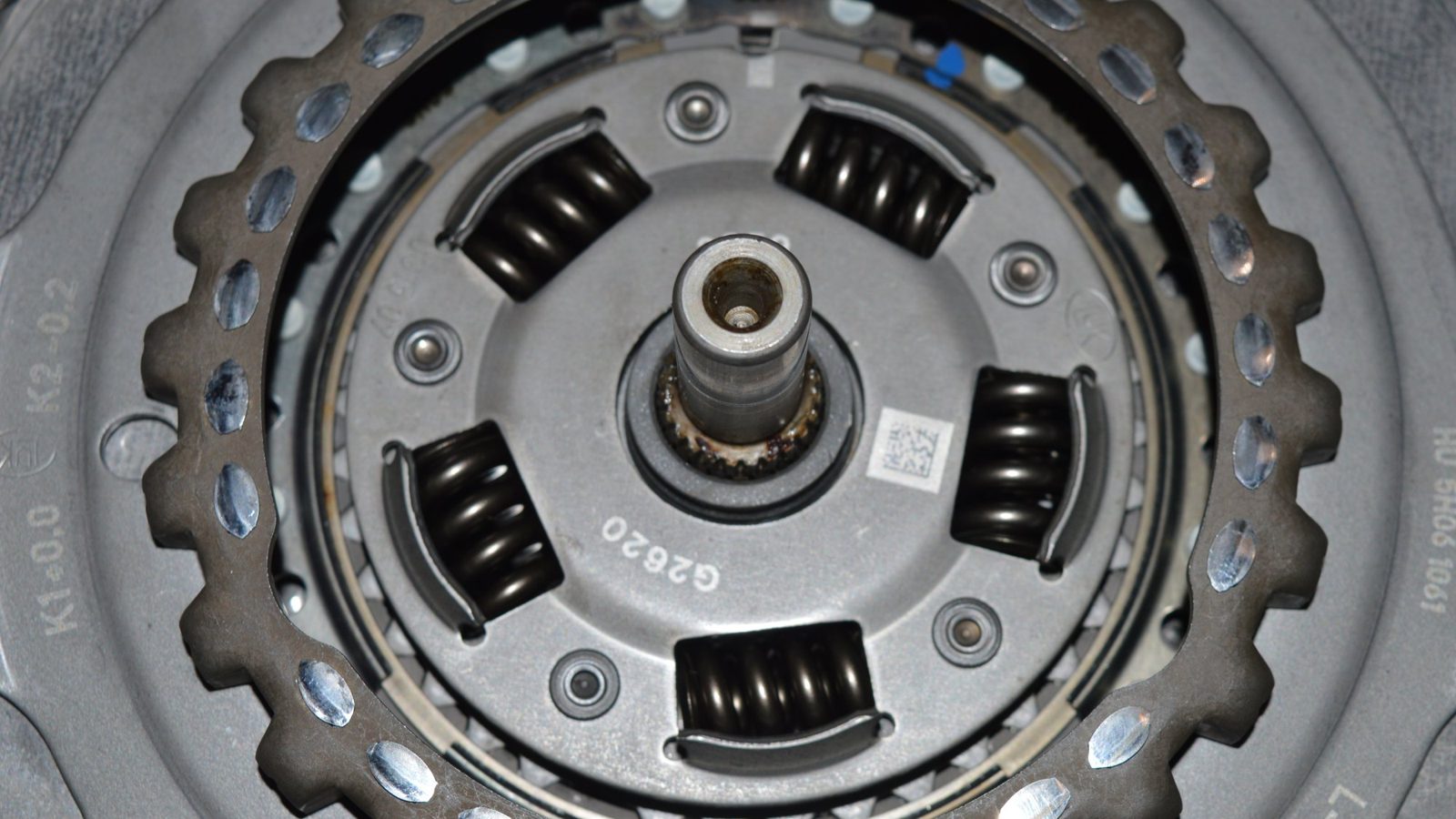
The wet clutch is strong, but it won't last forever. Hard driving and engine tuning put more strain on it, which can make it wear out sooner. That's when owners start complaining that the gearbox jerks or doesn't behave like it used to. If you want to see what I mean, have a look at what a worn dual clutch looks like. Once you've seen the parts up close, a lot of things start to make sense.
Skipping the gearbox oil change
This is the one that frustrates me most, because it's so often avoidable. Dirty oil is behind a large number of expensive DSG repairs. And when I ask when the oil was last changed, the answer is often, "I don't know." The gearbox can carry on working normally for a long time, and that's exactly what catches you out. Until one day it starts kicking, and suddenly we're talking about a repair rather than a routine service.
How should I service my DSG DQ381 and DQ500?
My rule here is very simple: don't wait until the gearbox starts giving you trouble before paying attention to it. You change the oil to prevent problems, not after the damage has already been done. And a proper service involves more than simply pouring in fresh oil.
- DSG gearbox oil and filter must be changed every 60,000 km. We use genuine oil, and after the service we always carry out gearbox adaptation.
- We don't use a flushing machine to change the oil. I've explained exactly why here: why we don't use a machine to change DSG and automatic gearbox oil.
- On cars with 4MOTION and fifth- or sixth-generation Haldex, the Haldex coupling oil and rear differential oil must be changed every 30,000 km. This is separate from the gearbox service.
WARNING! If someone tells you the DSG gearbox oil is "filled for life", don't take that as a reason to skip servicing. Missed oil changes can lead to a damaged mechatronic unit or a worn clutch. And guess who's paying the bill? You are.
I also want to make something clear about adaptation. We always carry it out after changing the oil, because the gearbox needs to work properly with its clutch control system. Simply draining the old oil and filling it with fresh oil isn't enough. A gearbox service needs to be done properly, from start to finish, not left half-finished.
Is a car with a DSG DQ381 or DQ500 worth buying?
Yes, absolutely. The DQ381 and DQ500 are durable gearboxes when they're serviced on time and their software is kept up to date. They change gear quickly, they're lovely to drive and, depending on their design, they can handle some serious loads. But don't confuse a strong gearbox with one that doesn't need maintenance. If you're buying a used car, the condition of that particular gearbox matters far more than everyone telling you how tough the design is supposed to be.
Tip from Kris Mladenov: If you're buying a car with a DQ381, ask for proof of the last gearbox oil change. Don't just accept someone saying, "It's been serviced." Check how it changes gear at low speeds, whether it jerks and whether there's a proper service history. That will tell you far more about the car you're about to buy.
I hope you've found this article useful! If you have, I'd really appreciate you sharing it with a friend who drives a DSG-equipped car or is thinking about buying one. My mission is simple: when I know something useful, I want more people to know it too. Because having the right information today can save you a lot of trouble tomorrow.
The solution in our shop
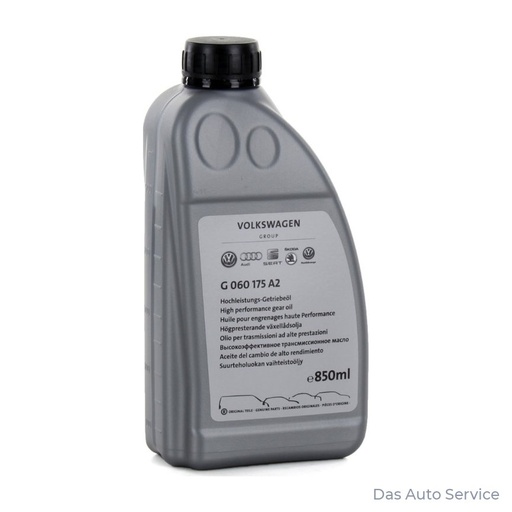
Genuine Haldex oil G060175A2 850ml
Genuine clutch oil for fifth-generation Haldex. For cars with 4MOTION and quattro fitted with this system, when servicing the rear-wheel-drive system.
View in shopRead more
- Gearbox servicing
- DSG and S tronic gearbox repair
- DSG DQ381 and DQ500 Oil Change: When and Why?
- DSG Mechatronic Repair: What We Check First
- DSG Clutch Wear: Signs, Causes and Replacement
- Why We Don’t Use a Machine to Change DSG Oil
Frequently asked questions
What's the difference between DQ381 and DQ250?
The DQ381 is the newer seven-speed wet-clutch DSG, while the DQ250 is the older six-speed wet-clutch DSG. Both use oil, but they're different gearbox designs.
When should I change the oil in a DQ381?
Every 60,000 km, using genuine oil and replacing the filter. Gearbox adaptation is always carried out after the service.
Is the DQ500 a reliable gearbox?
Yes, the DQ500 is a strong seven-speed DSG designed to handle high torque. But it still needs regular oil changes and proper servicing.
Which cars have the DQ381 gearbox?
You'll find it in the facelift Golf 7 GTI and R, Golf 8, Passat B8, Tiguan 2, Arteon, Octavia 4, Superb 3, and Audi A3 and Q3 with the more powerful engines. The exact gearbox fitted needs to be checked for each car.