What causes 1.8 and 2.0 TSI/TFSI oil consumption?
The 1.8 and 2.0 TSI/TFSI oil consumption problem is linked to the piston rings, pistons and, later, the connecting rods. Oil gets past the pistons into the cylinders, where it burns, resulting in excessive oil consumption. The problem gets progressively worse as the mileage increases because the defects become more pronounced, allowing more and more oil past the pistons. It usually starts between 50,000 and 80,000 km. According to the manufacturer's specifications, the 1.8 and 2.0 engines can consume up to 0.5 litres of oil every 1,000 km. To me, that's madness. I've rebuilt hundreds of these engines and monitored their oil consumption afterwards. In my experience, a properly repaired engine consumes little or no oil over 10,000 km.
Which engines are affected?
It's difficult to list every affected engine code, but as a general guide, almost all engines produced between 2008 and 2012 are affected, along with engines from several subsequent years across different brands. The problem occurs throughout the VW Group, including Audi, VW, SEAT and Škoda. Both three-letter and four-letter engine codes are affected. Off the top of my head, examples include CAEB, CDNC, CNDC, CDAA, BYT and BZB.
Is excessive oil consumption caused by an engine design defect?
I firmly believe that when we talk about "deliberately engineered defects", this engine is one of the clearest examples. It generated hundreds of billions for the Volkswagen Group. Why do I think that? Do I know more than I'm saying? Quite possibly. But I'd like to draw your attention to something: we can talk about a design defect when we're dealing with a single faulty component, rather than several components with related problems.
Back when nobody really understood what was happening, these engines were still relatively new and workshops had very little experience with them. The manufacturer took advantage of this by delaying the point at which the underlying problem was addressed on many of these cars, allowing more time and mileage to pass until their warranties expired. It offered "solutions" such as replacing the crankcase ventilation filter and updating the engine ECU software. Naturally, once the warranties had expired, widespread dissatisfaction followed. The manufacturer responded with carefully calculated financial arrangements, offering to cover up to 30–40% of the repair costs. Of course, this made the manufacturer look like the hero of the situation, winning back the loyalty and money of a large proportion of owners.
Where exactly do the problems originate?
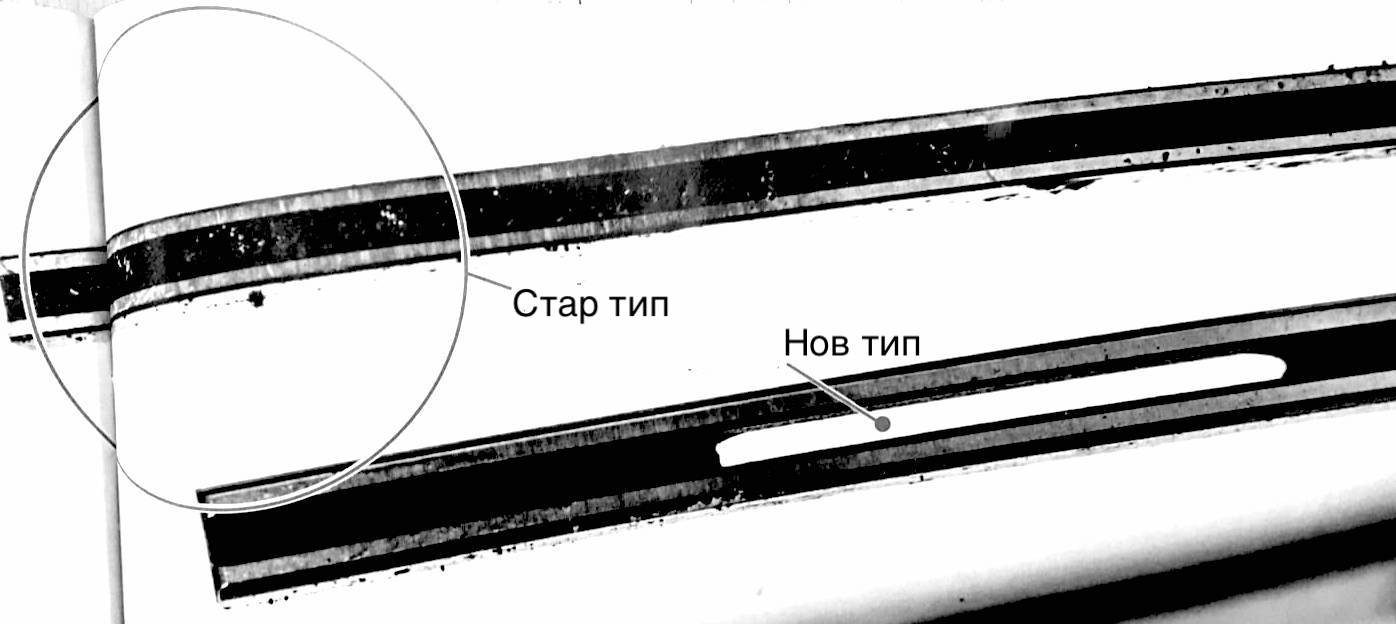
As I've already mentioned, the primary problem lies in the oil control ring. Its oil drainage holes are too small, and with oil change intervals of 30,000 km, they become clogged. As a result, the ring becomes less effective or stops working altogether, allowing oil to enter the combustion chamber. In the image below, you can see the old, problematic piston ring design alongside the revised version.
Can I replace just the piston rings?
That would be nice, but the answer is a big, emphatic, repeatedly underlined NO! 🙂
But why? Surely we already know what's causing the problem? Yes, we do, but there isn't just one problem. As a consequence of the original fault, the pistons also become deformed and shrink around the piston ring area. In other words, if you replace only the piston rings, there's an extremely high chance the engine will start consuming oil again. 🙂
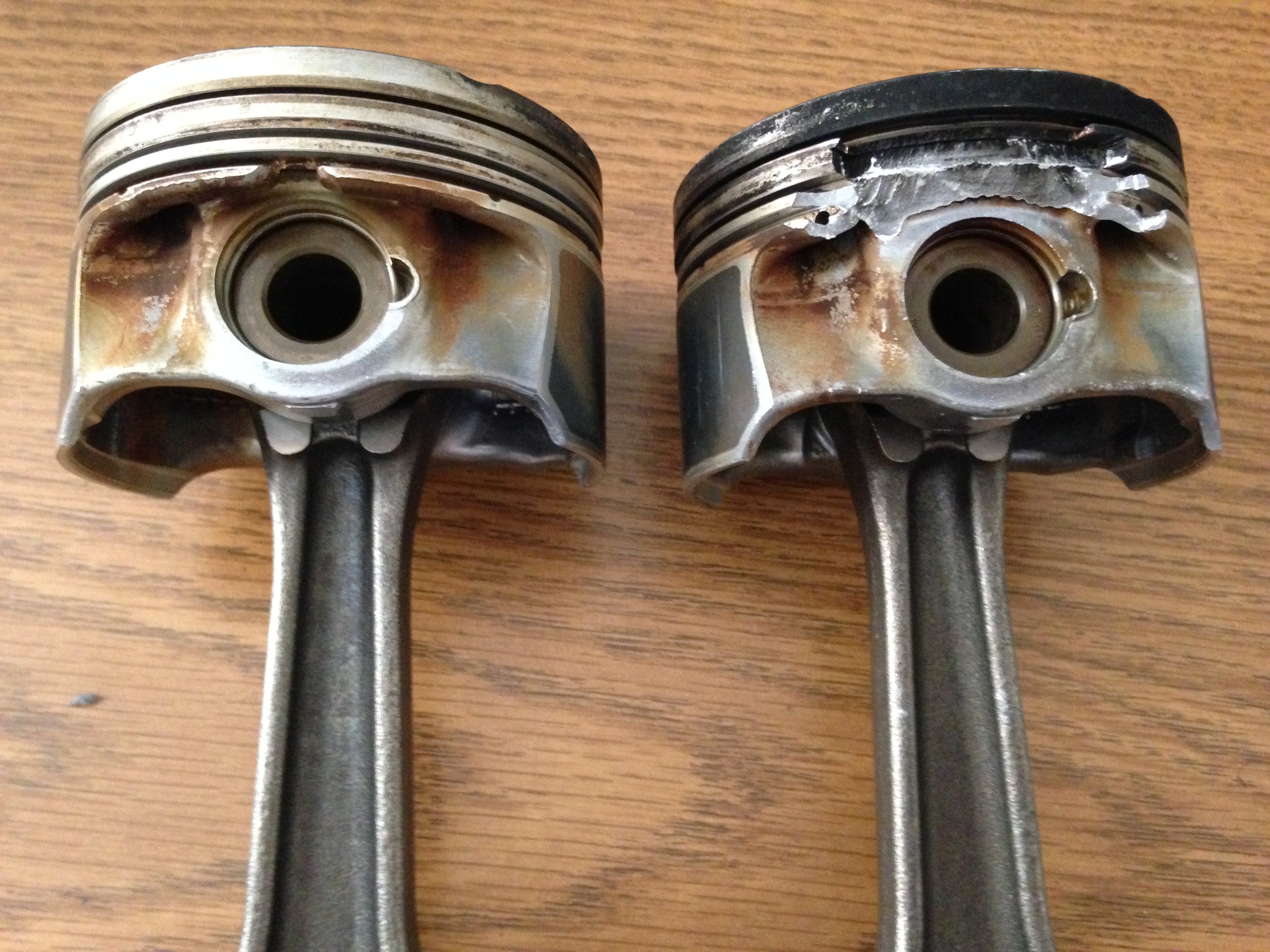
If the repair is delayed for too long, the pistons can also fracture, as you can see in the photograph below.
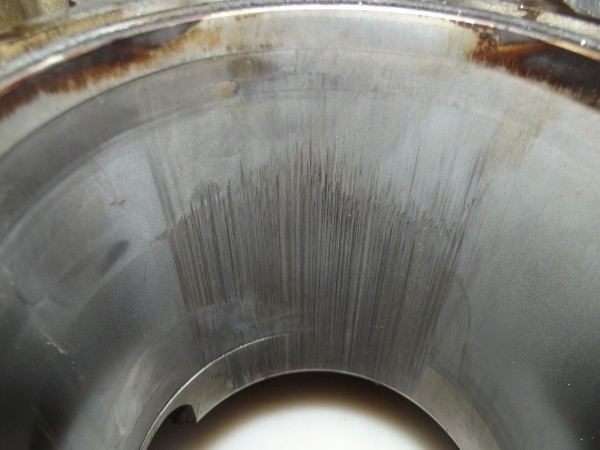
If you put off repairing the problem, fractured pistons aren't the only risk. You can also run into problems with the intake system, catalytic converter, turbocharger and injectors. Worst of all, the Alusil cylinder surfaces can become scored. As you know, Alusil and Nikasil are cylinder surface treatments designed to reduce friction, and they cannot simply be ground or honed in the conventional way.
Initially, the manufacturer proposed replacing the pistons as a complete set. However, it soon became clear that this wasn't enough. There was also a problem with the connecting rods, which could become distorted around the small end where the gudgeon pin fits. A successful repair therefore requires replacing both the pistons and the connecting rods. Put simply, the revised pistons use larger gudgeon pins and won't fit your original connecting rods. You can still find aftermarket pistons based on the older, unimproved design, but these can cause pronounced knocking at idle, sounding much like a worn big-end bearing. Every knock you hear is another reminder of the money coming out of your pocket because of a poor repair decision, whether you made it yourself or a workshop made it for you.
What are my options?
1. You can ignore the problem and simply keep topping up the oil until the engine eventually fails. Then you'll start looking for a second-hand engine, only to discover that there are hardly any healthy ones available. Or someone will sell you an engine they claim is in good condition, only for you to discover that it's faulty too, leaving you right back where you started.
2. You can buy a completely new engine.
3. We can repair it at Das Auto Service, rebuilding the engine to the extent actually required, in accordance with the manufacturer's procedures. This includes diagnostics and extensive testing, which are essential for us to provide a warranty on the repair.
How should the engine repair be carried out? (Video)
Some time ago, when we were still at our previous workshop, we made a video showing one of the many engines we'd repaired. You can see what a proper repair involves in the video below.
Can I get the problem fixed cheaply?
You'll probably come across all sorts of absurd proposals while trying to solve this problem. These are the kinds of "solutions" that end up costing you far more than they initially appear to. The engine is designed in such a way that there's really only one proper solution: the repair specified by the manufacturer. In any case, cars fitted with these engines tend to be cheaper than equivalent cars equipped with, for example, a 2.0 TDI engine.
How much does the repair cost?
I'll be straight with you: it's not cheap!
Pistons – BGN 2,200
Connecting rods – BGN 1,800
Labour – approximately BGN 2,500–3,000
Bear in mind that there are also numerous fasteners, gaskets, sealants and other components that add to the final cost. These prices reflect a repair carried out to the highest quality standards, with the aim of restoring the engine to factory-level condition.