Driving a Golf 8 2.0 TDI and wondering what needs changing and when? I understand. You'd be surprised how often people ask me exactly that. Your service book is now on your phone, the intervals are "flexible", and everyone in the owners' groups seems to have a different opinion. So I've put together this VW Golf 8 2.0 TDI service schedule, covering both what VW says and what I recommend based on our experience at Das Auto Service. I want you to know when your car genuinely needs attention and when there's no point spending money unnecessarily. After all, you're the one working hard to earn it.
We're talking about these models:
- VW Golf 8 hatchback (CD1) and Golf 8 Variant (CG5), from 2020 onwards
- 2.0 TDI 115 hp – engine code DSUD
- 2.0 TDI 150 hp – engine codes DTSB and DSRB
- Golf 8 GTD 200 hp – engine code DTUA
All three versions belong to the EA288 evo engine family. They have two SCR catalytic converters and a twin AdBlue injection system, which VW calls twin dosing. That's why you can't simply service them the same way as a Golf 7. There are a few important differences I want you to understand.
What engine oil does your Golf 8 2.0 TDI need?
Pay attention here, because there's an important difference compared with older TDIs. Your Golf 8 2.0 TDI needs 0W-20 oil meeting VW 509 00, also known as LongLife IV. Not the older 5W-30 meeting VW 507 00. The newer 508 00 and 509 00 specifications aren't interchangeable with the older 504 00 and 507 00 specifications. If someone tells you, "They're all diesel oils, just use whatever we've got", please don't listen. You could end up with higher fuel consumption and a DPF that fills up faster, wondering what's gone wrong. And that's exactly the sort of trouble I want to save you from.
According to the factory service schedule, the interval is flexible. The car calculates when an oil change is due, but the maximum is 30,000 km or 2 years. So what do I recommend? The same thing I've been saying for years, and which I've explained in detail in my article about when to change the oil and service items on your VAG car. Don't wait 15,000 km, let alone 30,000 km. For cars driven in Bulgaria, change the engine oil and oil filter every 10,000 km or once a year, whichever comes first, regardless of which oil you use. Especially if you do most of your driving around Sofia. Short journeys, traffic jams and frequent DPF regenerations all take their toll. During regeneration, some fuel can find its way into the oil and dilute it. The engine might sound perfectly normal, and you won't notice a thing. But that doesn't mean it isn't wearing out. And when the repair bill arrives, it's coming out of your pocket.
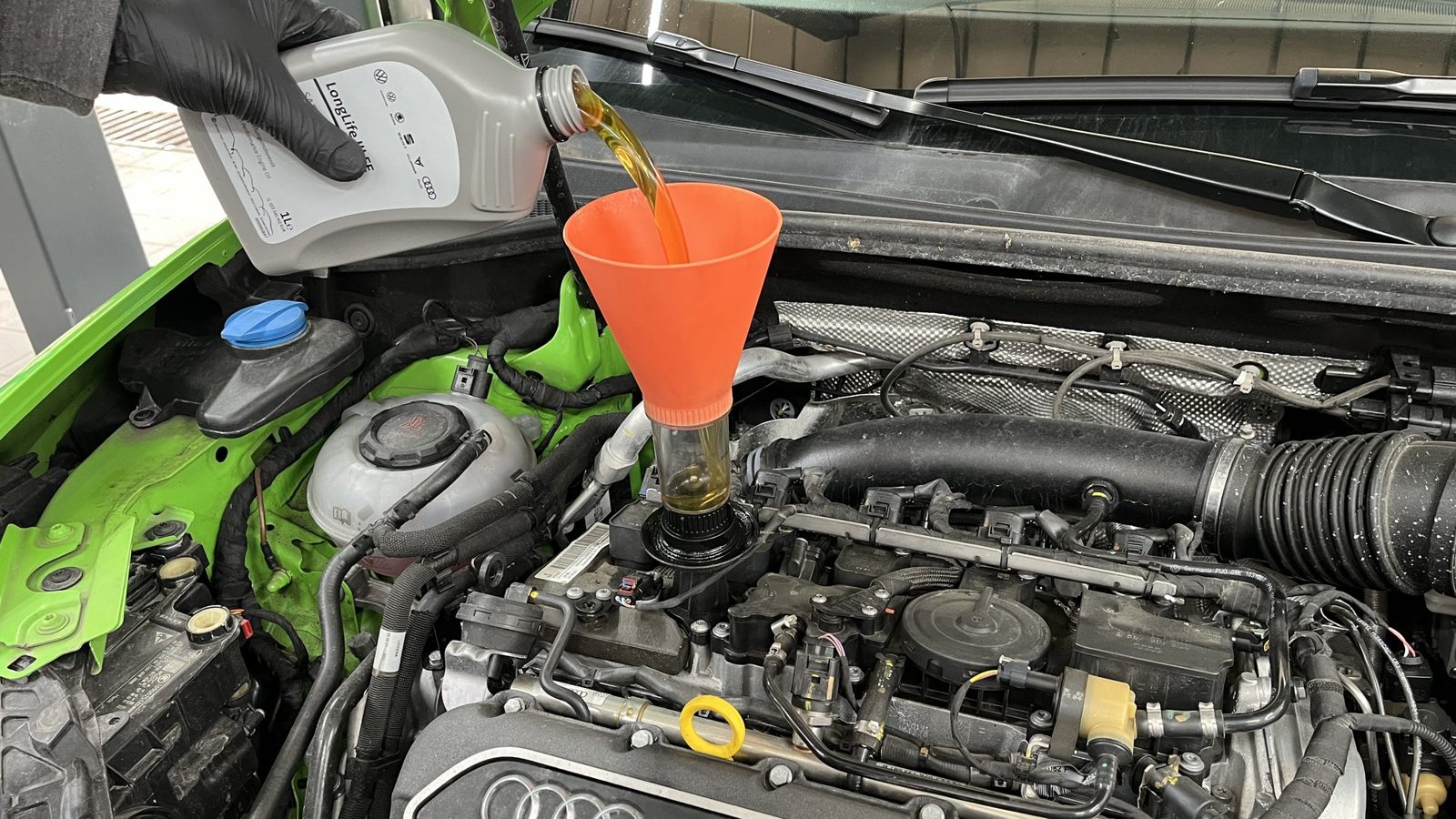
Advice from Kris Mladenov: Check the oil specification printed on the oil filler cap and in your digital service book. For the Golf 8 2.0 TDI, it's VW 509 00. If a workshop can't explain the difference between 507 00 and 509 00, change the workshop, not the oil specification. I'm telling you this because I want your engine to last.
Which filters should you change, and how often?
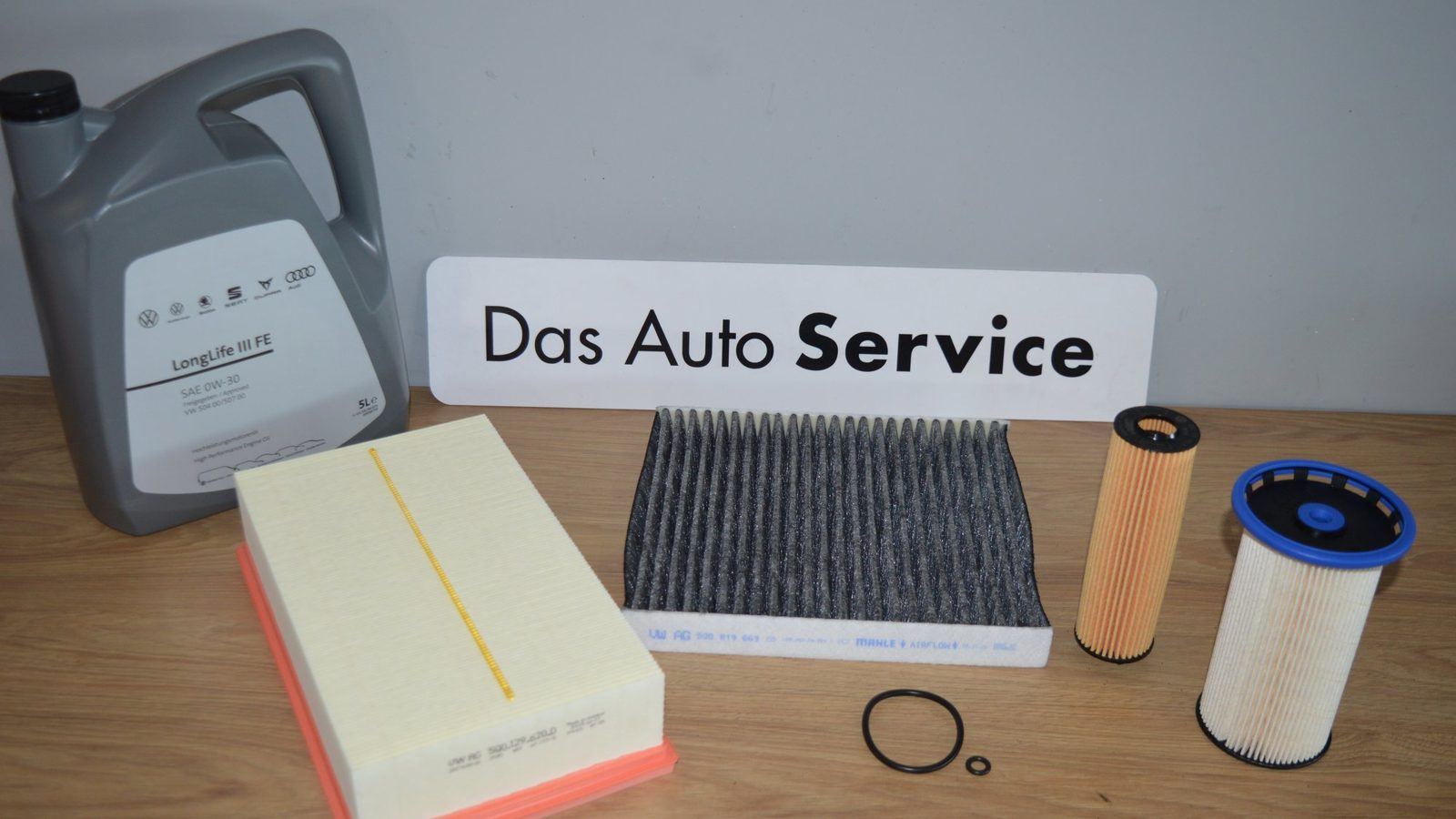
- Oil filter – at every engine oil change. No compromises here.
- Crankcase ventilation filter – every 80,000 km.
- Air filter – we replace it with the engine oil every 10,000 km, even though the factory schedule allows 90,000 km or 6 years because of environmental regulations. We check it at every inspection. You know how dusty our roads can get.
- Cabin filter (pollen filter) – we replace it with the engine oil every 10,000 km or once a year. I want you breathing clean air too.
- Fuel filter – we replace it with the engine oil every 10,000 km, even though the factory schedule for the 2.0 TDI specifies 90,000 km.
There's something important I want you to understand about the fuel filter. In a diesel engine, the high-pressure fuel pump and injectors work with clearances measured in microns. They're incredibly precise, and a blocked or poor-quality filter can ruin them long before your timing belt is due. That's why we only fit genuine filters at Das Auto Service. Not because someone's paying us to recommend them. It's because we've had to replace injectors damaged by filter problems, and we know just how unpleasant and expensive that can become.
What if your Golf 8 has the 7-speed DSG gearbox?
The 150 hp and GTD versions use the DQ381 (0GC). It's a 7-speed DSG gearbox with wet clutches. The factory oil change interval is 120,000 km, but I wouldn't leave it that long. Just as with the 6-speed DSG, I recommend changing the oil and filter every 60,000 km, using genuine oil and a genuine filter. Why? Because of the mechatronic unit – the brain that controls the gearbox. Old oil carries tiny particles that act like sandpaper on its valves. Then you come to me saying, "It kicks when changing gear" or "It jerks when pulling away in first". And in many of these cases, the oil has already gone well beyond the interval we recommend. I don't want you ending up there.
If you've got the 115 hp version with DSG, check the gearbox code on the identification label first. There are different versions, and I don't want you buying gearbox oil blindly. We identify the exact gearbox first, then choose the correct oil. As for the 6-speed manual gearbox, the factory says the oil is "filled for life". Well, I stopped believing that sort of thing a long time ago.
What needs servicing on a 4MOTION Golf 8?
The 150 hp Golf 8 2.0 TDI is also available with 4MOTION, which uses a Haldex coupling. Its oil needs changing every 3 years or 60,000 km, whichever comes first. During the service, we also remove and clean the pump, because that's one of the parts that suffers most from old oil. I've written a separate article about Haldex Gen5. Give it a read before someone tells you the Haldex doesn't need servicing. Believe me, it absolutely does.
When should you change the timing belt and water pump?
The Golf 8 2.0 TDI has a timing belt, and I recommend replacing it at 180,000 km or 5 years, whichever comes first. And not just the belt – I want a genuine timing belt kit with the rollers, tensioner and water pump. Everything together. We've seen aftermarket parts cause problems after just 50,000 km instead of lasting 210,000 km. That's why I insist on a genuine kit. The water pump is driven by the same belt, so we replace it at the same time. Leave it until later and you could end up paying for the same labour twice. Why put yourself through that?
If the red oil pressure warning light comes on, stop immediately and do not restart the engine! With this engine, just a few seconds can make the difference between replacing the bearings and having to repair the entire engine block. Don't take that risk.
How often should you change the brake fluid?
According to the factory schedule, the first change is after 3 years, then every 2 years. My advice is to change it every 2 years from the start. Don't wait. Brake fluid absorbs moisture over time, which lowers its boiling point. Under heavy braking, the pedal can start to feel spongy. And that's exactly when you need your brakes working properly. Brakes are no place to take chances. I've explained it all in my article about when and why to change the brake fluid on your VAG car.
And when should you change the coolant?
Your Golf 8 uses G12evo coolant. VW specifies long intervals, but I recommend changing it every third heating season. We also check its protection every autumn. Why am I so particular about this? Over time, coolant loses some of the additives that protect the aluminium engine block and cylinder head against corrosion. Tiny pits can start to form, and eventually you might end up with a leak that takes months to track down. Much better to catch it early, don't you think?
What should you know about AdBlue and the two SCR catalytic converters?
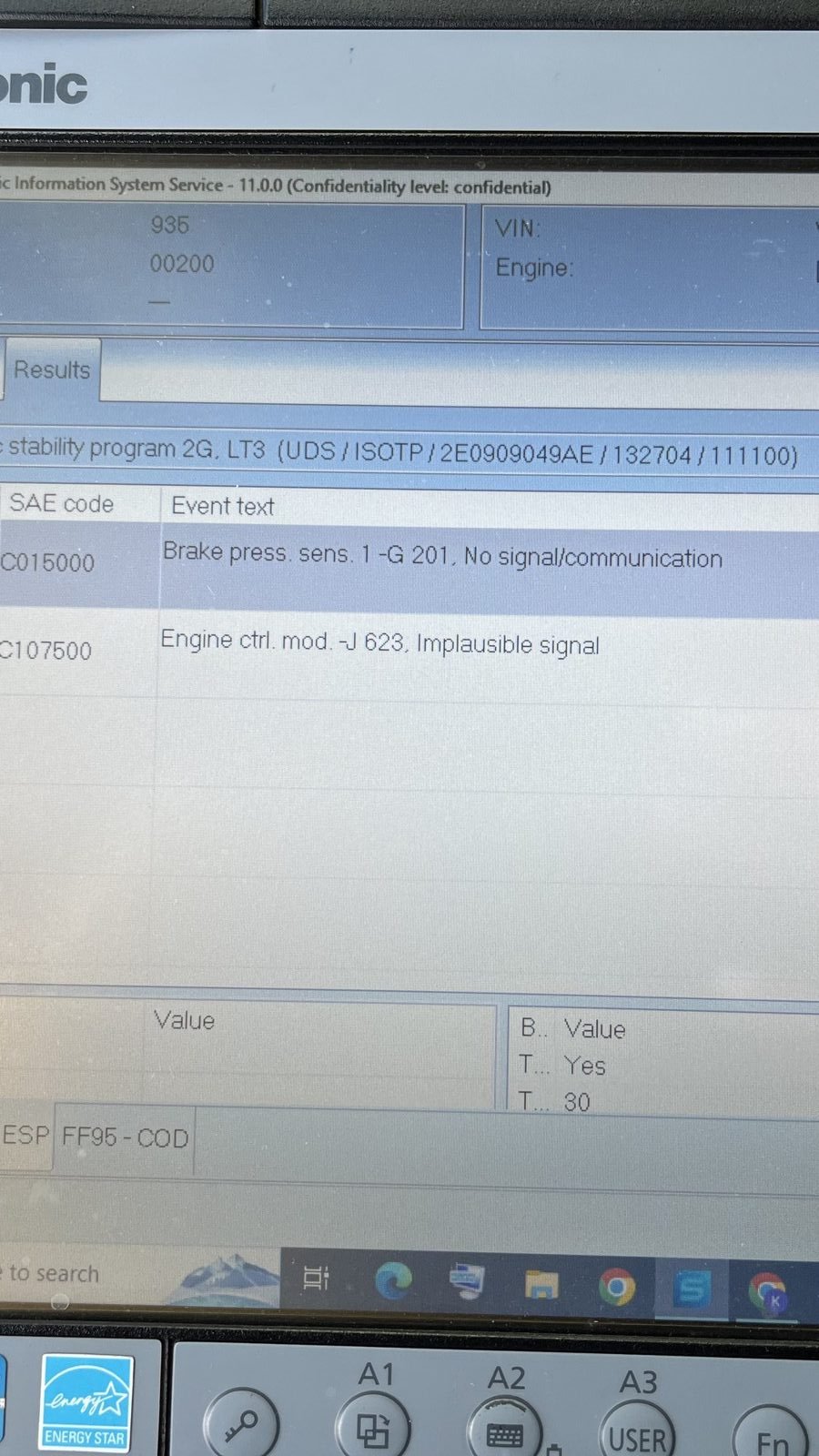
On the EA288 evo, the system is called twin dosing. Put simply, AdBlue is injected at two points, and there's a second SCR catalytic converter underneath the car. The exhaust gases are around 100°C cooler there, resulting in roughly 80% less nitrogen oxide emissions. What matters to you is using only genuine AdBlue fluid and not waiting until the dashboard starts counting down the remaining kilometres. If you see "Engine start not possible in 1000 km", don't immediately assume the tank is simply empty. There could be a fault in the system. In that case, we read the fault codes with a diagnostic tester first, rather than topping it up blindly and hoping for the best.
Why do I recommend an inspection every 6 months?
At Das Auto Service, we recommend having your car inspected every 6 months. We check the engine oil level and condition, look for leaks, inspect the brake pads, discs, tyres and suspension, and check for stored fault codes. Half an hour on a ramp can save you a lot of headaches. Experience has taught us that plenty of expensive repairs begin with something small that nobody noticed in time. And I'd much rather we spotted it before it made a serious dent in your wallet.
[workshop example – Kris]
What should you remember about your Golf 8 2.0 TDI service schedule?
- 0W-20 engine oil meeting VW 509 00 and oil filter – every 10,000 km or once a year, whichever comes first. Don't put it off.
- All filters – oil, fuel, air and cabin – we replace them with the engine oil every 10,000 km or once a year.
- DSG DQ381 – genuine oil and filter every 60,000 km, with gearbox adaptation after the change.
- Haldex on 4MOTION – every 3 years or 60,000 km.
- Brake fluid – every 2 years.
- Coolant – every third heating season.
- Timing belt and water pump – at 180,000 km or 5 years, whichever comes first. Genuine timing belt kit only.
- Full vehicle inspection – every 6 months.
My advice is simple. With your Golf 8 2.0 TDI, remember just 2 things. First, be careful who you trust with your car. Don't choose a workshop purely on the final bill. Make sure the person working on it knows what they're doing and can explain why a particular part needs replacing. Second, use genuine parts and service items. Yes, it costs around 20% more, but I believe the peace of mind is worth it. If you'd like us to look after your Golf 8, you're always welcome at Das Auto Service for an engine oil and filter change or a gearbox service.
I'm Kris Mladenov, and I write these articles because I want you to understand your car, not just pay repair bills without knowing why. I hope this has helped. If you've got a friend with a Golf 8 2.0 TDI, send them this article. You might save them a lot of trouble and money. 🙂
The right products from our shop
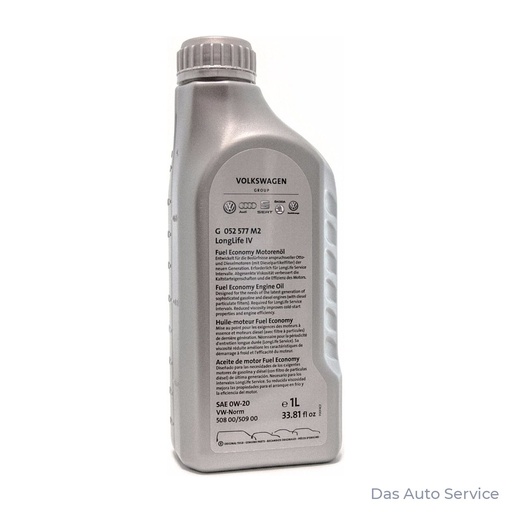
Genuine LongLife IV 0W20 engine oil G S60577M2 1l
Genuine 0W-20 LongLife IV engine oil meeting VW 509 00 – exactly what your Golf 8 2.0 TDI needs.
View in our shop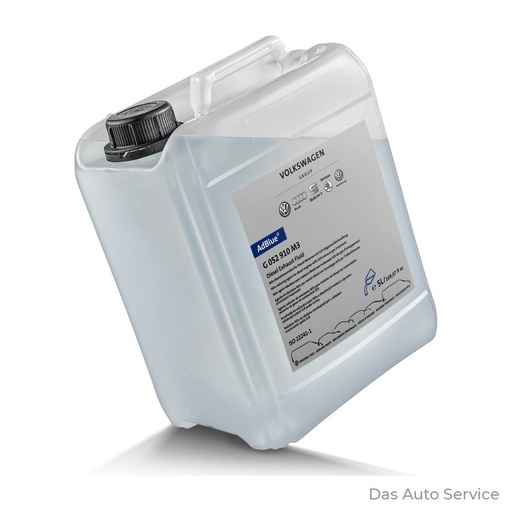
Genuine VAG AdBlue® fluid G052910M4 10l
Genuine AdBlue fluid – exactly what you need for the system with two SCR catalytic converters.
View in our shop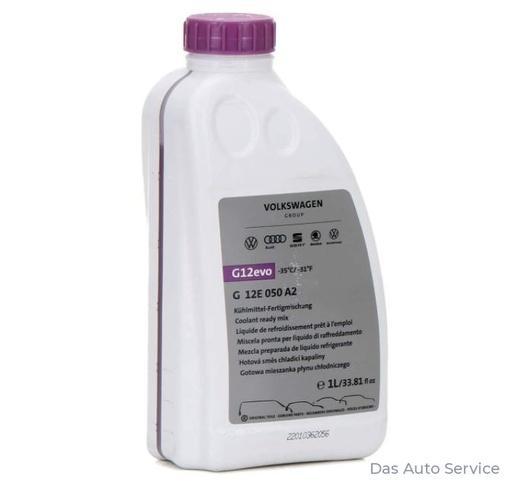
Genuine VAG G12Evo coolant G12E050A2 1.0l
G12evo coolant – replace it every third heating season.
View in our shop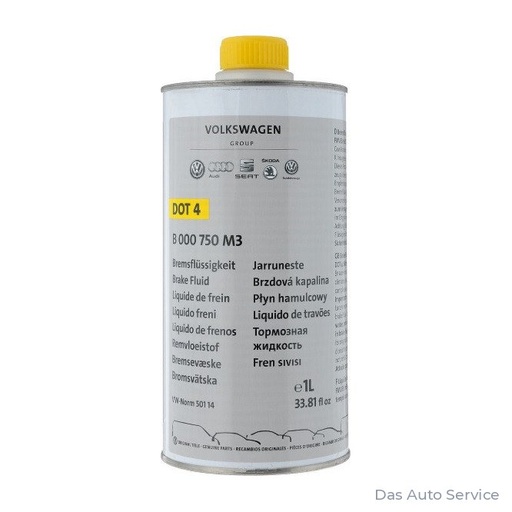
Genuine DOT 4 brake fluid B000750M3 Audi/Volkswagen 1l
Genuine DOT 4 brake fluid – change it every 2 years.
View in our shopRead more
- VAG engine oil and filter change in Sofia
- Gearbox servicing
- When should I change the oil and service items on my VAG car?
- Passat B7 and CC 1.6 and 2.0 TDI service schedule
- What should I know if my car has Haldex Gen5?!
Frequently asked questions
How often should you change the oil in a Golf 8 2.0 TDI?
The factory service interval is flexible, up to 30,000 km or 2 years. But I wouldn't leave it that long. Change the engine oil and oil filter every 10,000 km or once a year, whichever comes first, using genuine 0W-20 oil meeting VW 509 00 and a genuine oil filter.
Can you use 5W-30 VW 507 00 oil in a Golf 8 TDI?
No, my friend. The newer 508 00 and 509 00 specifications aren't interchangeable with the older 504 00 and 507 00 specifications. Your Golf 8 2.0 TDI needs 0W-20 oil meeting VW 509 00. Please don't compromise on this.
When should you change the timing belt on a Golf 8 2.0 TDI?
I recommend changing it at 180,000 km or 5 years, whichever comes first. We replace the rollers, tensioner and water pump along with the belt. And I insist on a genuine timing belt kit.
When should you change the DSG oil in a Golf 8 2.0 TDI?
The factory interval for the DQ381 is 120,000 km, but I wouldn't wait that long. We recommend changing the oil and filter every 60,000 km, using genuine parts and oil, just as we do with other wet-clutch DSG gearboxes.