Haldex is the four-wheel-drive system used in cars with a transverse engine. You'll find it in the Golf and Passat 4MOTION, Octavia and Superb 4x4, Tiguan, Leon Cupra, A3, TT and Q3 quattro. I've already talked you through the fifth-generation Haldex and gearbox and differential service intervals. Now I want to bring everything together and explain how to service every Haldex generation. Because you keep asking me the same questions, and I want you to know exactly what your car needs.
How does Haldex actually work?
When you're driving normally, your car runs mainly on its front wheels. Just ahead of the rear differential sits the Haldex clutch, which contains a pack of friction plates sitting in oil. When the electronics detect that the front wheels are slipping, or are about to slip, the pump builds pressure and squeezes those plates together. That sends some of the engine's power to the rear wheels. Simple enough, right? But here's the important bit. The whole thing depends on the oil and the pump that moves it.
How many different oils do you need to change?
There are two separate oils at the rear axle, and this is where people often get confused. One is inside the Haldex clutch itself, and the other is in the rear differential. Plenty of garages change one and forget the other. But! There's also a transfer box at the front, which sends power to the propshaft. That has its own oil too. So we're talking about three separate places that all need servicing.
What are the Haldex service intervals for each generation?
- Haldex generations 1 to 4: we change both the Haldex clutch oil and the rear differential oil every 60,000 km. Afterwards, we always carry out an adaptation using a diagnostic tool.
- Haldex 5, fitted to cars from around 2012 onwards: we service it every 30,000 km. That includes removing the pump and cleaning its strainer. Afterwards, we always carry out an adaptation using a diagnostic tool.
- Front transfer box: we change its oil at the same time as the gearbox oil.
These intervals apply when you're using genuine oils. And there's something else I want you to remember: the Haldex oil used in generations 1 to 4 is different from the oil used in generation 5. Don't mix them, and don't substitute one for the other.
With Haldex 5, changing the oil alone doesn't mean you've serviced the system properly. Over time, friction material wears off the clutch plates and blocks the pump strainer. Leave it like that and the pump overheats, eventually burning out the control module. This is the most common failure on the fifth-generation system. That's why removing the pump and cleaning the strainer is absolutely essential. Please don't skip it.
How can you tell if your Haldex has a problem?
- A four-wheel-drive warning light comes on, usually when you accelerate harder.
- You switch the engine off, start it again and the warning disappears. But as soon as you accelerate under load, it comes straight back.
- On wet roads or snow, the front wheels spin while the rear wheels seem to do absolutely nothing.
- We connect the car to our diagnostic equipment and find fault codes relating to the Haldex pump, valve or control module.
For Haldex 5, the manufacturer specifies cleaning the system and replacing the pump and control module with an improved part number. If the module has survived, you might get away with just a software update. And here's something important: don't rely on second-hand parts for this repair. You've already got old parts on your car. Why fit another set of old parts and risk ending up with exactly the same problem?
How do you know which Haldex generation your car has?
The model and year give us a good idea, but the most reliable way is to check the VIN. If you're not sure which Haldex generation you've got, just send us your VIN. We'll check exactly which oil your car needs and how often you should change it.
Advice from Kris Mladenov: Your Haldex can keep working for years without giving you the slightest hint that something is wrong. Then, out of nowhere, it can land you with a serious repair bill. So, my friend, change those oils on time. If you've got a fifth-generation Haldex, make sure the garage removes the pump and cleans the strainer. To me, that's the difference between a proper service and simply changing the oil.
I hope you now have a much clearer idea of what your 4MOTION or quattro needs. Don't wait for a Haldex warning light before giving the system some attention. And if this article has helped you, send it to a friend. You might save them a lot of trouble and a nasty repair bill.
The right products from our shop
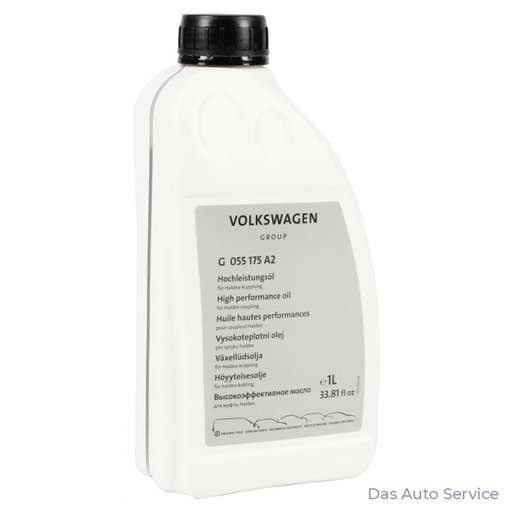
Genuine Haldex oil G055175A2 1L
Genuine Haldex oil G 055 175, suitable for generations 1 to 4.
View in our shop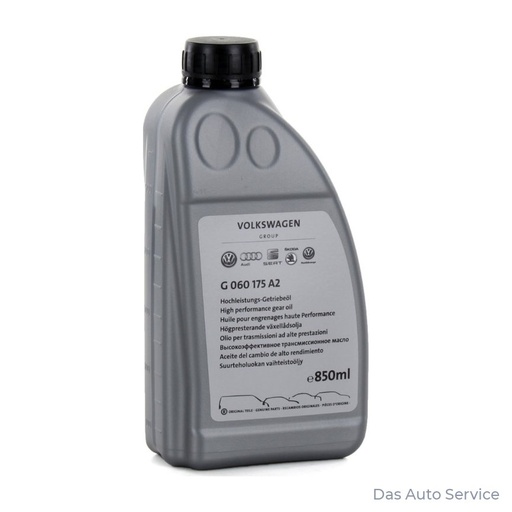
Genuine Haldex oil G060175A2 850ml
Genuine Haldex oil G 060 175, suitable for the fifth generation.
View in our shop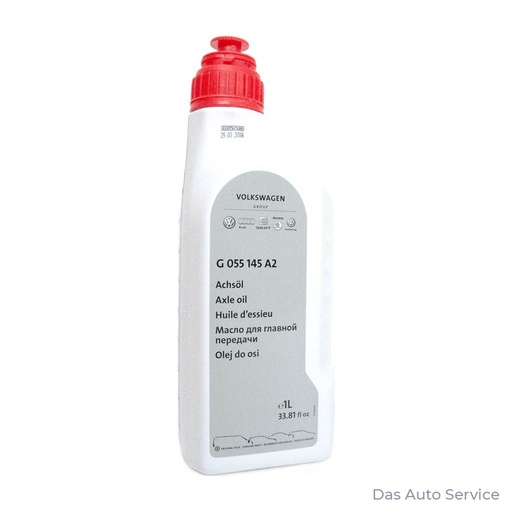
Genuine oil for the differential, rear axle and transfer box, according to the required specification.
View in our shopFurther reading
- Gearbox and Drivetrain Servicing
- Diagnostics
- What You Need to Know If Your Car Has Haldex Gen5!
- Gearbox Service Intervals for VAG Group Cars
- VW Passat B7 and CC 1.6 and 2.0 TDI Service Schedule
- Torsen quattro: Differential and Transfer Box Servicing
- Audi Q3 8U 2.0 TDI Service Schedule
Frequently Asked Questions
How often should you change the Haldex oil?
For Haldex generations 1 to 4, change the oil every 60,000 km. For Haldex 5, it's every 30,000 km, and you must remove the pump and clean its strainer.
How many different oils does the Haldex system use?
There's separate oil in the Haldex clutch, the rear differential and the front transfer box. Three different places, my friend, and you really don't want to miss any of them.
Why does the Haldex warning light come on when you accelerate?
Most often, the pump can't build enough pressure. The strainer might be blocked, the pump itself might have failed, or there could be a problem with the control module.