Over the years, I've gained extensive experience with 1.8 and 2.0 TFSI engines. It all began at one of Audi's training academies in Germany, and since then, I've dealt with countless cases, including some particularly complicated ones, both at our workshop and at workshops run by people who use my personal consultation or mentoring services. Back when I was attending the Audi Academy, eager to learn more about these engines, I had no idea just how troublesome they would prove to be over time. In this article, I'll focus on one of the most important 1.8 and 2.0 TFSI timing chain problems: excessive chain tension.
What exactly is the problem?
The problem I'll focus on in this article is excessive timing chain tension. As we know, these engines can suffer from both an excessively loose timing chain and one that's too tight. Both problems stem from the tensioner and the associated mechanisms that allow it to function correctly. Excessive timing chain tension can be relatively easy to recognise on the first cold start of the morning. You'll notice the engine running unevenly, almost as though it's firing on only three cylinders. After a short while, the engine settles down and starts running normally, or close to normally. The only remaining sign of a problem may be the Check Engine warning light, which stays illuminated on the dashboard.
Which fault codes might appear during a diagnostic scan?
When you read the fault memory, you're likely to find one or more of the following fault codes:
- P0011
- P0016
- P0341
- P000A
- P052A
What should you do after identifying these fault codes?
Step 1
Allow the engine to cool down completely. Ask another mechanic to start the engine while you listen carefully for knocking or scraping noises coming from the timing chain cover during the first few seconds after start-up.
WARNING!!!
An excessively tensioned timing chain can snap at any time. The risk depends on how long the vehicle has been driven with the problem before arriving at your workshop, so keep that in mind.
Step 2
Next, connect a diagnostic tester -> MVB (Measuring Value Blocks/live data) -> channel 91 -> Normal camshaft readings should be between -5 degrees (a more negative reading indicates excessive chain tension) and +5 degrees (a higher reading indicates a loose chain or a failed tensioner).
Step 3
If you've heard unusual noises coming from the timing chain cover or found that the camshaft readings are outside the normal range, it's time to carry out a mechanical inspection.
How do you inspect 1.8 and 2.0 TFSI timing chain problems?
First, you need to gain access to the crankshaft vibration damper pulley. Depending on the vehicle the engine is fitted to, this may involve removing the wheel and wheel arch liner or removing the front bumper and front-end panel.
Once you've gained access to the vibration damper pulley, remove the auxiliary drive belt and rotate the engine to top dead centre (TDC).
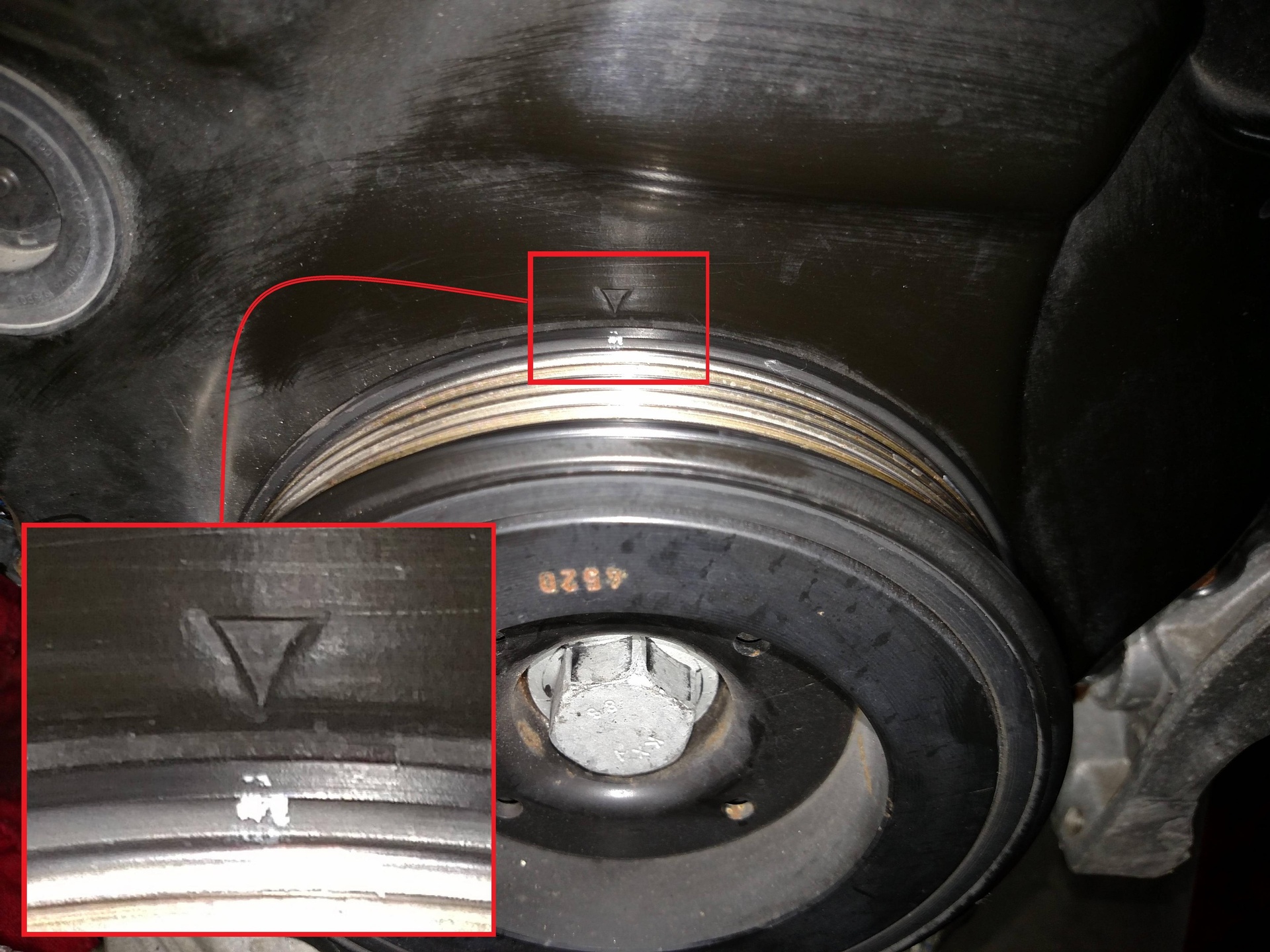
Once you've completed this step, remove the upper timing chain cover.
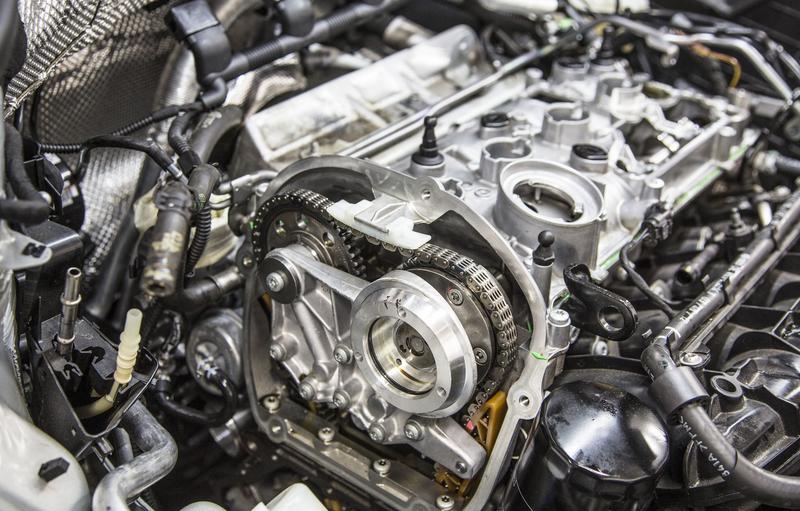
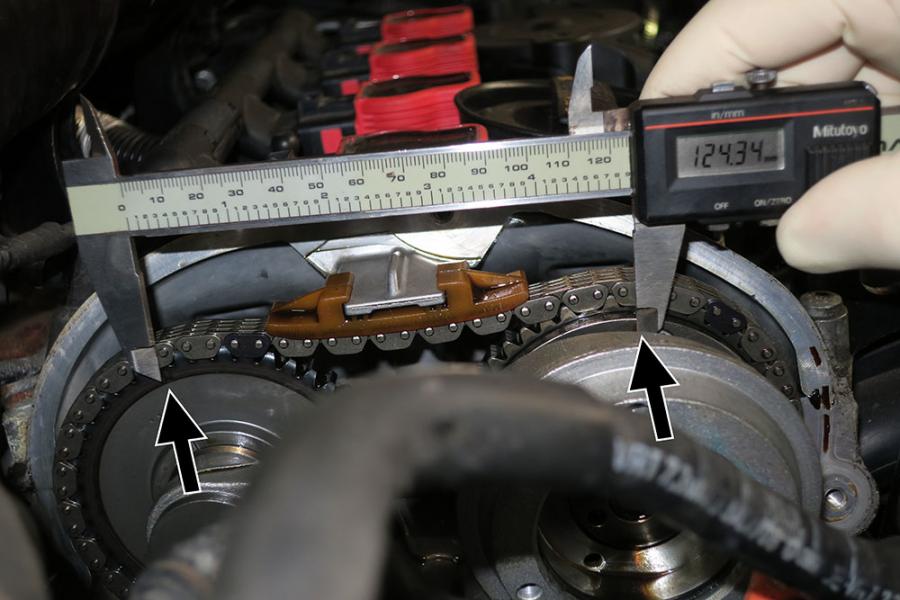
To confirm the problem and give your customer a definitive diagnosis, you'll need to take several measurements. If the vehicle arrived at your workshop with an engine that wouldn't start, skip the previous diagnostic steps and go straight to this inspection. Before taking the measurements, however, you need to know the correct specifications:
The correct distance between the two camshaft timing marks is 124–126 mm.
The correct distance between the intake camshaft and the mark on the camshaft bearing bridge is 61–64 mm.
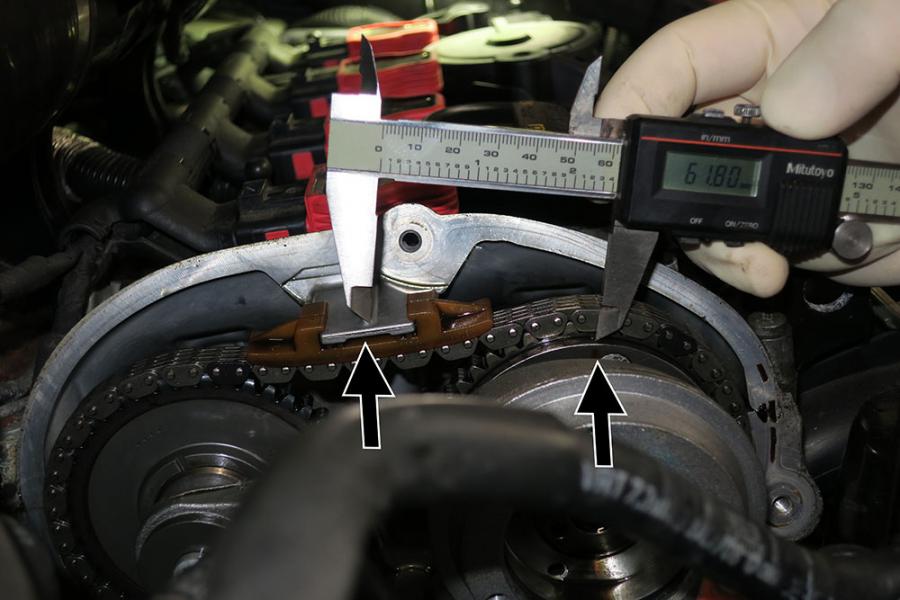
If the measurements fall outside these ranges, the timing chain is probably excessively tensioned. The next step is to remove the lower timing chain cover and check how many teeth the tensioner has extended by.
If you confirm excessive tension, you'll also need to remove the camshaft bearing bridge and inspect the strainer on the valve built into it. The strainer will almost certainly be torn and the valve damaged, causing excessive pressure and overextension of the tensioner.
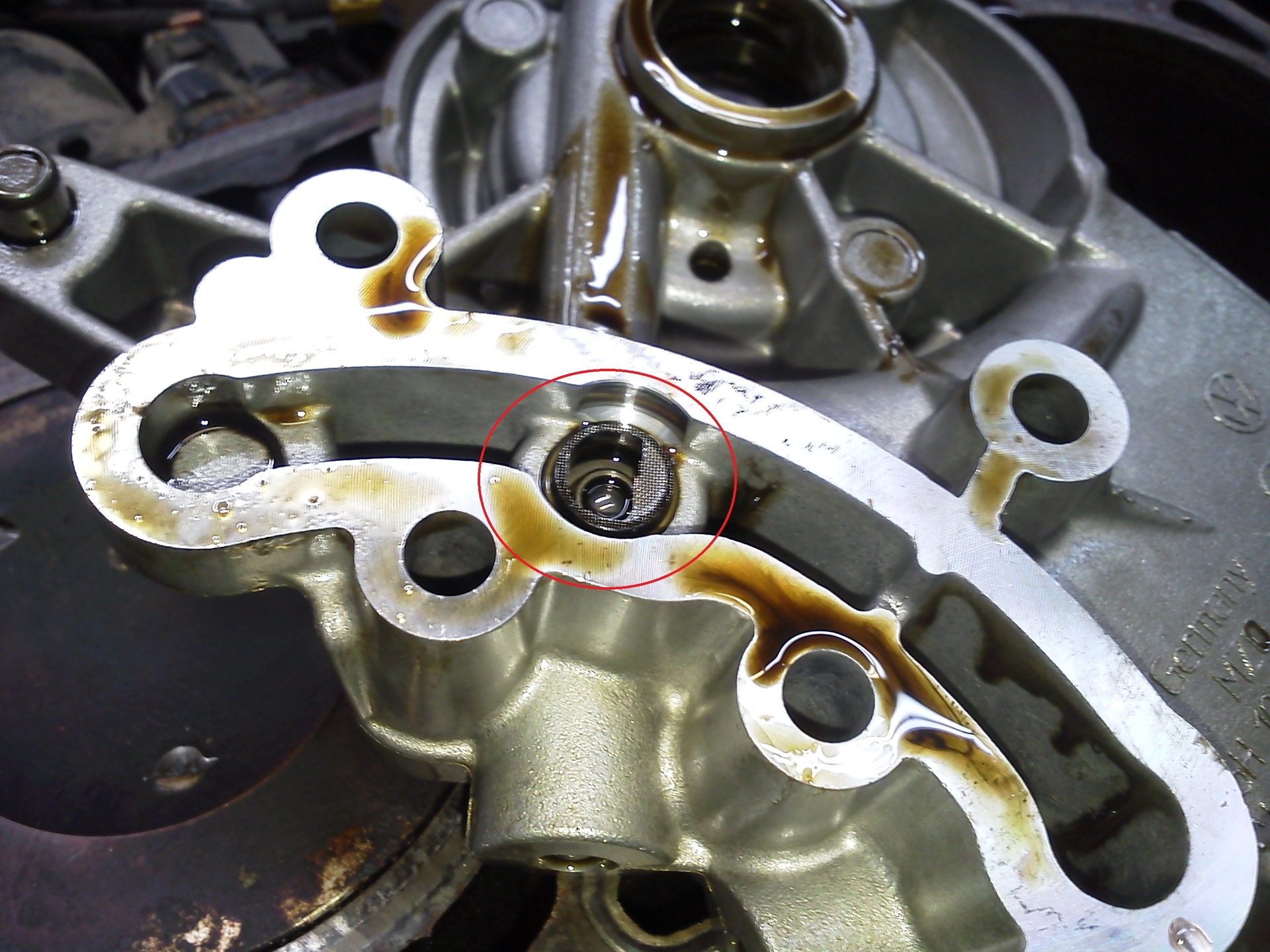
If you simply replace the timing chain assembly without addressing the camshaft bearing bridge, the same problem will soon return.
A recommendation from Kris Mladenov
I'd like to remind you to use only genuine parts. Don't compromise your own standards or the quality of your work just to please a customer.
I hope you've found this article useful. If you have, I'd appreciate it if you shared it so we can help more people and spread the word about my mission to change the automotive industry in Bulgaria.