The five-cylinder engine's sound is half the fun of driving an RS3. You know exactly what I mean. That's why you'll notice straight away if your car suddenly goes quiet, starts making a different sort of rumble or develops an annoying rattle. The Audi RS3 exhaust system is much more than a couple of silencers and pipes. There are valves, actuators and sensors in there, and they all need to do their jobs properly.
How does the Audi RS3 exhaust system work?
Inside the rear silencers are valves that open and close depending on your driving mode and engine speed. Switch to Sport mode and the valves open, letting that lovely five-cylinder sound come through. Switch back to Comfort and they close, making the car quieter.
Depending on the version, the valves are operated by electric actuators or vacuum, with the car's control unit telling them when to open and close. If something goes wrong, the exhaust note changes, and you might even get an engine warning light on the dashboard.
What are the most common problems?
- Exhaust valve stuck because of rust and soot — you change driving modes, but the exhaust sounds exactly the same.
- Faulty exhaust valve actuator — the car logs a fault code, and the engine warning light may come on.
- Loose heat shield or clamp — you hear a rattle, usually at certain engine speeds.
- Crack or exhaust leak — the car starts making a deeper rumbling noise, and you may notice an exhaust smell.
- Rust on the silencers and pipes after a few winters — the metal gradually corrodes until exhaust gases can start escaping.
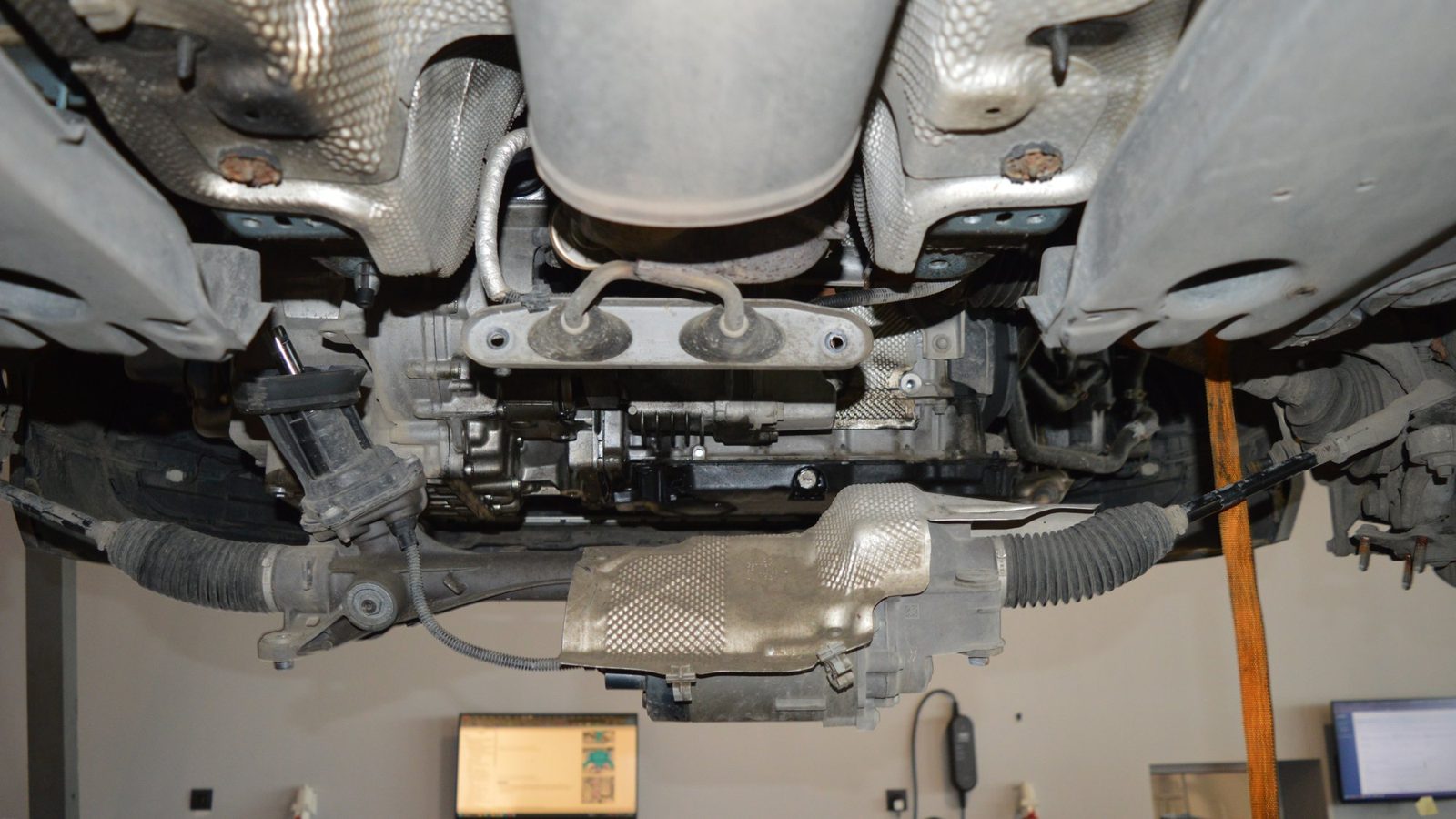
How do we check the RS3 exhaust system?
- First, we read the fault codes to see whether there's a problem with the exhaust valves or their control system.
- Next, we use the diagnostic equipment to operate the valves and check that they open and close properly.
- We put the car on the ramp and inspect the entire exhaust system for leaks, cracks and rust.
- Finally, we check the clamps and heat shields to see whether anything has come loose or been damaged.
I don't like replacing parts on a hunch. We find out exactly what's stopped working first, and only then decide how to fix it. Otherwise, you're just throwing your money away.
Don't remove the catalytic converter or fit a straight pipe in its place. You could end up with fault codes, a failed roadworthiness test and a car that no longer meets the legal requirements for driving on public roads. It's simply not worth it.
When can we repair a valve, and when does the silencer need replacing?
If an exhaust valve is stuck, sometimes all it needs is a good clean and a bit of help to get it moving freely again. But if the actuator itself has failed, we replace the actuator.
If the silencer has rusted through, we replace it with an original one. That way, we keep the sound and operation the system was designed to deliver, without creating extra problems with its controls.
Advice from Kris Mladenov: If you don't drive your RS very often, switch to Sport mode every now and then. It helps keep the exhaust valves moving regularly. I can't promise they'll never seize, but at least they won't spend all their time sitting in the same position.
If your RS3 doesn't sound the way it used to, don't rush out and buy new silencers or actuators. Bring it to Das Auto Service. We'll test the valves, inspect the whole exhaust system and track down exactly where the problem is coming from.
Read more
- Diagnostics at Das Auto Service
- Electrical Problems and Control Modules
- The 2.5 TFSI Five-Cylinder Engine in the RS3 and TT RS: What It Needs
- Audi RS Gearbox Oil Change: How We Do It
- Audi RS Brakes: Bleeding and Brake Fluid
Frequently Asked Questions
Why has my RS3's exhaust sound changed?
The most common culprit is a stuck exhaust valve or a faulty valve actuator. An exhaust leak or a loose heat shield could also be to blame. We check everything first and only then replace what's needed.
Can an exhaust valve be repaired?
Sometimes, yes. If the valve is stuck, we may be able to clean it and get it moving again. But if the actuator has failed, we'll need to replace it.
Is it legal to remove the catalytic converter?
No. Removing it breaks exhaust system regulations, can trigger fault codes and may cause your car to fail its MOT or equivalent roadworthiness test.