The first morning at minus ten arrives, and the same old stories start coming into our workshop. The washer jets won't spray, the wipers smear road salt all over the windscreen, and some cars already have split washer hoses because someone left summer screenwash or plain water in the system. And you know what really gets to me? All of this could have been avoided with a bottle of winter windscreen washer fluid costing just a few lev. You just need to think about it before the cold arrives.
Why shouldn't you use water or summer screenwash in winter?
Water freezes at zero degrees, and summer screenwash freezes just below that. When they freeze, they expand. The trouble is, your washer reservoir, hoses, jets and pump aren't designed to cope with that expansion. Quite often, the pump cracks or a hose pops off, and you end up with washer fluid leaking underneath the car. It's not a major repair, but why spend money on something you could easily prevent? Especially when you're left without working washer jets in the middle of all that winter slush.
Never put water in your washer reservoir during winter. It doesn't matter whether it's tap water or distilled water. Both will freeze.
Which winter windscreen washer fluid should you choose?
Winter screenwash contains more alcohol to stop it freezing, along with cleaning agents that remove road salt and greasy dirt from your windscreen. You've got two options, and I'll explain the difference:
- Ready-to-use winter screenwash – just open the bottle and pour it straight into the reservoir. Couldn't be easier. Just check the lowest temperature it's rated for.
- Concentrated screenwash – you dilute it with water, following the instructions on the label exactly. The colder the weather is expected to get, the less water you add.
There's something else I see all the time at the workshop. Someone still has summer screenwash sitting in the reservoir and simply tops it up with winter fluid. Please don't do that. Use up as much of the old fluid as you can before adding the winter screenwash. Otherwise, you end up with a mixture that could freeze at a much higher temperature than the one printed on the bottle. Meanwhile, you're driving around thinking your car is ready for the cold.
How can you tell when your wiper blades need replacing?
Winter is particularly hard on the rubber of your wiper blades. Road salt, ice and constant wiping across the glass wear them out pretty quickly. Here's how to tell when it's time for a new set:
- They leave streaks or a fine pattern of tiny water droplets across the windscreen.
- They judder and skip across the glass instead of gliding smoothly.
- The rubber is cracked or small pieces have started breaking off.
- You hear scraping or other unpleasant noises when they're working.
If you've ever driven at night with worn-out wiper blades and a wet, salty windscreen, you'll know exactly what I'm talking about. The headlights of oncoming cars turn into a blurry mess across the glass, and you can barely see anything. And at that point, mate, we're not talking about comfort any more. We're talking about your safety.
How can you protect your wiper blades in winter?
- Never switch your wipers on when the windscreen is covered in ice. Clear the ice first. Otherwise, you'll damage the rubber and put unnecessary strain on the wiper motor.
- If your car stays outside overnight, lift the wiper blades away from the glass. If you've left them resting on the windscreen, gently free them in the morning before setting off.
- If your car has headlight washers, don't worry – they use the same winter screenwash.
- Keep a spare bottle in the boot. On the motorway, especially when there's lots of slush, you'll get through washer fluid much faster than you might expect.
A tip from Kris Mladenov: My advice is to switch from summer to winter screenwash in November. Don't wait for the first freezing morning. Every autumn, check the condition of your wiper blades too. They're among the cheapest things on your car, but they make a huge difference to how clearly you can see the road ahead.
I want your washer jets to work properly this winter, even on the coldest mornings. You shouldn't have to wait until something freezes before remembering to buy winter screenwash. If you've found this article helpful, share it with your friends too. You might just save someone an unnecessary repair bill.
What you'll find in our shop
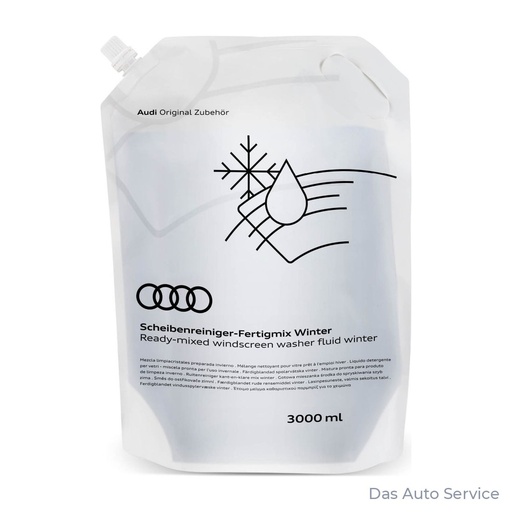
Genuine Audi winter windscreen washer fluid, 3 l
Genuine Audi winter screenwash, 3 litres. Ready to use, so there's no need to dilute it.
View in our shop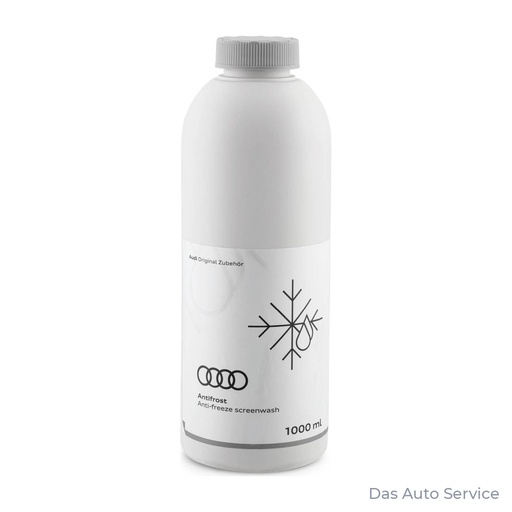
Audi Antifrost concentrated winter screenwash, 1 l
Antifrost concentrated winter screenwash, 1 litre. Dilute it according to how cold the weather is expected to get.
View in our shop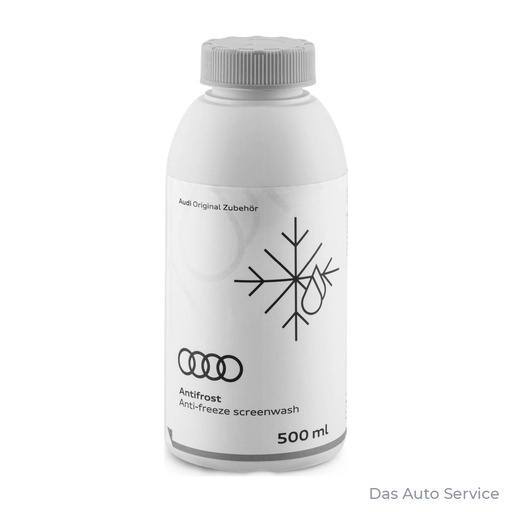
Audi Antifrost concentrated winter screenwash, 500 ml
Antifrost concentrated winter screenwash, 500 ml. A handy little bottle you can keep in the boot.
View in our shopRead more
- Front wiper blades by car model in our shop
- Everything you need for winter in our shop
- Routine servicing at Das Auto Service
- When should I fit winter tyres, and how should I store my summer tyres?
- G12, G12++, G13 and G12evo coolant: can I mix them?
- When should I replace my wiper blades, and how do I choose the right ones?
- Wiper blades in summer: tree sap, insects and dust
Frequently asked questions
Can I use water in my windscreen washer reservoir in winter?
No, mate. Water freezes and expands. And that can leave you with a cracked washer pump, damaged hoses or a split reservoir. It's just not worth it.
Can I mix summer and winter screenwash?
I'd avoid it. Mixing them can make the fluid freeze at a higher temperature than the one printed on your winter screenwash bottle. Use up the summer fluid first, then fill up with winter screenwash.
How often should I replace my windscreen wiper blades?
At least once a year, ideally in autumn. If they're already leaving streaks, juddering or scraping across the glass, don't put up with them any longer. Replace them.