"When I let go of the steering wheel on a straight road, the car slowly drifts to the right." I hear this almost every day at the workshop. And if you ask in an owners' group, someone will immediately tell you, "Get your wheel alignment done." Sometimes they're right. But do you know how many cars I've seen that have already had their alignment done and still pull to one side? And do you know why? Because the alignment wasn't the problem in the first place. It could be a single tyre, incorrect tyre pressure or a brake caliper that isn't releasing properly. I want to show you how to work out what's making your car pull to one side, what we check at Das Auto Service before we even touch the alignment, and why, on modern VAG cars, the job doesn't end with adjusting the wheels.
When exactly is your car pulling to one side?
That's the first thing I'll ask you. Because when the car starts pulling tells us an awful lot. Think about exactly when your car does it.
- It pulls constantly, at any speed and on a flat road – we start by checking the tyres, tyre pressures and wheel alignment.
- It only pulls when you press the brake pedal – we almost always start with the brakes.
- It pulls when you accelerate or lift off the throttle – we check the suspension arms, bushes and any play in the suspension.
- The steering wheel sits crooked, but the car drives straight – it's most likely an alignment issue rather than a broken part.
- It only pulls on certain roads – the slope of the road itself could be responsible.
And I'm not joking about that last one. Roads are built with a slight slope towards the verge so rainwater can drain away. So if your car drifts a little to the right on an old road, don't immediately assume something has broken. There's an easy way to check. Find a flat car park or an empty road without a sideways slope and, at low speed, relax your grip on the steering wheel for a second or two, but only if it's safe. See whether the car still pulls.
Have you checked the tyres and tyre pressures?
I know, it sounds almost too simple, but this is exactly where we start. If one front tyre has lower pressure than the other, the car may pull towards it. And sometimes the whole problem disappears after a quick top-up of air. Even if your car has TPMS, don't wait for the dashboard warning light to tell you something's wrong. Get a tyre pressure gauge and check the pressures when the tyres are cold, using the values on the sticker inside the door or on the fuel filler flap. I've also explained separately why the tyre pressure warning light can come on after changing the tyres.
But there's another, slightly trickier problem you can't spot just by looking at a tyre. We call it tyre conicity. Sometimes, during manufacturing, the belt inside the tyre ends up sitting slightly crooked. So instead of rolling straight like a cylinder, the tyre naturally tries to turn to one side. Imagine rolling a plastic cup across a table. It won't travel in a straight line, will it? Well, something similar happens with the tyre. From the outside, it looks perfectly healthy. But the car pulls. This is especially worth checking if everything was fine before you changed the tyres and the car started drifting to one side immediately afterwards.
So how do we find out? We swap the front tyres – left goes to right and right goes to left. If the car starts pulling the opposite way, or stops pulling altogether, that's a good indication that a tyre is responsible. If nothing changes, we keep looking. But! There's one important detail. With directional tyres or different tyre sizes front and rear, this kind of swap isn't always permitted. That's why it's better to have it done at the workshop.
When is wheel alignment really to blame?
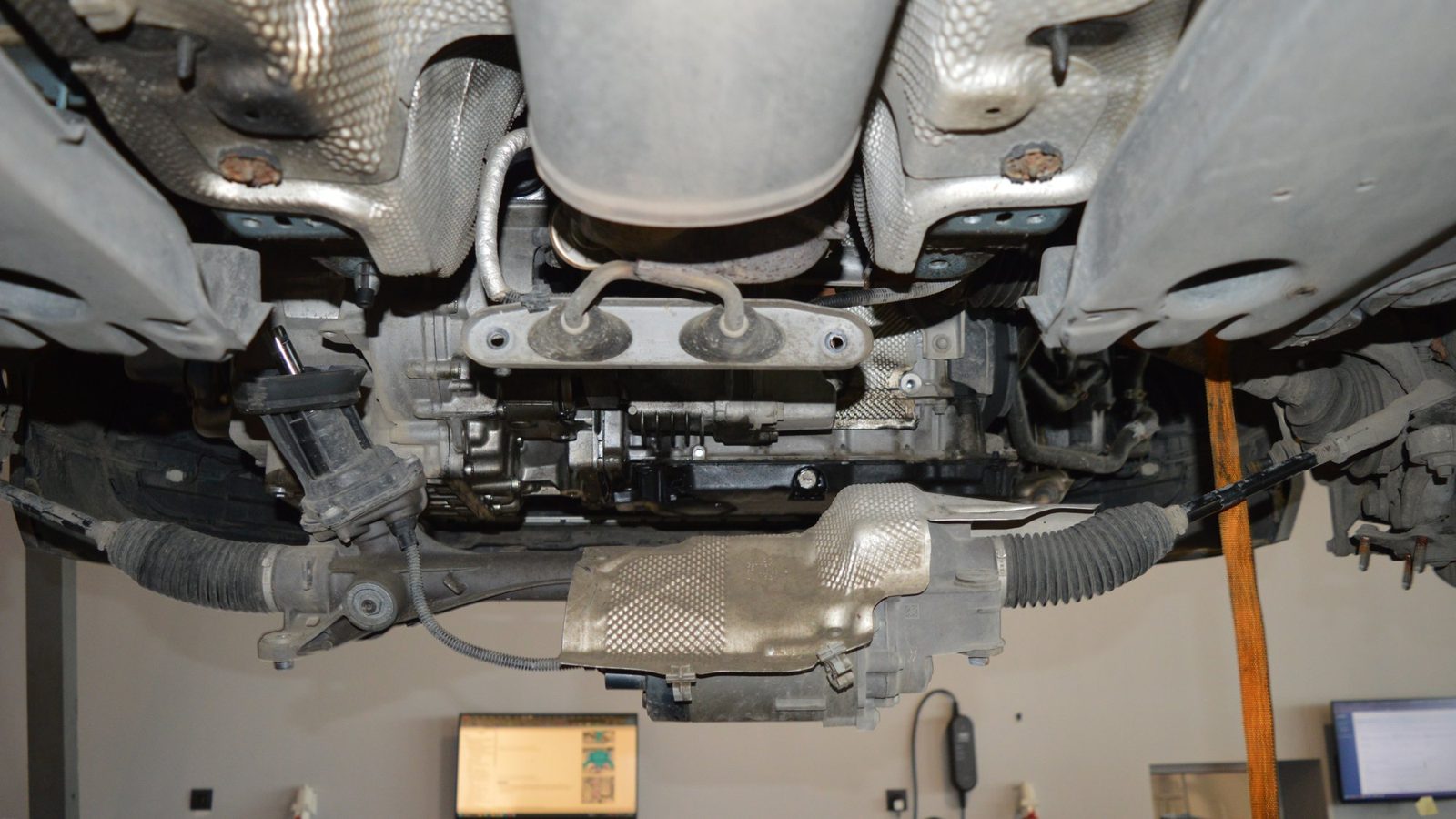
When I talk about wheel alignment, I mean the angles at which your wheels sit in relation to the car and the road. There are three main ones: toe, camber and caster. Each has its own job. So don't assume every pulling problem can be fixed by adjusting the track rods.
What does wheel camber actually do?
Stand in front of your car and look at the wheels. If one is leaning more than the other, you've found a possible reason for the pulling. Usually, the car will pull towards the side with more positive camber. Even a difference of around half a degree between the left and right wheels can be noticeable. On many VW and Audi models, there isn't a separate adjustment bolt at the front that we can simply turn to correct this angle. It depends on the position of the subframe, suspension arms and bushes. So if there's a big difference, we first look for something worn, bent or damaged by an impact. We don't just say "the alignment's out" and leave it at that.
Right, so what exactly is caster?
Caster is one of the angles that helps your car travel in a straight line and makes the steering wheel return towards the centre after a turn. If it's different on the left and right, the car will usually pull towards the side with less caster. And here, too, the problem is often mechanical. Maybe you've hit a kerb and bent a suspension arm, or a bush has gone soft. And no amount of wheel alignment, my friend, is going to straighten a bent suspension arm.
Can incorrect toe make the car pull to one side?
It can play a part, but toe is rarely the main reason a car pulls to one side. More often, we see a crooked steering wheel or tyres with badly worn inner edges. If your car drives straight but the tyres are wearing on the inside, toe is one of the first things we check. And here's something else worth knowing. If the bushes have gone soft or there's play in the suspension arms, these angles change while you're driving.
I've already talked to you separately about the suspension arms in Audi's multi-link suspension and why they start knocking. But here's the thing: you won't necessarily hear any knocking. When the bushes soften, the wheel starts moving away from its correct position under acceleration and braking. That's when you feel the car wandering or "floating" along the road. And however much we adjust the alignment, that play isn't going to disappear.
Why does the car only pull when you press the brakes?
Now we're looking at the brakes, my friend. If one side brakes harder, the car will usually pull towards that side. That could mean the brake on the opposite side isn't doing its job properly. It might be a seized caliper piston, rusty slider pins, contaminated brake pads or a brake hose that's swollen internally and interfering with normal brake pressure.
There's another possibility, too. A caliper might be dragging because it isn't releasing fully. In that case, the car can pull even when you're not pressing the brake pedal. After driving, one wheel may be much hotter than the other, you might notice a burning smell, and the car won't coast as freely as it should. That's a serious warning sign. In my article about vibrations when braking I've explained some other problems that can come from the brakes.
WARNING! If your car suddenly pulls sharply to one side when you brake, the brake pedal feels soft or the red brake warning light comes on, don't keep driving. I'm telling you this as a friend, because your safety is at stake.
Can the electric steering rack hide the problem?
Most newer VW and Audi models have an electric steering rack. And here's something interesting. Volkswagen has a patent for a function that allows the system to learn how the car travels in a straight line and use the steering rack's electric motor to compensate slightly for pulling. Sounds brilliant, doesn't it? Except the tyre could still be faulty, the alignment could still be outside specification, and you might barely feel anything through the steering wheel. Meanwhile, the tyres keep wearing. So just because you can no longer feel the car pulling doesn't necessarily mean the cause has been fixed.
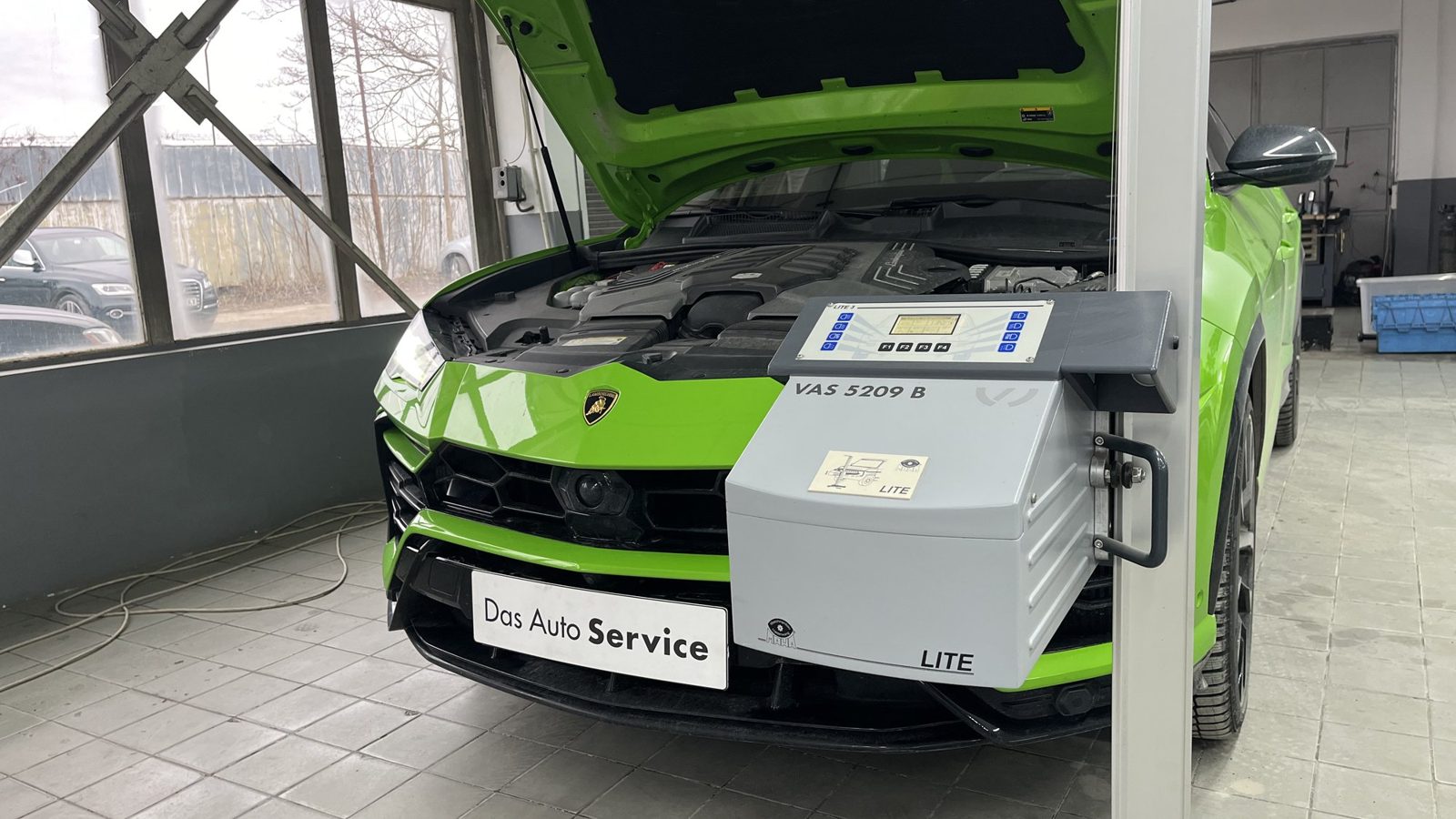
There's something else I really want you to understand. After wheel alignment, we need to check that the G85 steering angle sensor correctly recognises when the steering wheel is straight. If an adjustment is needed, we follow the procedure for that particular car. Otherwise, the ESP and driver assistance systems may receive incorrect information about the direction you're travelling. If your car has a windscreen-mounted camera and the procedure requires it, we calibrate that too, using the specialist VAS 6430 equipment. Why? Because the camera needs to be aimed precisely in relation to the direction the car is travelling. I've explained this in detail in my article about camera and driver assistance system calibration.
Why doesn't blind wheel alignment fix the pulling?
Because wheel alignment isn't a magic cure for every suspension problem. If your car pulls because of a tyre, a dragging brake caliper or a worn bush, you can spend all day adjusting the track rods. The problem will still be there. At best, you might temporarily change how the car drives or straighten the steering wheel. A week later, it could be pulling again, and the tyres could still be wearing unevenly. And do you know who pays for all that? You do, my friend. First you pay for the alignment, then another diagnosis, then the actual repair, and you might even end up needing new tyres. That's why I don't want us to start with wheel alignment until we've worked out exactly what's wrong.
How do we diagnose pulling at Das Auto Service?
We follow a proper sequence. We don't put your car straight onto the wheel alignment machine. First, we look at exactly how it behaves. That helps us work out whether the problem is with the tyres, suspension, brakes or the wheel angles themselves.
- First, we road-test the car and see exactly when it pulls – all the time, under braking or when accelerating.
- We measure the pressure in all four tyres. We check the wear patterns and look for differences between the left and right sides.
- If we suspect a tyre, we swap the front wheels from left to right, where permitted, and check whether the car starts pulling the opposite way.
- We lift the car and inspect the suspension arms, bushes, track rod ends and wheel bearings for wear and play.
- We check the brake calipers and compare how hot the brake discs get after driving.
- Only after all that do we measure the wheel alignment and make the necessary adjustments. Then we check G85 and carry out any required settings and camera calibration, if the car has a camera and the procedure calls for it.
Advice from Kris Mladenov: Here's one simple tip. Take a look at both front tyres. If one is badly worn on the inside while the other looks fine, we need to check the wheel alignment and suspension. And whenever you change your tyres every 6 months, ask the technician to have a look at the suspension arms and bushes. The wheels are already off anyway. It's much better to catch a problem early than end up paying for another set of tyres.
My recommendation, from Kris Mladenov: here's something simple I want you to remember. If your car is pulling to one side, don't rush to pay for wheel alignment. First, find out why it's pulling. Start with the tyres and tyre pressures, then check the brakes, suspension arms and bushes. Only then should you look at the wheel angles. And on newer cars, we mustn't forget the electronics either – G85, ESP, the camera and the driver assistance systems. Because a proper wheel alignment isn't just about getting the steering wheel straight. I want your car to genuinely drive the way it should. If you'd like us to find the real cause, you can bring your car to Das Auto Service for diagnostics or for wheel alignment and driver assistance system calibration.
I'm Kris Mladenov, and my mission is simple: when I know something useful, I want more people to know it too. I hope I've helped you! And if I have, I'd love you to share this article with a friend whose car always seems to be pulling one way or the other 🙂
The solution in our shop
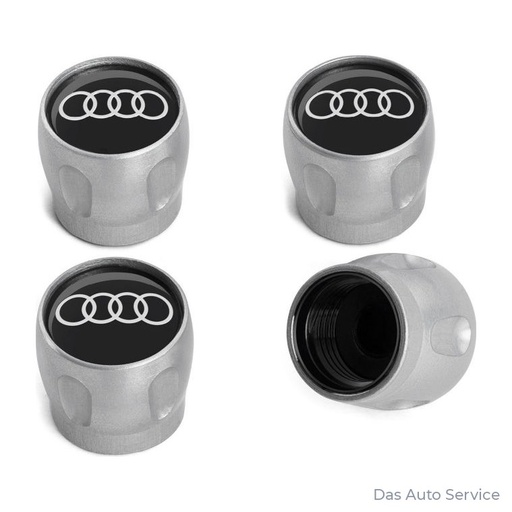
Genuine Audi tyre valve caps – they protect the valves from dust and moisture, which can contribute to a slow loss of tyre pressure.
View in our shop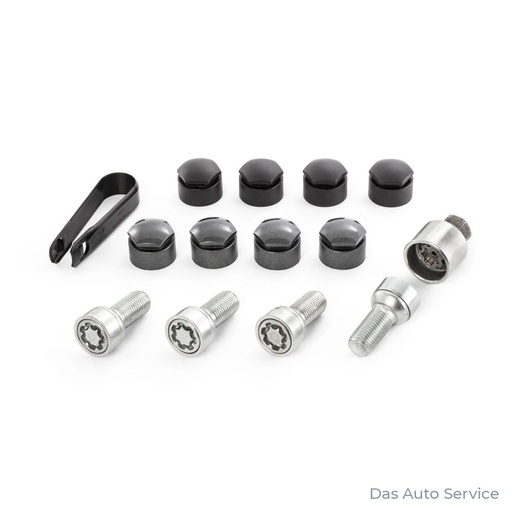
Audi locking wheel bolts M14 x 1,5 x 27
Genuine Audi locking wheel bolts – it's important to use the correct size and tighten them properly with a torque wrench.
View in our shop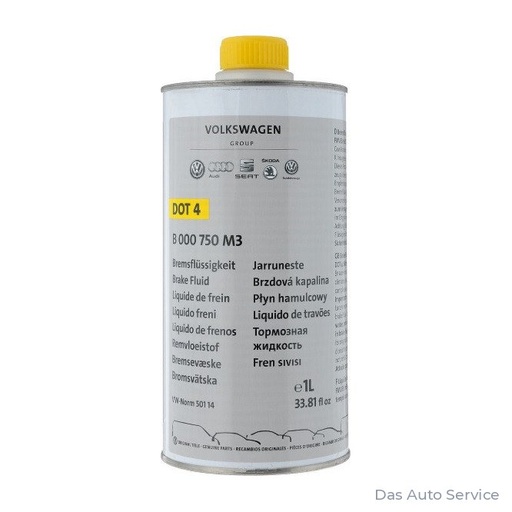
Genuine VAG DOT 4 brake fluid B000750M3 1l
Genuine DOT 4 brake fluid – we change it every 2 years and after any work on the braking system.
View in our shopRead more
- Diagnostics
- Adaptive cruise control and driver assistance system alignment
- TPMS: Why is the tyre pressure warning light on after changing the tyres?
- Vibrations when braking: Brake discs, wheel hubs or something else?
- Audi A4 and A6 multi-link suspension: Why do the suspension arms knock?
- After a windscreen replacement: Why do the camera and driver assistance systems need calibrating?
- Electric steering rack on the Golf and A3: Knocking noises and fault codes
Frequently asked questions
Why did my car start pulling to one side after changing the tyres?
Check the tyre pressures first. If they're correct, one of the tyres might have a problem with its internal belt, making it roll like a cone. Where permitted, we swap the front tyres from left to right. If the car starts pulling the other way, that's a pretty good clue. The tyre is most likely to blame.
Is it normal for my car to drift slightly to the right?
If the road slopes towards the verge, a slight pull to the right can be perfectly normal. But on a flat road with no sideways slope, your car should travel straight. If you're constantly correcting it with the steering wheel, my friend, there's something we need to check.
Why does my car only pull to one side when I brake?
Because one side is braking harder than the other. It could be a seized brake caliper, rusty slider pins, contaminated brake pads or a problem with a brake hose. Don't leave this for another day, my friend. We're talking about your safety now.
Is calibration needed after wheel alignment?
After wheel alignment, we check whether G85 is reading the steering wheel position correctly and carry out any necessary adjustment according to the procedure for your car. If you have a camera on the windscreen, we also check whether it needs calibrating. The procedure isn't the same for every model.