Half the automatic cars that come to us for a pre-purchase inspection have a DSG gearbox. And do you know what I hear from almost every seller? "The gearbox is perfect. Changes gear like clockwork." Sometimes that's absolutely true. But other times, behind that word "perfect" is a gearbox that's a month away from a repair costing half the value of the car. And that's when things get expensive. That's why I never just take the seller's word for it. Let me show you how we carry out a DSG gearbox check before buying a used car, and how we decide whether the risk is worth taking.
First, do you know which DSG gearbox the car has?
Not all DSG gearboxes are the same. The 7-speed DQ200 has a dry clutch and you'll find it in cars with smaller engines. The 6-speed DQ250 and the 7-speed DQ381 and DQ500 have wet clutches. Each has its own weak points, so we check them differently. If you'd like to understand them better, I've written separate guides to the DQ200, the DQ250 , and the DQ381 and DQ500. We use the VIN to identify exactly which gearbox is fitted to the car. Only then do we start checking it.
What should you feel during the test drive?
- First, we set off with the gearbox cold, both forwards and in reverse. The DSG shouldn't jerk or jolt when you pull away.
- Then we drive slowly, as though we're stuck in traffic. This is when it's easiest to feel whether the clutches are starting to wear out.
- We check how the gearbox shifts up and down, first with a light touch on the accelerator and then with a bit more throttle.
- We come to a stop as though we're approaching traffic lights and feel how the gearbox changes down through the lower gears. There shouldn't be any jolting.
- We also try manual mode and the steering wheel paddle shifters, if the car has them.
What does the diagnostic tool tell us?
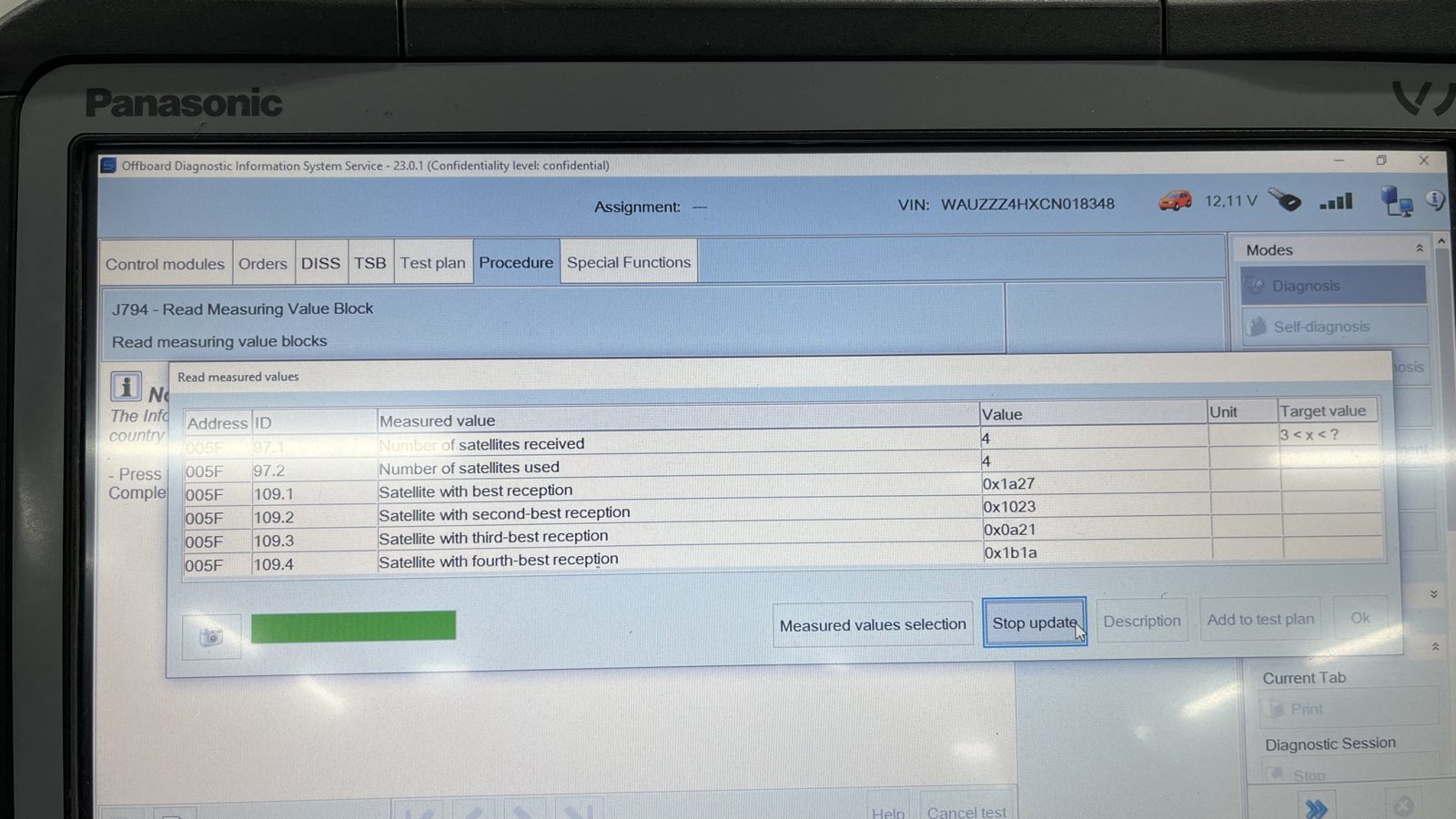
Now we get to the really important part. During the test drive, we can feel how the DSG behaves right now. But that doesn't tell us the whole story. With the diagnostic tool, we go into the gearbox control unit, its "brain", and look at the readings that help us understand how worn the components are and how the gearbox has been working up to now. For me, this check is essential before you hand over your money for the car.
- We read the fault codes stored in the DSG, including older ones. We're not just interested in whether there's a warning light on right now.
- We check the clutch adaptation values. These help us assess how much the clutches have worn.
- We check the pressure readings and gearbox oil temperature.
- We look at how many times the gearbox has been adapted and when the last adaptation was carried out.
If someone has cleared the DSG fault codes just before the inspection, I immediately become more cautious. That doesn't necessarily mean there's anything wrong with the gearbox. But! I want to know why those faults were cleared. And you should ask too.
Is there proof of when the DSG was last serviced?
I'm not satisfied with a seller simply saying, "The oil's been changed." I want to see exactly when it was done, with proof to back it up. DSG gearboxes with wet clutches need servicing every 60,000 km using a genuine service kit. If there's no service history at all, assume you'll need to service the gearbox straight after buying the car. I'm telling you this so you can plan for it now rather than get an unpleasant surprise later.
What repairs should you budget for before buying?
- A DSG service if there's no proof of when the gearbox oil was last changed.
- Clutch replacement if the adaptation values show that the clutch is already badly worn.
- A mechatronic unit repair – that's the gearbox's brain – if there are pressure-related fault codes or signs that the gearbox has gone into limp mode.
Advice from Kris Mladenov: I'm not telling you to avoid cars with DSG gearboxes. Quite the opposite. You could find yourself a really good car. But get it checked with a diagnostic tool first, and only then listen to how beautifully the seller says it changes gear. An inspection costs about as much as a gearbox service, but it could save you from paying for a clutch or mechatronic unit repair. So don't fall for "it changes gear like clockwork" without checking.
I genuinely hope your next car has a DSG that really does change gear like clockwork, rather than one where that's just what the seller tells you. If you've found this article useful, send it to a friend who's looking for a car. You might save them a lot of headaches.
The solution in our shop
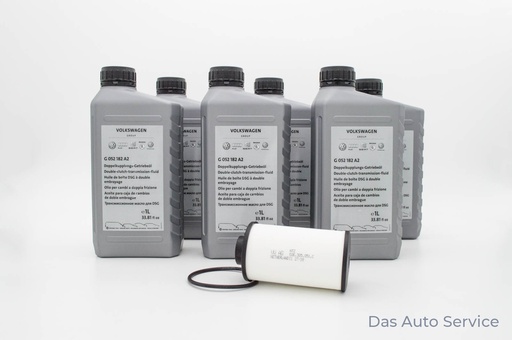
Service kit for a 6-speed DSG gearbox
Genuine service kit for a 6-speed DSG gearbox if you've bought the car without any history of when the gearbox oil was last changed.
View in our shop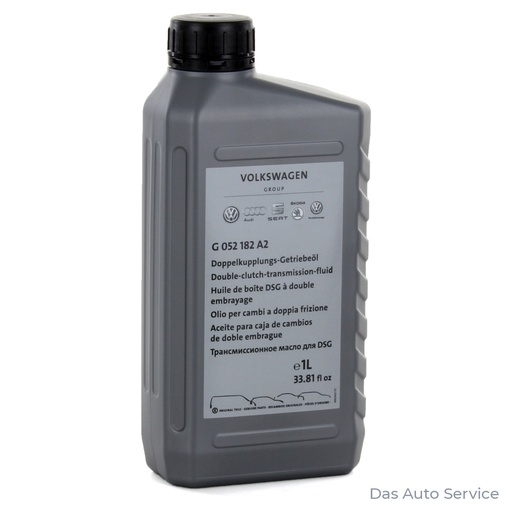
Genuine DSG gearbox oil G052182A2 1 l
Genuine G 052 182 oil for a wet-clutch DSG gearbox.
View in our shopRead more
- Pre-purchase car inspection
- Gearbox repairs
- DSG DQ200 with dry clutch: why does the gearbox jerk and jolt?
- DSG DQ250: when does the mechatronic unit fail and what should you do?
- DSG DQ381 and DQ500 with wet clutches: when should you change the oil?
- How is mileage rolled back on VAG digital odometers?
- How can I check a VAG car's genuine service history?
Frequently asked questions
How do you check a DSG gearbox before buying a car?
First, we drive the car from cold and at low speeds, just like in stop-start traffic, to feel whether the DSG jerks or jolts. Then we connect the diagnostic tool. We check stored fault codes, clutch adaptations, pressure readings and when the gearbox oil was last changed. A quick drive around the block won't tell you everything.
How can I tell how worn the DSG clutch is?
We use the diagnostic tool to check the clutch adaptation values in the DSG's measuring blocks. These help us assess how much wear there is on the clutches.
Should I service the DSG straight after buying the car?
Yes, if you have no proof of when the gearbox oil was last changed. Don't just take the previous owner's word for it.