Your engine warning light comes on. A diagnostic scan shows a lambda sensor fault or a catalytic converter efficiency fault. And straight away, someone says, "Replace the sensor" or "The catalytic converter's finished." But here's the thing, my friend. Very often, neither is actually to blame. They're simply telling us that something else isn't right with the engine. And if we start replacing parts blindly, you're the one paying the bill out of your own pocket. The original problem might still be there, too. That's why, when it comes to VAG lambda sensor problems, I always want to find the real cause first.
What do lambda sensors actually do?
The lambda sensor before the catalytic converter measures how much oxygen is in the exhaust gases. The engine's computer uses those readings to adjust the fuel and air mixture. The sensor after the catalytic converter checks whether the converter is doing its job. Put simply, these two sensors are the computer's eyes when it comes to combustion and the catalytic converter. But here's the important bit! Just because a sensor is reporting a problem doesn't mean the sensor itself is faulty.
When are VAG lambda sensor problems caused by something else?
- The engine is drawing in air where it shouldn't — through a split hose, a leaking seal or a problem with the crankcase ventilation system.
- There's an exhaust leak before the sensor, causing it to give incorrect readings.
- One of the cylinders is misfiring — the culprit could be an ignition coil, a spark plug or an injector.
- There's a problem with the fuel itself or the fuel pressure.
- Old engine oil is getting into the combustion process through the crankcase ventilation system.
When does the catalytic converter really need replacing?
One of the most common things that kills a catalytic converter is an engine misfire. When a cylinder doesn't burn its fuel properly, some of that fuel reaches the catalytic converter and starts burning inside it. The temperature rises so much that the converter can actually melt. If you've been driving for a long time with a flashing engine warning light, there's a very real chance it's already been damaged. But! Even then, we fix the cause of the misfire first. Otherwise, you fit a new catalytic converter and eventually destroy that one too. And that's an expensive mistake you'll be paying for, not the garage.
How do we find the real cause?
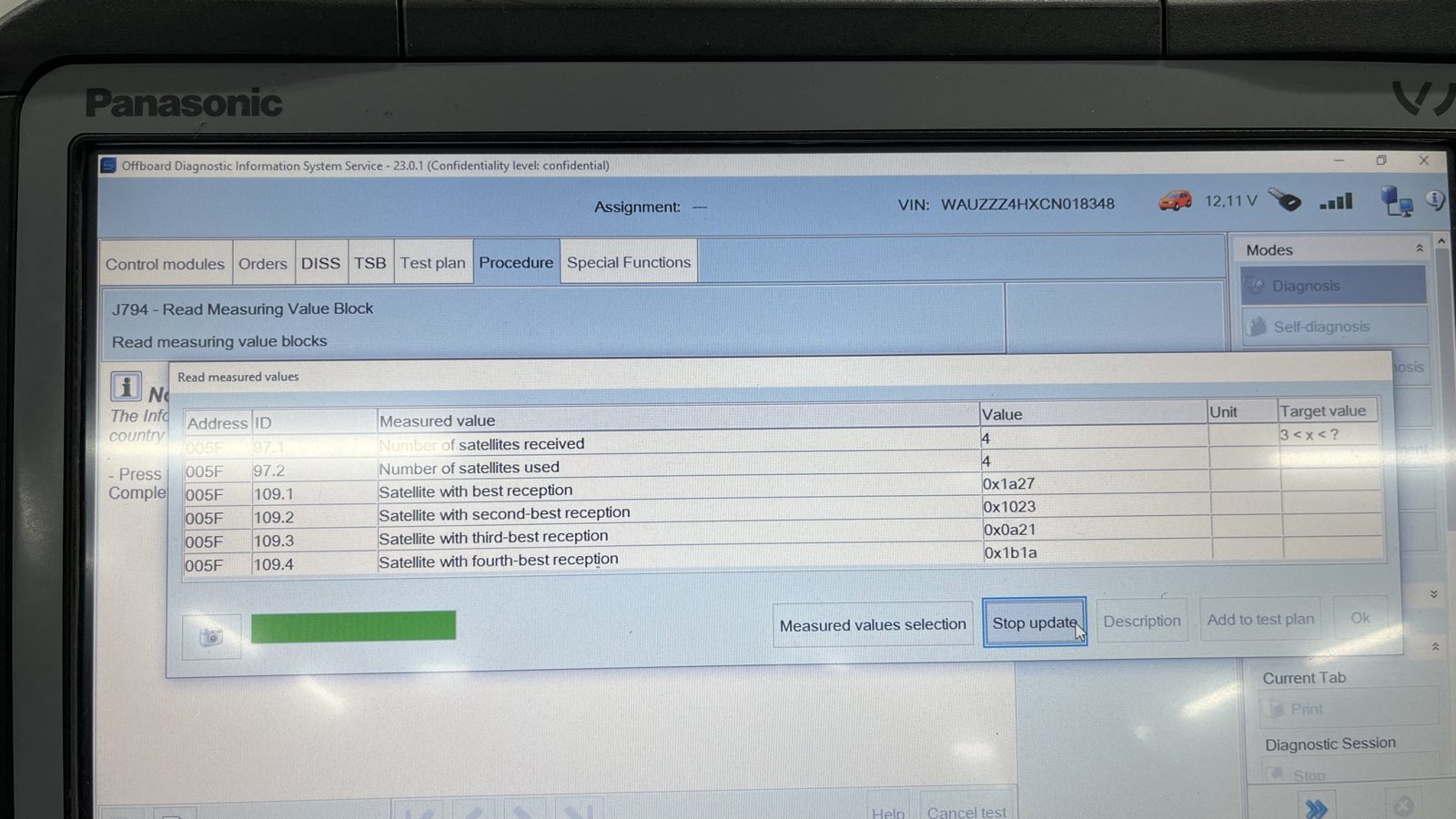
- We start by reading the fault codes and checking the exact conditions under which they were stored.
- We monitor the fuel trim values and lambda sensor readings while the car is being driven.
- We check for unwanted air entering the engine and for leaks in the exhaust system.
- We check the ignition coils, spark plugs and fuel injection system to rule out cylinder misfires.
- Only after all these checks do we tell you which part actually needs replacing.
If the engine warning light is flashing, don't keep driving. A misfiring cylinder can destroy your catalytic converter very quickly. And catalytic converters certainly aren't cheap.
Why can aftermarket lambda sensors cause problems?
Cheap lambda sensors often respond more slowly or give readings that differ from the original sensors. The engine runs and the car seems to drive normally, but the computer can no longer adjust the fuel mixture quite as accurately. Fuel consumption starts creeping up, and after a while, the engine warning light comes back on. And you're left wondering, "How can that be? The sensor's brand new!" That's exactly the catch. With lambda sensors, you can notice the difference between a genuine part and "something similar" surprisingly quickly.
Advice from Kris Mladenov: If your engine warning light is on but the car is driving normally, don't rush to clear the fault code. It gives us a clue about where to start looking for the problem. If you erase it without knowing why it appeared, you're only making the diagnosis harder.
If your engine warning light is on and you don't know why, bring your car to Das Auto Service and we'll take a look. We'll find out where the problem is coming from before we start replacing expensive parts. Because fitting a new lambda sensor is easy. But I want us to be sure it's actually the culprit first.
Read more
- Vehicle diagnostics at Das Auto Service
- Routine servicing at Das Auto Service
- 1.8 and 2.0 TFSI: Ignition coils and spark plugs
- What should I check before my annual vehicle inspection?
- 2.0 TFSI burning oil and whistling: Crankcase ventilation problems
- Diagnostic scans: What the measuring blocks tell us
- Dashboard warning lights: Which are serious and which can wait
Frequently asked questions
The engine warning light is on for a lambda sensor fault. Should I replace it?
Don't rush to replace it. Let's first check whether the sensor itself is faulty or whether it's simply picking up a problem somewhere else. Otherwise, you could pay for a new sensor and find that nothing has changed.
What most commonly damages a catalytic converter?
Engine misfires, especially if you keep driving with a flashing engine warning light. Unburnt fuel enters the catalytic converter, makes it incredibly hot and can actually melt it.
Can I drive with the engine warning light on?
If the light stays on and the car drives normally, you can make a short journey to get it diagnosed. But if it's flashing, stop. It's not worth risking your catalytic converter.