"My ESP light is on, but the car drives perfectly normally. Is it safe to carry on?" I hear this question every week, both at the workshop and over the phone. Look through the online groups and you'll find all sorts of advice, from "just clear the fault and keep driving" to "your ABS module is finished". But there's something important I want you to understand. A yellow ABS or ESP warning light rarely means your car has lost its brakes. What it almost always means, though, is that one of the systems designed to protect you is no longer working. So I'll explain what each warning light means, the most common causes on VAG cars and when you can carry on carefully. Most importantly, I'll tell you when you need to stop.
What's the difference between ABS and ESP?
ABS stops your wheels from locking up when you brake hard. That means you can still steer around an obstacle instead of sliding straight towards it. ESP (also called ESC on newer VW and Audi models) protects you in another way. It monitors where you're pointing the steering wheel and where the car is actually going. If it senses the car starting to skid, it can apply the brake to an individual wheel and reduce engine power.
Here's something I really want you to remember. ABS and ESP rely on the same wheel speed sensors and the same control module. So when ABS fails, ESP usually stops working too. Both warning lights come on together. But that certainly doesn't mean you've got two separate faults.
Why does the ESP light flash or stay on continuously?
There's a difference. And it's a very important one.
- The ESP light flashes for a second or two when you pull away on a wet road, on ice or around a bend – don't worry. The system is stepping in and doing its job. There's no fault.
- The ESP light stays on continuously – either you've switched the system off using the button or it has logged a fault.
- The ABS light stays on continuously – ABS is no longer working. Your normal brakes still work, but the wheels could lock up if you brake hard.
- The ABS light comes on together with the red brake warning light – there may be a problem with the braking system or the brake fluid level may be too low.
WARNING! If the red brake warning light comes on alongside the ABS light, pull over somewhere safe and do not continue driving. The electronic brake force distribution system, which balances braking between the front and rear wheels, may also have stopped working. Under heavy braking, the rear of the car could skid. This isn't the time to tell yourself, "I'll somehow make it to the garage." Call for recovery.
What causes ABS and ESP warning lights on VAG cars?
At Das Auto Service, we see these problems regularly, and the causes are often the same. I'll take you through them in the order we come across them most often.
Wheel speed sensor
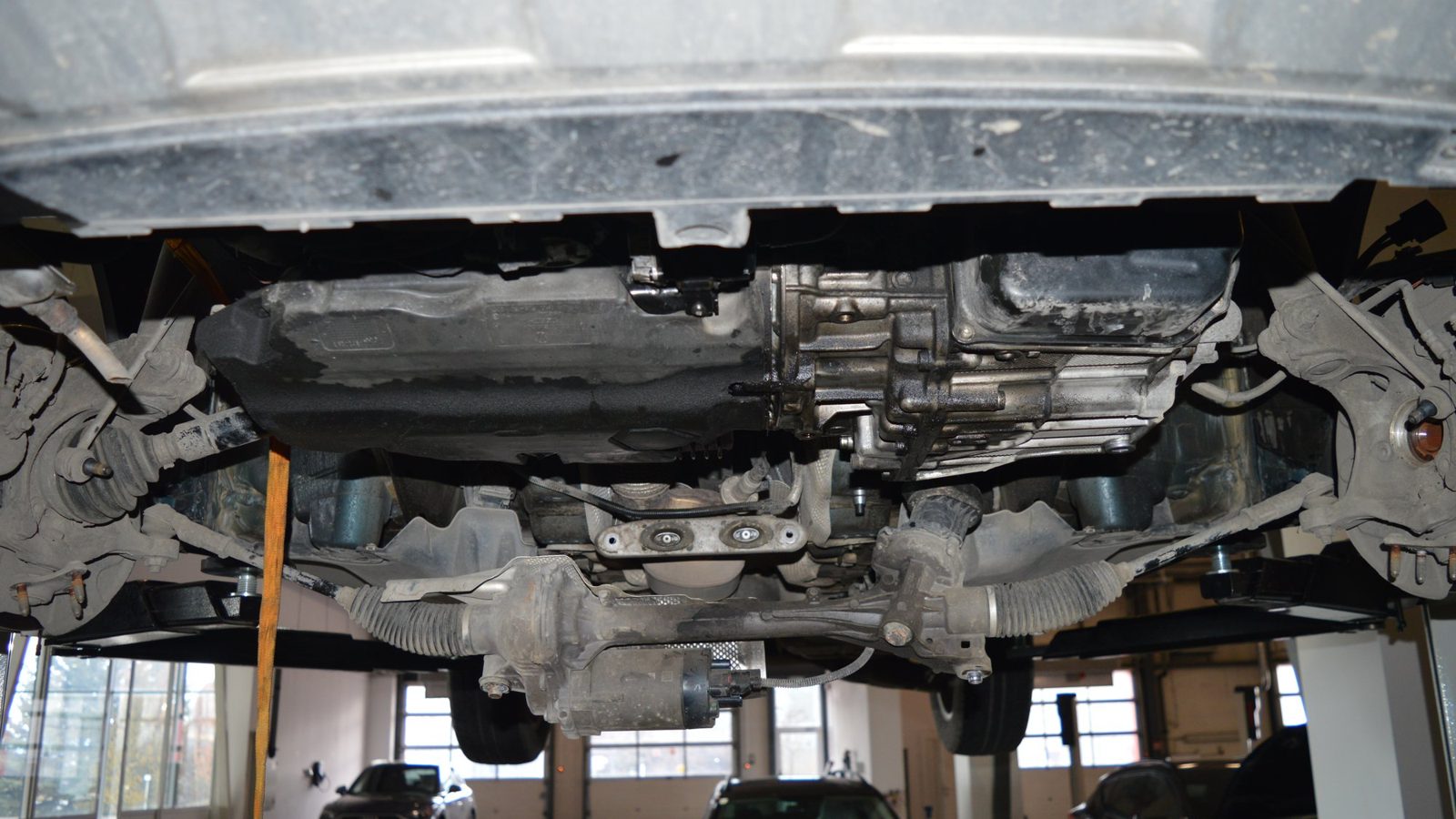
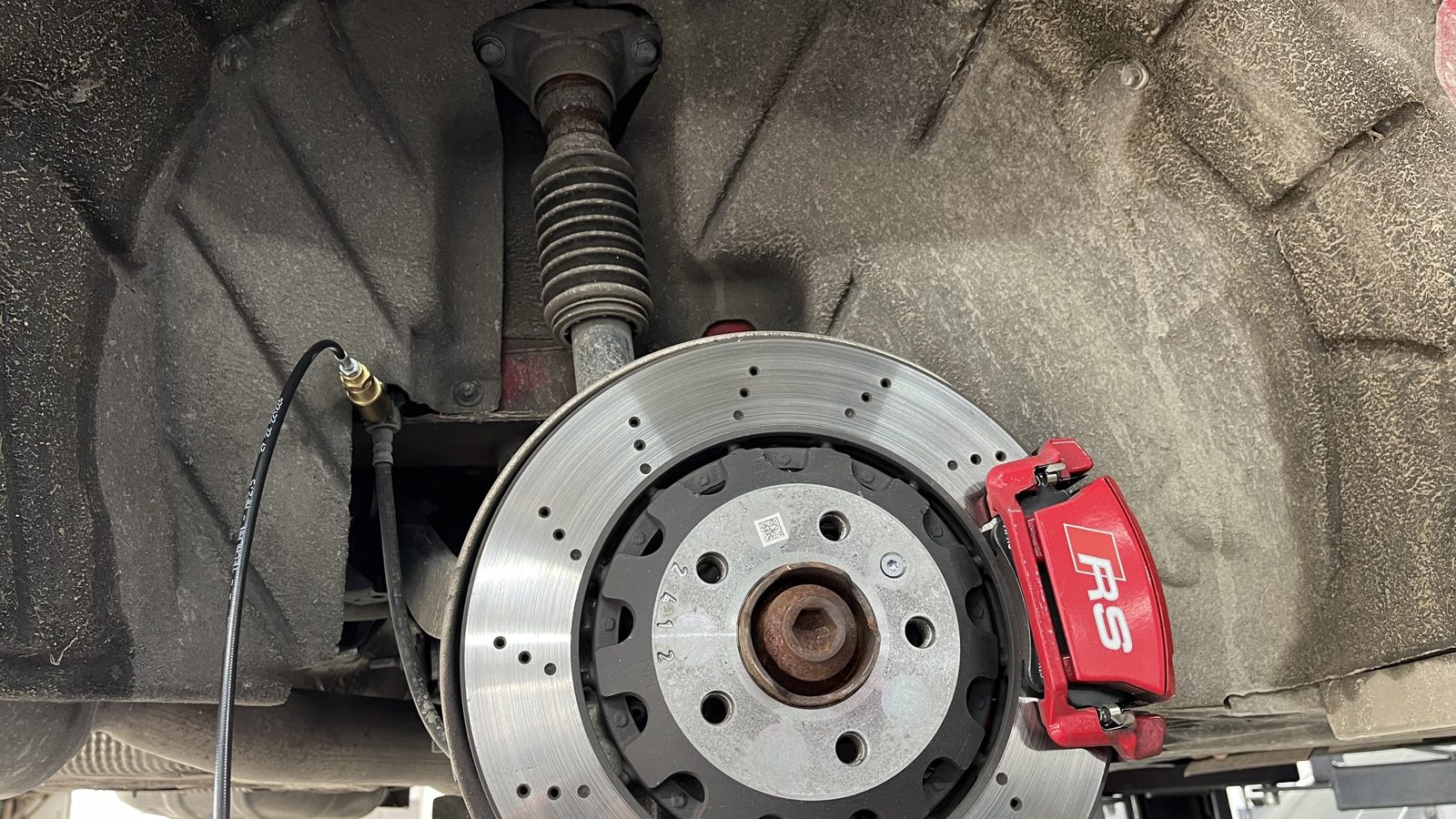
This is the most common culprit. The sensors sit next to the wheel hubs, where they're constantly exposed to water, mud and road salt. Over time, the wiring can crack or break, and the connectors can corrode. The good news is that a diagnostic scan will usually tell us exactly which wheel is causing the problem. Fault code 00283 points to the front-left sensor G47, 00285 to the front-right sensor G45, 00290 to the rear-left sensor G46 and 00287 to the rear-right sensor G44. That means we don't have to guess which of the four is at fault.
But! There's a catch. Just because the diagnostic tool reports a sensor fault doesn't mean you should rush out and buy a new sensor. The problem could be the magnetic ring in the wheel bearing, which the sensor reads to measure wheel speed. The ring might be dirty or cracked, or the bearing itself might have play in it. That's why we check the wiring and the signal in the live data first, then inspect the bearing, and only then decide what needs replacing. Otherwise, you end up replacing parts blindly, and guess who pays for all those unnecessary parts? You do. Not the garage.
Weak battery
The ABS and ESP control module is very sensitive to voltage. If your battery is getting weak, particularly on a cold morning, you might start the engine and suddenly see the ABS, ESP and several other warning lights come on together. Drive for a little while and they disappear. That doesn't mean several systems have suddenly broken down. It simply means the voltage dropped too far when you started the engine. I've explained this in another article too – why a new battery needs to be coded.
Steering angle sensor after a wheel alignment
This one's a classic. You have a wheel alignment done, drive away from the garage and the ESP light comes on at the very first corner. Often, the reason is that the G85 steering angle sensor hasn't been calibrated. After adjusting the front wheel alignment, a basic setting needs to be carried out using a diagnostic tool. This tells the ESP system which steering wheel position corresponds to driving straight ahead. If someone skips that step, the system may detect a difference between where the steering wheel is pointing and where the car is actually travelling. And it may switch itself off.
ABS and ESP control module
Less commonly, the control module itself is to blame. It may have an internal fault, or its connector may have corroded. This is where guessing really isn't an option. We carry out a full diagnostic check first, and only then do we even consider replacing the module. It's an expensive part, and after replacement it needs to be coded and configured for your particular car. Second-hand parts aren't the answer for this repair. Because if someone replaces your module without doing the proper checks and the warning light comes straight back on, guess who's paying for that mistake. You are.
Can I just clear the fault code and carry on driving?
Of course you can clear it. But that isn't a repair. If the problem was a weak battery and you've already replaced it, the fault might never come back. But if there's a problem with a sensor, wiring or wheel bearing, the warning light will come back on after a few kilometres. And in the meantime, you're driving without working ABS and ESP, thinking everything is fine. That's exactly what worries me.
So what can you do yourself? Switch the engine off, start it again and pull away slowly. If the warning light goes out and stays off, you should still have the car checked with a diagnostic tool. The fault remains stored in the module's memory and can help us work out where the problem started. If the warning light stays on, book an appointment so we can check the car.
Advice from Kris Mladenov: If your ABS warning light comes on, check the brake fluid level in the reservoir under the bonnet too. If it's below the minimum mark, don't just top it up and carry on driving. There could be a leak, or your brake pads might be nearly worn out. I've explained more about this in my article on brake fluid for VAG cars.
When should you stop, and when is it safe to drive?
- The ABS light and red brake warning light come on together – pull over somewhere safe immediately. Do not continue driving.
- The brake pedal feels soft, sinks towards the floor or the car pulls to one side when braking – stop immediately.
- The ABS or ESP light is on, but the brakes are working normally – you can drive carefully, avoiding sudden braking, straight to a garage.
- The ESP light only flashes when the wheels lose traction – don't worry, that's normal. The system is doing its job.
One of the worst times to be without ESP is in winter. On ice or wet leaves, this is exactly the system that can help when your car starts to skid. And while you're driving along normally, you might not even notice it isn't working. You'll only find out when you really need it. That's why I don't want you to ignore that warning light.
How do we diagnose the problem at Das Auto Service?
We start by scanning all the control modules, not just the ABS module. Why? Because a power supply problem, or even an engine fault, can disable ESP. Then we look at the live data and compare the wheel speeds reported by all four sensors. If one sensor is showing something different from the other three, we know where to start looking.
We check the wiring, connector and wheel bearing. Only then do we replace the sensor, if it's genuinely the cause. After suspension work or a wheel alignment, we also calibrate the steering angle sensor. We use genuine parts because an aftermarket sensor can sometimes produce a signal that's "almost" the same as the original. But as far as the ABS module is concerned, that "almost" can be more than enough to trigger another fault.
My advice, from Kris Mladenov: I'll keep this simple. If the yellow ESP or ABS warning light comes on, don't panic. But don't pretend you haven't seen it either. Your car might brake perfectly normally when you're driving gently, only for you to discover that some of the systems designed to protect you aren't there when things get serious. Don't just clear fault codes or buy parts blindly. Find the cause first, then fix it using genuine parts. If you'd like us to take a look at your car, you can book an appointment with us for diagnostics or routine servicing.
I'm Kris Mladenov, and I write these articles because I want to help you avoid unnecessary repairs and costly mistakes. I hope this has helped. If it has, share it with a friend who's also got a warning light glowing on their dashboard. 🙂
The solution in our online shop
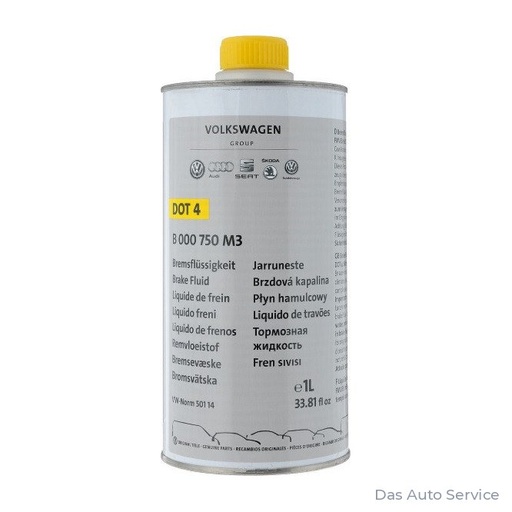
Genuine DOT 4 brake fluid B000750M3 Audi/Volkswagen 1 litre
Genuine DOT 4 brake fluid – replace it every 2 years and after every brake repair.
View in our shop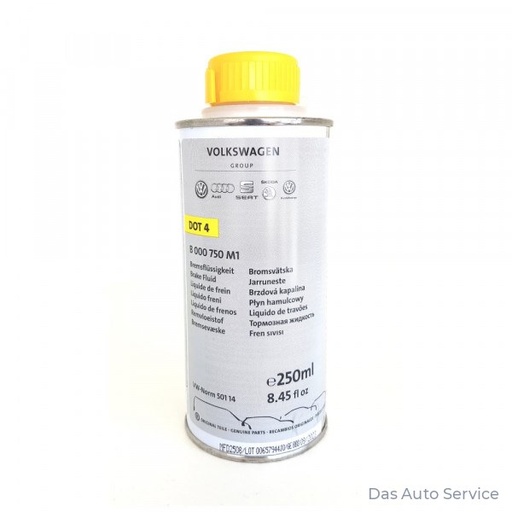
Genuine DOT 4 brake fluid B000750M1 Audi/Volkswagen 250 ml
Small bottle of DOT 4 brake fluid – only top up if your garage has told you to.
View in our shop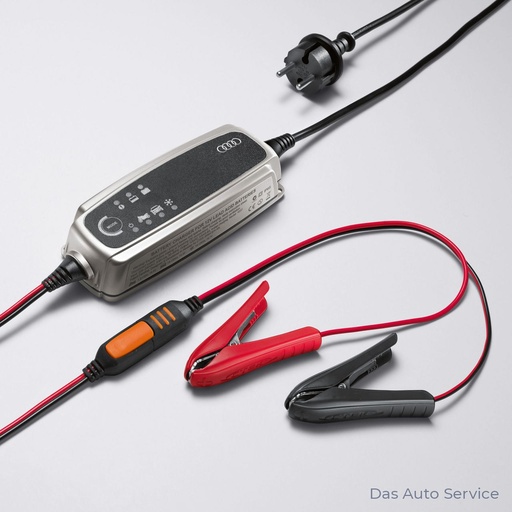
Genuine Audi battery charger – helps maintain your battery when the car is parked for long periods or only used for short journeys.
View in our shopRead more
- Diagnostics
- Routine servicing
- Why does Start/Stop stop working in winter, and why does a new battery need coding?
- Brake fluid for VAG cars – does it need changing, and when?
- VAG brakes: when should I replace the brake discs and pads together?
- TPMS: why is the tyre pressure warning light on after changing tyres?
Frequently asked questions
Can I drive with the ABS warning light on?
Yes, but only carefully and straight to a garage, provided your brakes are working normally. If the red brake warning light comes on alongside the ABS light, pull over somewhere safe. Do not continue driving.
Why do the ABS and ESP warning lights come on together?
Because both systems use the same wheel speed sensors and control module. When ABS fails, ESP usually stops working too. It doesn't necessarily mean you've got two separate faults.
Why is the ESP warning light on after a wheel alignment?
Most often, the G85 steering angle sensor hasn't been calibrated after the wheel alignment. The calibration is carried out using a diagnostic tool.
Can a weak battery trigger the ABS warning light?
Yes. When the voltage drops, the ABS and ESP control module can log a fault and several warning lights may come on at once. This is particularly common on cold mornings.