"Kris, I've found a set of 5x112 wheels. That means they'll fit my car, right?" I hear this all the time, and I understand why people think that. You see five bolt holes, the bolt pattern matches, and it looks like there's nothing to worry about. But there is. Apart from the bolt pattern, there are three other important measurements that determine whether a wheel fits properly. Get them wrong, and instead of enjoying your new wheels, you could end up with a problem you never saw coming.
What does 5x112 actually mean on alloy wheels?
It's really simple. The 5 means the wheel is held on by five bolts, while 112 is the diameter, in millimetres, of an imaginary circle passing through the centres of those bolt holes. You'll find this bolt pattern on most modern VW, Audi, Škoda and SEAT models. And this is where the confusion starts. A lot of owners assume that if two cars both have a 5x112 bolt pattern, their wheels must be interchangeable.
Imagine two wheels that look identical at first glance. Both have five bolt holes, and both are 5x112. But one might not sit properly on the hub, while the other could rub against the suspension. So 5x112 only tells you how the bolt holes are arranged. It doesn't tell you whether the whole wheel is suitable for your car. And there's a big difference between a wheel you can physically bolt on and one that's actually safe to drive on.
What else should I check for 5x112 wheels compatibility?
Now, I really want you to pay attention here, because these are exactly the details people overlook when buying second-hand wheels or a set they've spotted on another car. It's not enough for the seller to say, "They came off an Audi, mate. Of course they'll fit your VW." You need to know the centre bore, ET (offset), wheel width and diameter. Every single one matters.
- Centre bore. This is the hole in the middle of the wheel that fits over the hub. On VW, Škoda and SEAT models, it's usually 57.1 mm, while on most Audis it's 66.6 mm. If the wheel's centre bore is larger than the hub, you'll need the correct spigot rings. These help keep the wheel properly centred rather than sitting slightly off-centre.
- ET, or wheel offset. This number determines how far inwards or outwards the wheel sits relative to the hub. Get the offset wrong, and the wheel could stick out too far beyond the wheel arch or rub against suspension components. And just because you can bolt a wheel onto the car without any trouble doesn't mean it's the right fit.
- Width and diameter. These are probably the first measurements you look at when deciding how you want your car to look. But not every width or diameter is approved for your model. You need to stick to the sizes specified for your particular car, rather than choosing purely because the wheels look great in a photo.
You'll see people in owners' groups saying they've fitted a particular set of wheels and everything's fine. And that might well be true. But their car isn't necessarily the same as yours, even if it's the same make. That's why I never choose wheels based on a photo or someone's promise that "they'll fit, mate". I check the measurements first. Then we can talk about whether the set is actually suitable.
Can I reuse my old wheel bolts with new wheels?
Here's another detail far too many people overlook. VAG wheels are secured with bolts, not nuts, and not every bolt works with every wheel. What matters is the shape of the surface inside the wheel where the bolt head sits. We call this the bolt seat. Original wheels have a ball-shaped seat, while many aftermarket wheels use a conical seat.
If you use a bolt with a ball seat in a wheel that needs a conical one, it won't sit properly. And the same goes the other way round. You might be able to screw it in, and it might even feel tight, but that doesn't mean it's holding the wheel securely. So whenever you change your wheels, check the bolts too. Never assume the old ones will automatically fit.
How should wheel bolts be tightened?
With a torque wrench, to the exact torque specified by the car manufacturer. The bolts should be tightened in a diagonal, criss-cross pattern so the wheel seats evenly against the hub. Not by hammering them tight with an impact gun until the mechanic decides they're tight enough. An impact gun is no substitute for tightening bolts properly.
I've written in detail about why we use a torque wrench. Back in 2019, I raised the same issue in my article How Were Your Winter Wheels Tightened?. There's a simple reason I keep talking about this. A wheel shouldn't just be tight. It needs to be tightened correctly.
WARNING! A wheel fitted with the wrong bolts, or bolts that haven't been tightened correctly, can come loose while you're driving. This is serious, and it's absolutely not something to experiment with. If you're not sure the bolts are right or have been tightened properly, get them checked before you drive away.
Which wheels would I choose for my own car?
I'd start with genuine wheels designed for my particular model. If I found another set I liked, I'd check every measurement before buying. Not just the 5x112 bolt pattern, but the centre bore, ET, width, diameter and the bolts required. Then I'd have them fitted at a workshop that uses a torque wrench. It's not complicated. It just needs to be done properly.
And one more thing. If you're getting your car ready for winter, don't forget about snow chains as well as the right wheels and tyres. Snow chains also need to match your tyre size. Don't buy a set just because the packaging says Audi.
Tip from Kris Mladenov: After fitting new wheels, have the wheel bolt torque checked again after 50–100 km. During those first few miles, the contact surfaces can settle slightly. It's a small check I certainly wouldn't skip. After all, we're talking about the wheels that carry your entire car.
I hope you've found this article useful! If you have, I'd really appreciate you sharing it with a friend who's looking for new wheels or has already spotted a set of 5x112 alloys. My mission has always been the same: when I know something useful, I want more people to know it too. Because I'd much rather explain these things to you now than see you paying out of your own pocket later for a mistake we could easily have avoided.
The solution in our shop
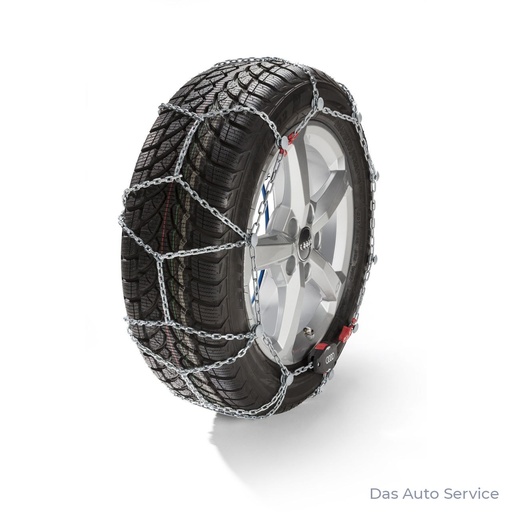
Audi snow chains, comfort, for tyres 205/60 R16, 205/55 R16, 205/50 R17
Genuine Audi snow chains. Make sure you choose the correct ones for your car's tyre size.
View in shop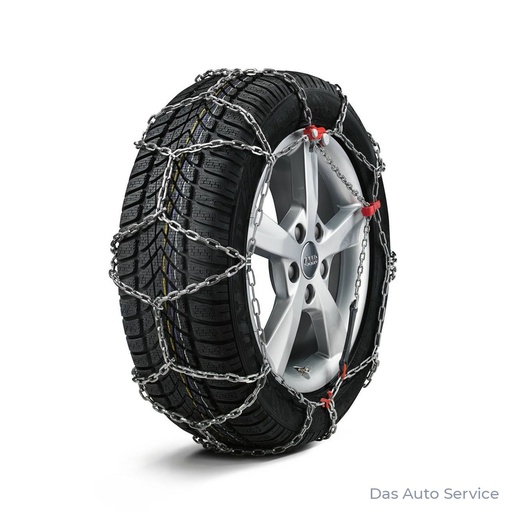
Audi snow chains, basic, for tyres 205/60 R16
Genuine Audi snow chains, entry-level range. Again, the most important thing is to check that they're suitable for your tyre size.
View in shopRead more
- Routine servicing
- Wheel Bolt Tightening Torque: Are Your Wheels Safe?
- Torque Wrench for Car Bolts: Why It Matters
Frequently asked questions
Which 5x112 wheels will fit my VW?
Wheels that have not only the correct 5x112 bolt pattern, but also the right centre bore, ET, width and diameter for your specific model. Check which wheel bolts they require before fitting them, too.
What does ET mean on alloy wheels?
ET is the wheel offset. It tells you how far inwards or outwards the wheel sits relative to the hub. If the offset is wrong, the wheel could stick out beyond the wheel arch or rub against the suspension.
Do I need spigot rings for 5x112 wheels?
If the wheel's centre bore is larger than your car's hub, you'll need the correct spigot rings. They help keep the wheel properly centred on the hub.
Can I tighten wheel bolts using only an impact gun?
No. Wheel bolts must be tightened in a criss-cross pattern using a torque wrench, to the exact torque specified by the manufacturer.