The red battery warning light comes on, your headlights start to dim, and you think, "The battery must be on its way out." I hear this all the time at the workshop. But sometimes the battery is perfectly fine, and the real problem is the alternator – the part that generates electricity while your engine is running. The good news is that an alternator rarely gives up without warning. It usually gives you a few clues first. And if you spot them early, you can get it sorted at the workshop instead of waiting for roadside assistance somewhere along the way.
How Can I Tell If My Alternator Is Not Charging?
Your car has ways of telling you when it's not getting enough electrical power. The trouble is, the signs of an alternator not charging can look very similar to a weak battery or an electrical fault. That's why I want you to know what to look out for before you start replacing parts and hoping for the best. Here are five warning signs you really shouldn't ignore.
- The red battery warning light comes on. This is the clearest sign that something is wrong with the charging system. It doesn't necessarily mean the battery itself is faulty. The alternator might simply not be supplying enough power.
- The headlights and dashboard lights dim at idle. You're stopped at traffic lights and notice the lights getting weaker. That could mean the alternator is struggling to maintain the correct voltage.
- The battery keeps going flat even though you drive regularly. You're using the car all the time, yet the battery still runs down. Before rushing out to buy a new one, check whether it's actually getting enough charge.
- Fault codes appear in different control modules and Start/Stop stops working. Suddenly, your dashboard looks like a Christmas tree. And all those warnings might have one simple cause – low voltage confusing the car's electronics.
- You hear a squealing noise from the belt. Especially if the sound is coming from around the alternator. Don't dismiss it as normal engine noise. The belt and pulley are directly involved in driving the alternator.
Here's the tricky bit. These symptoms don't always appear together. You might notice your headlights dimming first, then see the battery warning light come on weeks later. So don't wait until you've collected every symptom on the list. Your car isn't going to send you a polite invitation to book a workshop appointment.
Why Does an Alternator Stop Charging?
An alternator isn't just one component that either works or doesn't. Inside, you've got a voltage regulator and brushes. Outside, there's a pulley, and the belt keeps everything turning while the engine runs. Then the electricity has to travel through the cables and connections to reach the battery. If something goes wrong anywhere along that route, charging suffers. Here's what we check most often.
- The voltage regulator and brushes. The regulator controls the voltage, while the brushes help the alternator do its job. When they wear out or fail, charging can become unreliable or stop altogether.
- The overrunning alternator pulley. This lets the alternator rotate smoothly without taking unnecessary jolts from the engine. When it stops working properly, you can get strange noises and problems with the belt.
- The belt and tensioner. The belt drives the alternator, and the tensioner keeps the belt at the correct tension. If the belt slips or the tensioner isn't doing its job, the alternator won't turn as it should.
- The cables and earth connections. Even if the alternator itself is working perfectly, a poor electrical connection can prevent the battery from charging properly. The earth connection provides the return path for electricity through the car's electrical system.
There's something important I want you to understand here. Not every charging problem means you need a complete new alternator. Sometimes the fault is somewhere around it. That's why I don't like diagnoses that go, "Battery light's on, so let's replace the alternator." First, we find out what's actually wrong. Then we decide what needs repairing.
How Do You Check Whether the Alternator Is Working?
We start with measurements, not guesses. Reading fault codes with a diagnostic tool, clearing them and declaring everything fine simply isn't enough. We need to see what's actually happening with the charging system while the engine is running. And not just while the car is sitting there quietly at idle.
- First, we measure the voltage with the engine running. Around 14 V is a useful guide. Then we switch on electrical equipment and check whether the charging system continues to work properly.
- We check the current and the signal waveform with diagnostic equipment. This tells us more than simply whether the battery is receiving a charge. It helps us see whether the alternator itself is working correctly. A voltage reading alone doesn't always tell the whole story.
- We inspect the belt, tensioner and pulley. We're looking for whatever might be causing squealing, slipping or incorrect operation. There's no point blaming the alternator if the real problem is the belt drive.
- We check the battery too. The battery and alternator work together, so we need to know the condition of both. If you're replacing your battery, have a read of why a new battery needs codingas well.
Only after these checks can we tell you whether the fault is in the alternator, the battery or one of the connections between them. That's the difference between proper diagnostics and guesswork. And I'd much rather find the actual fault than make you pay for perfectly good parts that never needed replacing.
WARNING! If the alternator has stopped charging, your car is running entirely on whatever electricity is left in the battery. Once that runs out, the engine can cut out while you're driving. If the red battery warning light is on, don't keep driving and hope the problem will somehow fix itself.
When Should I Have My Alternator Checked?
You don't need to wait for a dashboard warning light. I recommend checking the charging system during every autumn vehicle check. It's a good opportunity to make sure both the battery and alternator are ready for the colder months. Especially if you've already noticed that the engine is getting harder to start or the lights are beginning to dim.
Another important time is when you're replacing the battery. It makes no sense to fit a brand-new battery without checking whether the alternator is charging it properly. Otherwise, you could find yourself with a flat battery again before long. And then you'll be wondering why your lovely new battery hasn't lasted.
Tip from Kris Mladenov: Check the voltage with the engine running at least once a year. It takes a minute and could save you a lot of trouble. If you notice anything unusual, get the charging system checked sooner rather than waiting until your car leaves you stranded.
I hope you've found this article useful! If you have, I'd love you to share it with a friend who drives an Audi, VW, Škoda, SEAT, Cupra, Porsche, Bentley or Lamborghini. My mission is simple – when I know something useful, I want more people to know it too. Because one quick check at the right time can save you a whole lot of headaches. And I'm telling you this as a friend – look after your car. If you ignore what it's trying to tell you, you're the one who'll end up paying for it out of your own pocket.
The solution in our shop
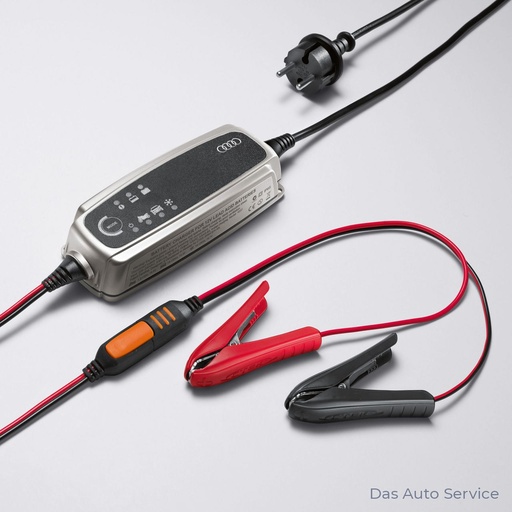
The genuine Audi battery charger helps keep your battery charged. It's useful to have, but it doesn't replace an alternator check if there's a problem with the charging system.
View in shop
This compact LED torch is handy when you want to inspect the belt or take a look under the bonnet in poor light. Just remember that a visual inspection alone can't tell you whether the alternator is charging properly.
View in shopRead more
- Electrical faults and control modules
- VW Battery Coding: Why Start/Stop Stops in Winter
- Car Winter Preparation Checklist: 10 Essential Checks
Frequently asked questions
How can I tell if my alternator is charging?
Measure the voltage with the engine running and watch how it changes when you switch on electrical equipment. If the charging looks suspicious, the current and signal waveform should also be checked using diagnostic equipment.
What voltage should an alternator produce?
Around 14 V with the engine running is a useful guide. But a single voltage reading isn't enough for a definite diagnosis, especially on cars with electronically controlled charging systems.
How do I know whether the problem is the alternator or the battery?
Both components need to be tested separately. Just because the battery keeps going flat doesn't automatically mean it's faulty. The alternator might not be charging it properly.