You stop at the traffic lights, the revs drop, the engine starts shaking and suddenly cuts out. The driver behind you is already beeping, you're turning the key or pressing the start button, wondering what on earth just happened. I hear this all the time at the workshop: "Kris, the car drives perfectly fine, but sometimes it stalls when I stop." Listen, my friend, this isn't something I want you to ignore. When your car is stalling at idle, it's telling you something isn't working properly. And when it happens in the middle of a junction, it's a safety issue too.
How do I know if my car has an idling problem?
Idling is simply when your engine is running but you're not pressing the accelerator. The revs should stay steady and the engine should run smoothly. If the rev counter starts bouncing up and down, the car shakes or the engine cuts out completely, something's wrong. Sometimes it happens every day. Other times, only under certain conditions. And believe me, those little details matter.
- The revs keep going up and down. The needle rises and falls even though you're not touching the accelerator. One moment the engine is running smoothly, the next it's shaking as if it's about to stall.
- The car stalls when you stop or switch on the air conditioning. You pull up at the traffic lights, turn on the A/C and the engine can't keep the revs steady.
- It only stalls when cold or when warm. It might play up first thing in the morning, then run perfectly once it's warmed up. Or the other way round. Everything's fine when the engine is cold, but as soon as it warms up, it starts stalling.
Here's something I really want you to remember. Just because your car only stalls occasionally doesn't mean the problem is minor. Don't wait until it starts happening at every junction. The more accurately you can tell me when it happens, the easier it'll be for us to find what's causing it.
Why is my car stalling at idle?
There are several possible causes, and this is where things get interesting. Look through the owners' groups and you'll see advice like "clean the throttle body", "change the spark plugs" or "your MAF sensor is faulty". The trouble is, exactly the same symptom can have completely different causes. That's why I don't like replacing parts based on guesswork. We find the fault first. Then we fix it.
- The throttle body is dirty or hasn't been adapted properly. Think of the throttle body as a little door that controls how much air enters the engine. When it's dirty or isn't set up correctly, the engine can struggle to maintain a steady idle.
- There's a vacuum leak. A hose or part of the crankcase ventilation system is letting air in where it shouldn't. The engine is getting air that hasn't been measured properly, which upsets the way it runs. Sometimes that's exactly why it starts shaking and stalling.
- Carbon has built up on the valves in a direct-injection engine. Those deposits interfere with the engine's normal operation. I've explained why this happens and how we clean it in my article about carbon build-up on the valves.
- The ignition coils or spark plugs are playing up. They're responsible for producing the spark that ignites the fuel in a petrol engine. If that spark becomes intermittent, the engine starts shaking and can eventually stall. I've explained more in my article about ignition coils and spark plugs.
- A sensor is sending incorrect information. It could be the temperature sensor, the mass airflow (MAF) sensor that measures incoming air, or the crankshaft position sensor. The engine's computer relies on these sensors to understand what's happening. When the information is wrong, the engine can start running roughly or stall altogether.
- On a diesel, the problem could be with the fuel supply or injectors. If the engine isn't getting fuel properly, it won't run smoothly. But I'm not going to blame the injectors until we've checked what's actually happening.
See how many completely different faults can cause the same symptom? That's why I don't want you buying parts just because someone on a forum had a similar problem. Their car might have been stalling because of a dirty throttle body, while yours has a vacuum leak. Same symptom. Not necessarily the same cause.
What do we check at the workshop when your car keeps stalling?
At Das Auto Service, we start with diagnostics, not ordering parts. I want to see how the engine behaves at idle and what the sensors are telling us. Simply reading the fault codes isn't enough. We need to understand what's actually happening at the moment the engine starts shaking.
- First, we read the fault codes and check the live data at idle. This is the information the engine's computer receives while the engine is running. We're looking for readings or behaviour that aren't quite right.
- Next, we check for vacuum leaks with a smoke test. We introduce smoke into the system to see whether it escapes anywhere that should be properly sealed. That way, we're not guessing which hose might be causing the trouble.
- We check the throttle body and its adaptation. We look for dirt and make sure it's working properly. If necessary, we carry out the correct adaptation so the engine's computer can control the throttle body as it should.
- Finally, we check the ignition system and sensors. On petrol engines, we pay particular attention to the ignition coils and spark plugs. If we suspect a sensor problem, we check its readings too. The aim is to find the real cause, not just clear the fault codes and hope for the best.
To me, proper diagnostics means being able to explain, in plain English, exactly why your car was stalling. Not telling you, "We've changed this part, fingers crossed it'll be fine." Your car deserves better than that, and your hard-earned money shouldn't be spent on experiments.
WARNING! If your engine stalls at a junction, you could lose power assistance for the steering and brakes. The steering may become heavy, and you might need much more effort to stop the car. Don't keep driving it around town until the cause has been identified. This isn't just an inconvenience anymore. It's a risk to you and everyone else on the road.
What can I do to stop this becoming a bigger problem?
The most important thing is not to get used to the problem. I know how tempting it is to think, "Well, it didn't stall today, so it must have fixed itself." But faults don't disappear just because the symptoms have stopped for a while. If your engine is shaking, the revs are fluctuating or the car keeps stalling, we need to find out why. Otherwise, you risk ending up with a dead engine at exactly the worst possible moment.
Tip from Kris Mladenov: When you bring your car to me, tell me exactly when it stalls. Is it when the engine is cold, after it's warmed up, when you're stopping or when you switch on the air conditioning? And don't worry if you don't know much about engines. Those little details are far more useful than guessing which part might be faulty. They help us work out where to start.
I hope this article has helped you! If it has, I'd really appreciate you sharing it with a friend whose car shakes or stalls at the traffic lights. My mission is simple. When I know something useful, I want more people to know it too. Because I'd much rather help you understand a problem early than see you paying for a repair you could have avoided.
The solution in our shop

Genuine Longlife III FE 0W30 oil 5L
Genuine LongLife III engine oil for your regular engine service. Changing the oil regularly is an important part of looking after your engine, but an oil change alone won't fix whatever is causing it to stall.
View in shop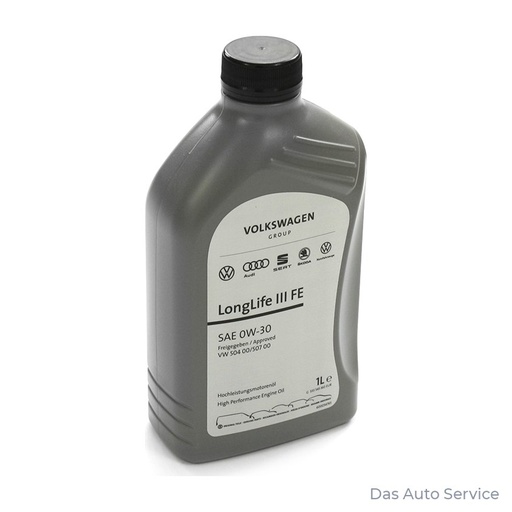
Genuine Longlife III FE 0W30 oil
Genuine LongLife III engine oil in a 1 l bottle. Handy when you need some extra oil that meets the correct specification for your car.
View in shopRead more
- Diagnostics
- TFSI Intake Valve Carbon Build-Up: Causes and Cleaning
- 2.0 TFSI Ignition Coils and Spark Plugs
Frequently asked questions
Why is my car stalling at idle?
It could be a dirty throttle body, a vacuum leak, an ignition problem, a faulty sensor or an issue with the fuel supply. We need to run diagnostics to find out exactly what's making the engine stall.
Is the throttle body causing the problem?
It could be, especially if it's dirty or hasn't been adapted properly. But don't blame it straight away. Other faults can cause exactly the same symptoms.
Can a vacuum leak cause my car to stall?
Yes. If air is getting in through a hose or the crankcase ventilation system without being measured properly, the idle can become unstable and the engine may stall.
Is it dangerous to drive if my car stalls at traffic lights?
Yes. When the engine cuts out, you could lose power assistance for the steering and brakes. Don't carry on driving around town until you've found out what's causing it.