You turn the key, the engine fires up, runs for a second or two, then cuts out. You try again. Same thing. Your car starts then stalls, and you're already imagining a mechanic having to take half the engine apart to find the problem. But here's something that might surprise you. One of the most common causes has nothing to do with the engine itself. Sometimes it's the key you're holding. Other times, it's the fuel supply, the air getting into the engine or a faulty sensor. I'll explain how to tell these problems apart and what you can check yourself before taking the car to a garage.
Why does a car start then stall immediately?
When an engine starts and immediately cuts out, it means it has managed to fire up, but something is stopping it from carrying on running. There are several possible causes, and there's no point replacing parts blindly. First, we need to find out whether the car's computer is deliberately shutting the engine down, whether there's not enough fuel or whether the air and fuel mixture is wrong. From the driver's seat, all three can look exactly the same. But diagnosing them requires different checks.
The immobiliser – when your car doesn't recognise its own key
This is the first thing I'd check. The immobiliser is a security system that stops the engine from running if it doesn't recognise the key. When you turn the key, the car checks whether it's the right one. If the key isn't recognised, the engine may start for a second before the computer cuts off the fuel supply. And that's it. You can try starting it as many times as you like. If the immobiliser won't authorise the engine to run, it won't keep running.
You'll usually see the immobiliser warning light flashing on the dashboard or a message about the key. That's an important clue, so don't ignore it. People often start looking for a faulty fuel pump when the real problem is simply that the car doesn't recognise the key. That's why I always say you should start with the easiest check, not the most expensive repair.
Fuel supply – when the engine isn't getting enough fuel
The second major group of causes involves fuel pressure. The pump inside the fuel tank needs to deliver fuel to the engine. If it isn't doing that properly, the engine may start and immediately stall. Direct-injection petrol engines also have a high-pressure fuel pump. That pump plays a part in delivering fuel and could also be responsible. I've explained this in more detail in my article about high fuel pressure in TSI engines.
There's an important detail here. Just because the engine starts briefly doesn't mean the fuel system is working properly. There needs to be enough fuel pressure, and that pressure needs to stay steady while the engine is running. If the pressure drops away, the engine stalls. But! You can't blame the fuel pump just because the car starts and cuts out. First, we measure the pressure. Then we work out what's actually faulty.
Air and sensors – when the engine gets the wrong information
An engine needs more than just fuel. It also needs the right amount of air. If there's a major vacuum leak, air gets in where it shouldn't, throwing the air and fuel mixture out of balance. A faulty throttle body can also stop the engine from staying running. The same goes for the mass airflow sensor, which measures how much air is entering the engine. When that information is wrong, the computer can't control the engine properly.
This is where it's particularly important not to guess. The same symptom can come from several different faults. If you start replacing the throttle body, mass airflow sensor and other parts just because someone told you that's what it usually is, you're basically guessing your way through the repair. And I don't like that approach. The car needs to be checked before anyone starts ordering parts.
Cold weather and diesel engines – when the fuel starts to thicken
With diesel engines, cold weather introduces another possible cause. At low temperatures, paraffin wax can start to form in diesel fuel, making it difficult for the fuel to flow through the system properly. The engine may start on the fuel that's already there, then immediately stall because it isn't getting enough more. This is a completely different problem from an immobiliser fault, even though the symptoms can look almost identical from the driver's seat. If you drive a diesel and this only happens in cold weather, have a read of my article TDI hard to start when cold.
What can I check myself before going to a garage?
There are a few simple checks you can do without taking anything apart. They won't identify every possible fault, but they can point you in the right direction. Most importantly, they can save you from replacing parts unnecessarily.
- Try the spare key. If the engine starts and keeps running normally with the spare, focus on the original key.
- Check the dashboard. If the immobiliser warning light is flashing or there's a message about the key, that's an important clue.
- Check how much fuel is in the tank. Don't blindly trust the fuel gauge, because the fuel level sensor can give you a misleading reading too.
These are basic checks, but that's exactly why they're worth doing. There's no point jumping into complicated diagnostics if trying the spare key immediately tells us where to look. If the car still starts and stalls, though, we need to check the systems one by one. Not by guessing, but by taking measurements.
What do we check at the garage when a car starts then stalls?
At Das Auto Service, we start with the faults that can cause exactly this symptom. The aim isn't simply to read the fault codes and point at a part. We need to understand why the engine is stopping and which system isn't doing its job. Because a fault code is a clue, not a complete diagnosis.
- We check the immobiliser and key recognition using a diagnostic tester. This tells us whether the security system is allowing the engine to run.
- We measure the fuel pressure. We check whether the system is delivering enough fuel instead of immediately blaming the pump.
- We check the air supply and sensors. We look for major vacuum leaks and problems with the throttle body or mass airflow sensor.
These checks help us separate one possible cause from another. If the car doesn't recognise the key, there's no point starting with the fuel system. If the fuel pressure isn't right, we need to find out why. The answer comes from proper diagnostics, not from a shopping list of parts to replace.
IMPORTANT! A key from another car or a "repaired" electronic control module from a breaker won't simply work when you fit it. Cars have security systems that prevent these parts from being swapped freely. Some modules also have Component Protection, an additional security feature that restricts the use of replacement components. Don't buy electronic control modules blindly and hope they'll solve the problem.
Tip from Kris Mladenov: Try the spare key first. It's the easiest check and could immediately point the diagnosis in the right direction. If the problem is related to the key or its battery, there's no point starting by replacing fuel pumps and sensors. If the car starts and stalls with both keys, we need to investigate further.
I hope you've found this article useful! If you have, I'd really appreciate you sharing it with a friend who's dealing with the same problem. My thinking has always been simple. If I know something useful, I want more people to know it too. That means fewer unnecessary repairs, fewer parts replaced on guesswork and more owners who understand what's actually happening with their cars.
The solution in our shop

Genuine Longlife III FE 0W30 oil 5L
LongLife III engine oil is for routine engine servicing, not for fixing whatever is causing your car to start and stall. It's important not to confuse regular maintenance with repairing a specific fault.
View in shop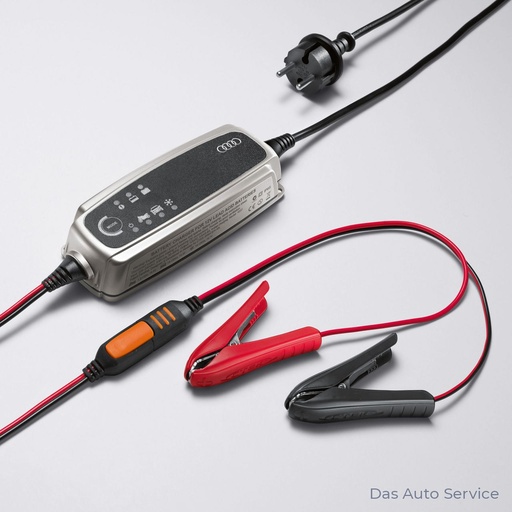
The genuine Audi battery charger helps keep your battery charged. It doesn't replace proper diagnostics of the immobiliser or fuel system.
View in shopRead more
- Diagnostics
- Electrical faults and control modules
- TSI High-Pressure Fuel Pump: Faults and Diagnosis
- TDI Glow Plug Problems: Cold Starts and Checks
Frequently asked questions
Why does my car start and then stall immediately?
The most common causes are an immobiliser that isn't recognising the key, insufficient fuel pressure, a major vacuum leak or a faulty sensor. On diesel engines in cold weather, paraffin wax forming in the fuel can also cause this problem.
Could the key be causing the problem?
Yes. If the immobiliser doesn't recognise the key, the engine may start for a second before the computer cuts off the fuel supply. Try the spare key and check whether the immobiliser warning light is flashing.
Is the fuel pump faulty if my car starts then stalls?
It's possible, but not necessarily. We need to measure the fuel pressure before deciding whether the pump is responsible.
Why does my diesel start and stall only when it's cold?
One possible cause is paraffin wax forming in the diesel fuel. This restricts the fuel supply, so the engine may start briefly before stalling.