Your car won't start first time. You turn the key, the starter motor cranks, but the engine won't fire up. You try again, and it starts. The next day, it might start straight away, then suddenly need three attempts. I hear this all the time at the workshop: "Kris, it does start, but sometimes I have to try again." And do you know what worries me? You get used to it and start thinking it's normal. Until one morning, you turn the key and the car won't start at all. That's why I want to explain what might be causing this and how we can find the problem before it leaves you stranded.
Why does my car sometimes struggle to start?
The first thing I'll ask you is exactly when it happens. First thing in the morning, when the engine is cold? After you've been driving and stopped for a little while? Or does it make no difference whether the engine is hot, cold, has been sitting overnight or just a few minutes? This matters because different faults show up in different ways. And the last thing I want is for us to start replacing parts blindly and hoping we've guessed right.
- Only when cold – if the engine takes ages to start in the morning but starts normally for the rest of the day, we'll check the glow plug system on a diesel, the fuel supply and the battery. A cold start needs everything working properly, and that's when weak points tend to show themselves.
- Only when warm – if it starts straight away in the morning but struggles once the engine is warm, we'll focus on the sensors and fuel system. Just because it starts perfectly when cold doesn't mean everything is fine.
- Regardless of temperature – if it starts one time and refuses the next, with no obvious pattern, we'll check the starter motor, immobiliser and fuel pressure. The important thing here is to catch what's actually happening at the moment it refuses to start.
What are the most common reasons a car won't start first time?
There's something I want you to remember. Difficulty starting is a symptom, not a diagnosis. Look through the owners' groups and you'll see people saying, "Change the battery", "Your fuel pump's gone" or "It's probably a sensor." Someone might be right, but we're not fixing your car based on somebody else's guess. We need to find out exactly what's stopping it from starting.
Weak battery
If the starter motor is turning slowly and you can hear the engine struggling to crank, I'll start with the battery. It might have enough power to light up the dashboard but not enough to turn the engine over properly. And no, just because the battery looks fine doesn't mean it's healthy. We test it under load. If it needs replacing, have a read of why a new battery needs coding, because on these cars, how you replace the battery matters.
Fuel pressure dropping
Imagine you've parked your car for the night and the pressure in the fuel system drops while it's sitting there. In the morning, you crank the engine, but it isn't getting fuel at the pressure it needs. By the second attempt, the system has built up enough pressure and the engine starts. It could be a valve in the fuel pump or an injector that's leaking fuel. But here's the important bit! We need to measure the pressure, not guess.
Glow plugs on diesel engines
If you drive a TDI and it mainly struggles to start on cold mornings, we'll check the glow plugs. Their job is to help the diesel engine start when it's cold. If they're not working properly, starting can become difficult even though the car runs perfectly normally for the rest of the day. I've explained this in more detail in why your TDI struggles to start when cold.
Crankshaft and camshaft sensors
These two sensors tell the engine's computer how the engine is turning and where the shafts are positioned. Without the right information, the computer can't control the starting process properly. That's why the starter motor can sometimes crank perfectly normally, but the engine just won't fire up. Then, on the next attempt, it might start as though nothing happened. That's exactly why we look at what the sensors are reporting while you're trying to start the engine.
The key and immobiliser
The immobiliser is the security system that only allows the engine to run when it recognises the correct key. If something goes wrong with that recognition, the car may refuse to start. There's no point blaming the fuel pump or battery before we've checked the immobiliser system. The car's computer can give us valuable information about what happened.
How do you find out what's causing the problem?
When you come to Das Auto Service and tell me, "My car only starts on the second attempt", I don't start writing a shopping list of parts to replace. I start with checks. I want to see what's happening when the engine refuses to start, because that's when we get the most useful information. Here's what we check.
- We test the battery under load. This tells us whether it has enough power to crank the engine properly, rather than simply checking its voltage.
- We measure fuel pressure after the car has been sitting. We want to know whether the system holds pressure or whether it drops while the car is parked.
- We look at live data while cranking the engine. These are real-time readings from the engine's computer, showing us what's happening as you turn the key.
- We read the fault codes stored in the engine and immobiliser systems. We don't just clear them and hope for the best. We look for a connection between the recorded faults and the starting problem.
These four checks help us narrow down the possible causes and work out what to investigate next. Sometimes the answer is fairly simple. Other times, it takes more work. But I'd much rather spend time diagnosing the fault properly than replace perfectly good parts. It's your money we're spending, not mine.
Can I keep cranking the engine until it starts?
IMPORTANT! If the car hasn't started after 2–3 attempts, stop. Repeated cranking drains the battery and puts extra strain on the starter motor. You could end up with another problem on top of the one you already have. Don't try to win an argument with your car by being stubborn.
Is there an easy way to check if it's a fuel problem?
Tip from Kris Mladenov: Before starting the engine, switch on the ignition and let the dashboard light up for 2–3 seconds. Then try starting the car. If it now starts first time, the problem is most often related to fuel pressure. That's a useful clue for the diagnosis, but it doesn't tell us which part is faulty.
I hope you've found this article helpful! If you have, I'd love you to share it with a friend whose car also needs two or three attempts to start in the morning. I've always believed that if I know something useful, more people should know it too. And I'm telling you all this because I care about you and your car. Don't wait until the day it refuses to start altogether. By then, you're the one stuck with the inconvenience, and the repair could be more complicated too.
The solution in our shop
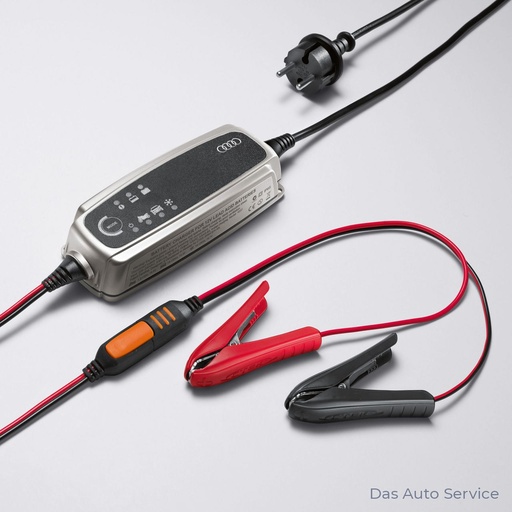
The genuine Audi battery charger helps keep your battery charged. It's useful when your car is parked for longer periods, but it doesn't replace a proper battery load test.
View in shop
Genuine Longlife III FE 0W30 oil 5L
Genuine LongLife III engine oil is suitable for servicing your engine when it meets that particular engine's requirements. It won't fix a starting problem. At our workshop, we change the engine oil and all filters – oil, fuel, air and cabin – every 10,000 km or once a year, whichever comes first, regardless of the oil used.
View in shopRead more
- Diagnostics
- Electrical faults and control modules
- VW Battery Coding: Why Start/Stop Stops in Winter
- TDI Glow Plug Problems: Cold Starts and Checks
Frequently asked questions
Why won't my car start first time?
It could be a weak battery, fuel pressure dropping, faulty glow plugs on a diesel, a sensor problem or the immobiliser. We need to check what's actually happening while the engine is trying to start.
Is the fuel pump causing the problem?
Possibly, but not necessarily. Fuel pressure can drop because of a valve in the pump or a leaking injector. That's why we measure the pressure before blaming any particular part.
Is the battery to blame if my car struggles to crank?
It could be, especially if the starter motor is turning slowly. We'll test the battery under load before deciding whether it needs replacing.
Is it bad to keep trying to start the engine?
Repeated cranking drains the battery and puts extra strain on the starter motor. If the car hasn't started after 2–3 attempts, stop and get the cause checked.