DSG – three letters I hear all the time at the workshop. Some people love this gearbox because it changes gears incredibly quickly and makes the car a pleasure to drive. Others worry because they've heard how much it costs to repair the mechatronic unit or replace the clutches. The truth is, DSG is a clever gearbox that combines the convenience of an automatic with the way a manual gearbox works. But there's one important detail – not all DSG gearboxes are the same. I'll explain how they work, the difference between a dry vs wet DSG gearbox, and how to avoid expensive problems.
What is DSG and how does it work?
Imagine two manual gearboxes combined into one, but without a clutch pedal or the need to move a gear lever. That's DSG in simple terms. Instead of one clutch, you have two – one handles the odd-numbered gears and the other handles the even-numbered gears. While you're driving in second, third gear is already selected and waiting. When it's time to change, one clutch releases, the other engages, and the car keeps accelerating with almost no interruption.
That's why DSG changes gears so quickly. It doesn't have to find the next gear because it's already prepared it. Everything is controlled by the mechatronic unit – I call it the "brain of the gearbox". It decides when to change gear and controls the clutches without you having to think about any of it. Convenient, quick and pretty clever. But when that brain or the clutches start causing trouble, you soon understand why proper servicing matters so much.
What's the difference between a dry and wet DSG gearbox?
This is where a lot of the confusion starts. Plenty of people know their car has a DSG gearbox, but have no idea whether it's a dry or wet version. And that's not a minor detail. Both gearboxes work on the same principle, but their clutches are different, and so is the way they behave. Let me explain each one.
- Dry DSG – DQ200 with 7 speeds. The clutches operate without being immersed in oil, much like the clutch in a conventional manual gearbox. It's used with smaller engines and is more economical, but it's also more sensitive when pulling away. If you notice the gearbox jerking or juddering, don't be too quick to accept it as normal. I've explained these problems in detail in my article about the DSG DQ200 and its dry clutch.
- Wet DSG – DQ250 with 6 speeds, and DQ381 and DQ500 with 7 speeds. Here, the clutches operate immersed in oil. This allows them to handle more torque, which is why these gearboxes are used where the loads are higher. But! Wet doesn't mean everlasting or indestructible. The mechatronic unit can still cause problems, as I've explained in my article about the DSG DQ250 and mechatronic failures.
Put simply, a dry DSG has clutches that operate without an oil bath, while a wet DSG has clutches immersed in oil. That's the main difference. It doesn't mean one is automatically good and the other is bad. It means they're designed for different loads, and you need to know which one you're driving. Because when someone tells you "all DSG gearboxes are the same", I'd ask whether they've ever actually seen both gearboxes from the inside.
What are the pros and cons of a DSG gearbox?
I'll start with the good things. DSG is one of the reasons so many people enjoy driving VW, Škoda, SEAT and Audi cars. Gear changes are quick, fuel consumption is low, and you get the convenience of an automatic. No clutch pedal, no manual gear changes – you just drive. When everything is working properly, you barely notice what's happening inside the gearbox.
- The advantages are quick gear changes, good fuel economy and convenience in everyday driving. The two clutches allow the next gear to be prepared in advance.
- The disadvantages mainly involve the mechatronic unit and the clutches. If the gearbox has been neglected and hasn't been serviced properly, repairs can become expensive. And nobody enjoys that.
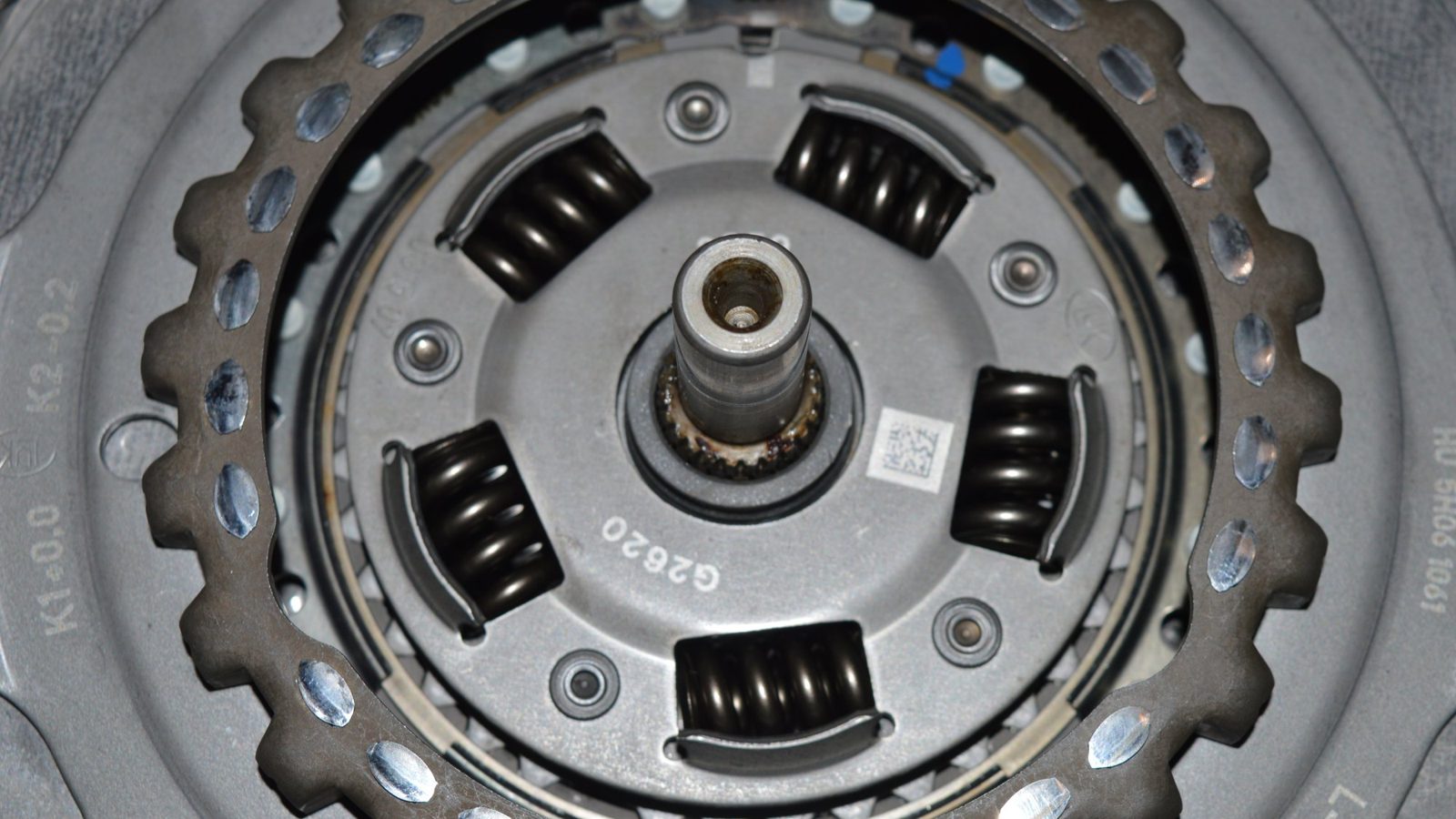
There's something I want to make clear. When a DSG starts juddering, it doesn't automatically mean you need a complete replacement gearbox. There are different components inside, each doing a different job, and the first step is to find out where the problem is coming from. For me, proper diagnostics always come before repairs. Otherwise, it's far too easy to keep replacing parts until you happen to find the faulty one. The trouble is, the person doing the guessing isn't the one paying the bill.
How can I look after my DSG and avoid repairs?
The answer is simple – service it on time and don't put it under unnecessary strain. DSG is a complicated gearbox, but that doesn't mean you should be afraid of it. There are a few basic rules I recommend to every owner. Nothing difficult. You just need to follow them.
- Change the gearbox oil every 60,000 km using genuine oil, whether your DSG is dry or wet. This is the interval we recommend at Das Auto Service for all versions.
- After every service, we carry out gearbox and clutch adaptation. This allows the control system to adjust to the way the gearbox and clutches are operating. It's not a step that should be skipped.
- Don't hold the car on a hill by pressing the accelerator and brake at the same time. That's not how the clutches are meant to be used. Avoid getting into this habit.
If you're wondering what actually wears out, have a look at the DSG dual clutch up close and what a worn one looks like. Once you've seen the clutch discs themselves, it's much easier to understand why the way you drive matters. This isn't some magical gearbox that works without wear. There are mechanical parts inside, and they need looking after.
IMPORTANT! "DSG gearbox oil lasts a lifetime" is one of the most expensive myths you'll hear. At Das Auto Service, I recommend changing it every 60,000 km using genuine oil, for every DSG version. Don't wait until the gearbox starts jerking before you think about servicing it.
Tip from Kris Mladenov: Find out whether your DSG is dry or wet. It makes a difference to both the way you should drive and how the gearbox needs to be serviced. Don't wait until it starts juddering to find out which gearbox you have. And don't skip the adaptation after servicing.
I hope you've found this article useful! If you have, I'd be happy if you shared it with a friend who drives a car with a DSG gearbox. My mission has always been simple – when I know something, I want more people to know it too. Because the better you understand your car, the harder it is for someone to convince you that every little judder means you need a new gearbox.
The solution in our shop
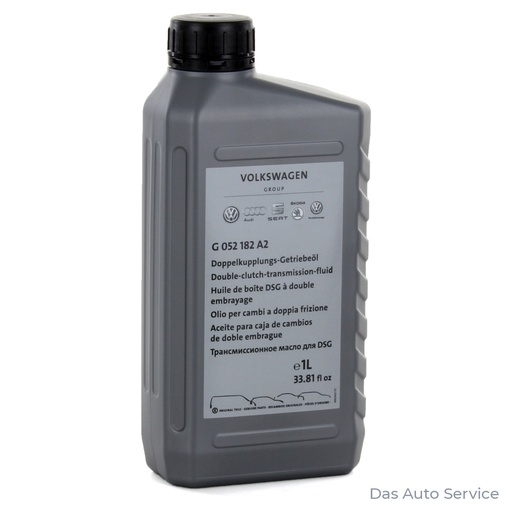
Genuine DSG gearbox oil G052182A2 1l
Genuine DSG gearbox oil is the right choice when servicing your gearbox. I don't compromise on oil quality because the gearbox depends on it to work properly.
View in shop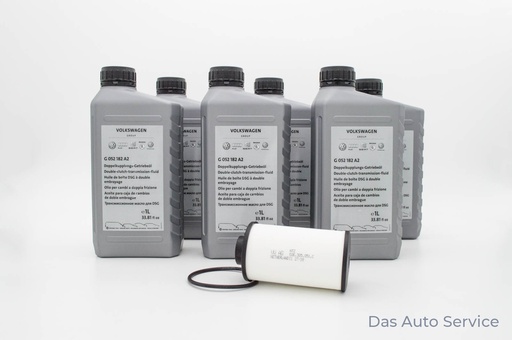
The 6-speed DSG service kit contains what you need to service this version of the gearbox. It's important to make sure the kit matches your specific gearbox.
View in shopRead more
- Gearbox servicing
- DSG and S tronic gearbox repair
- DSG DQ200 Problems: Jerking and Harsh Gear Changes
- DSG DQ250 Mechatronic Problems: Signs and Causes
- DSG Clutch Wear: Signs, Causes and Replacement
Frequently asked questions
What does DSG mean?
DSG is a dual-clutch gearbox that changes gears automatically. Think of it as two manual gearboxes in one, controlled by a mechatronic unit.
What's the difference between a dry and wet DSG gearbox?
In a dry DSG, the clutches operate without an oil bath, while in a wet DSG, they're immersed in oil. The wet version can handle more torque, while the dry version is more economical but more sensitive when pulling away.
When should DSG gearbox oil be changed?
At Das Auto Service, I recommend changing the oil every 60,000 km using genuine oil for all DSG versions. We always carry out adaptation after servicing.
Is it normal for a DSG gearbox to jerk or judder?
Don't assume jerking or juddering is normal without having the gearbox checked. The cause needs to be identified through diagnostics before deciding what needs repairing.