"The gearbox is jerking, it's jolting, and now it can't even decide which gear to select." I hear this all the time at the workshop. DSG is one of the most common automatic gearboxes fitted to VW, Audi, Škoda and SEAT cars, but it's also one of the most talked about. Some owners love it. Others tell you to avoid it at all costs. The truth is somewhere in between. Half the things people worry about are myths. The other half are very real problems. And because not all DSG gearboxes are the same, I'll explain the different types, where their weak points are and how to look after yours so you don't end up with an expensive repair.
What is a DSG gearbox and how does it work?
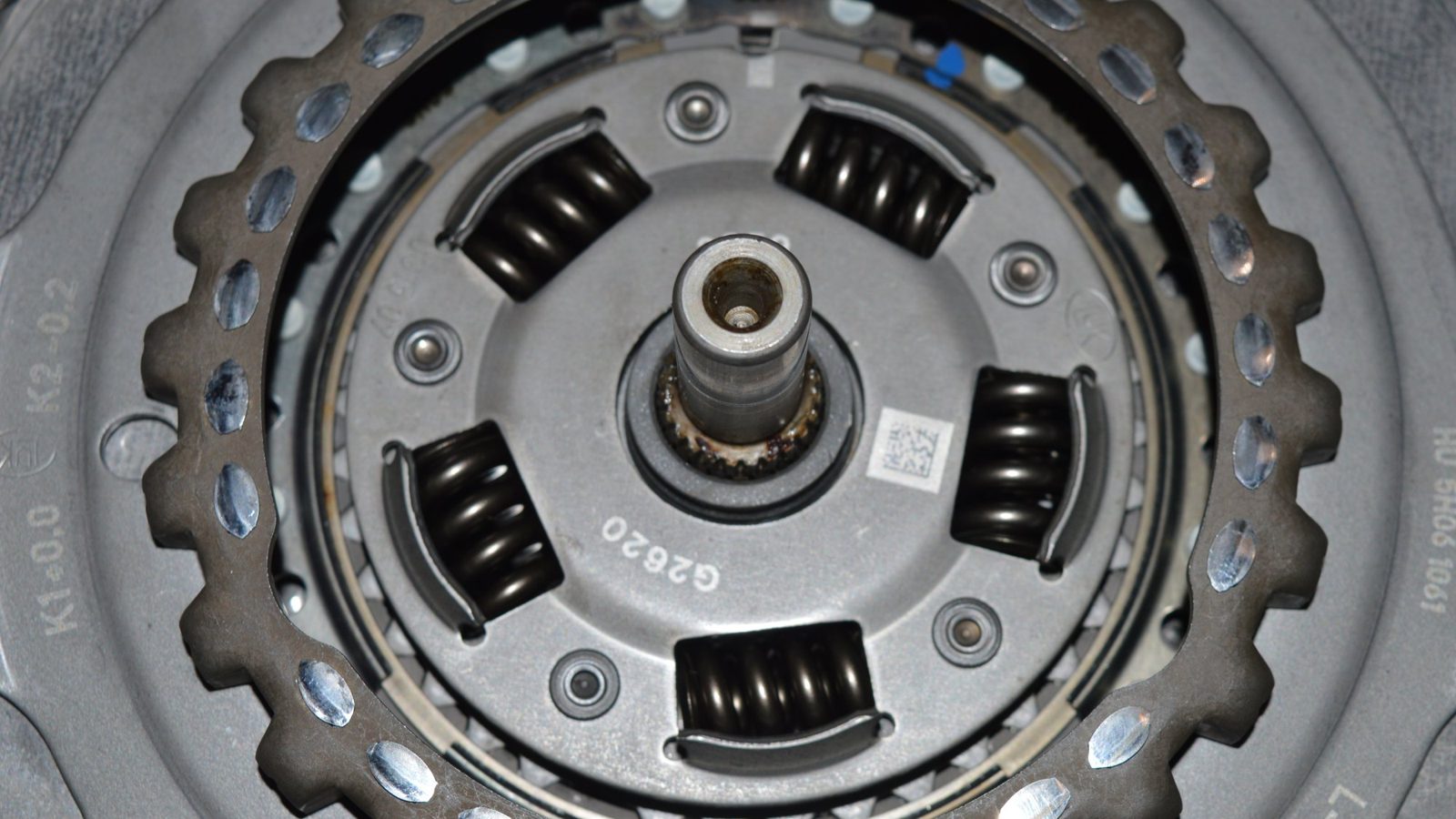
Imagine two gearboxes built into one. One handles the odd-numbered gears, the other handles the even-numbered ones. Each has its own clutch. When you're driving in third gear, for example, fourth is already selected and waiting. When it's time to change, one clutch releases, the other takes over, and the car carries on accelerating with barely any interruption.
That's why a DSG changes gear so quickly. It doesn't have to find the next gear because it's already been selected. The whole process is controlled by the mechatronic unit – the gearbox's brain, which decides when to change gear and how the clutches should work. It sounds complicated, but the idea is simple. Two gearboxes working as one team. Problems start when one part of that team stops doing its job.
What are the different DSG gearbox types?
Here's the first thing I want you to understand. DSG isn't just one gearbox. There are different generations, different clutches and different designs. You can't compare the problems of a DQ200 with those of a DQ500 and then decide that every DSG gearbox is unreliable. Let's go through them.
- DQ200 – 7-speed DSG with dry clutches. Used with smaller engines producing up to around 250 Nm of torque. It's called a dry-clutch gearbox because the clutches don't run submerged in oil.
- DQ250 – 6-speed DSG with wet clutches. Here, the clutches run in oil, which cools and lubricates them. The clutches, gears and mechatronic unit share the same oil.
- DQ381 – 7-speed DSG with wet clutches. A newer design built for engines with more torque. It's a strong gearbox, but it still needs regular servicing.
- DQ500 – 7-speed DSG with wet clutches. Designed for the heaviest and most powerful cars with transverse engines. It can handle serious loads, but that doesn't mean it lasts forever.
- S tronic DL501 (0B5) – 7-speed wet-clutch gearbox for Audi models with longitudinal engines. It has two separate oil systems, which is very important when servicing it.
See the difference? Even when two gearboxes have the same number of gears, they can be completely different inside. That's why the first thing we do at Das Auto Service is identify the exact gearbox fitted to the car, rather than simply saying, "It's a DSG." That's where proper diagnosis begins.
What are the common problems with different DSG gearboxes?
Each of these gearboxes has its own quirks and weak points. There's no point replacing parts blindly just because someone read on a forum that those parts tend to fail. First, you need to understand what's actually happening inside. Let me show you the most common problems.
Why does the DQ200 jerk and judder?
With the DQ200, the clutch and mechatronic unit are the two things you'll hear about most often. The car starts juddering when you pull away, the gearbox jerks or the gear changes become rough. But! That doesn't automatically mean you need to replace everything. You need to check whether the problem comes from the clutch, its control system or the mechatronic unit itself. I've explained this in detail in my article DSG DQ200 with dry clutches – why it jerks and judders.
Why does the DQ250 lose gears and flash PRNDS?
One of the known problems with the DQ250 is the mechatronic unit. The PRNDS display may start flashing, the gearbox may lose gears or refuse to change properly. That's when you need a proper diagnosis, not guesswork. The mechatronic unit controls the entire gearbox, and when something goes wrong inside it, you'll notice straight away. I've covered this in more detail in DQ250 – when does the mechatronic unit fail?.
Are the DQ381 and DQ500 reliable gearboxes?
Yes, these gearboxes can handle some serious punishment. But there's one big condition – you have to service them on time. Wet clutches depend on their oil, and that oil doesn't stay in good condition forever. Neglect it, and you're putting the very parts you want to protect at risk. I've covered both gearboxes separately in DSG DQ381 and DQ500 with wet clutches.
What should I know about the S tronic DL501 (0B5)?
With this gearbox, there are three things you need to pay attention to – the mechatronic unit, the clutch and the two separate oil systems. That last point often gets overlooked when people talk about servicing. Someone hears, "The oil has been changed," and assumes everything is fine. But when a gearbox has two separate oil systems, you need to know exactly what's been serviced. You can read more in S tronic 0B5 DL501 – mechatronic unit, clutch and two oils.
How should I service my DSG gearbox properly?
Now we come to the most important part. A lot of people only start taking an interest in their DSG when the gearbox begins to jerk. I'd much rather talk about servicing before a problem appears. Because looking after your gearbox properly makes far more sense than repairing it once something has already failed. And no, simply draining the old oil and pouring in fresh oil isn't enough.
- The oil in all DSG and S tronic gearboxes should be changed every 60,000 km. At Das Auto Service, we use genuine oil because the correct oil is essential for the clutches and mechatronic unit to work properly.
- We carry out an adaptation after every service. This is a procedure where the gearbox control system adjusts how the clutches operate. We don't leave it until "it's needed". We do it every time.
- We don't use automatic gearbox flushing machines. I've explained why in why we don't change DSG gearbox oil using a machine.
- When we suspect a faulty mechatronic unit, we first test it on the workbench. We don't immediately tell you it needs replacing. See what we check on a mechatronic unit before saying it needs replacing.
IMPORTANT! DSG gearbox oil is not "lifetime" oil. Don't use that claim as an excuse to skip servicing. Using aftermarket oil can shorten the life of the mechatronic unit and clutches. My recommendation is clear – genuine oil, changed every 60,000 km.
I want to pay particular attention to adaptation. It's not some optional extra we only carry out when a gearbox starts juddering. It needs to be done properly after servicing because the gearbox control system needs the correct clutch settings. If someone tells you it isn't necessary, ask them why. A gearbox service should be completed properly, not left half-finished.
What parts and oil do I need for my DSG?
The correct parts depend on the exact gearbox fitted to your car. Simply knowing that your car has an automatic gearbox isn't enough. You need to identify the gearbox code before choosing the parts you need. Here are a few examples of parts used for servicing and repairs.
Is it worth buying a car with a DSG gearbox?
Yes. I certainly wouldn't rule out a car just because it has a DSG. But I'd want to know exactly which gearbox is fitted, how it's been serviced and how it behaves on the road. Those things matter far more than the stories you'll hear about automatic gearboxes. A well-maintained DSG can give you quick, smooth and enjoyable gear changes without you even thinking about what's happening inside.
The big problem is that many expensive repairs happen after missed servicing or because the car hasn't been driven properly. Then the gearbox itself gets all the blame. I'm not saying DSG gearboxes have no weak points – they do, and I've already shown you what they are. But there's a huge difference between a design-related fault and a gearbox that's never been looked after. So don't be afraid of those three letters, DSG. Learn what they actually mean.
Tip from Kris Mladenov: First, find out which DSG gearbox you have. You can find the code in your car's documentation or identify it with a diagnostic tool. Then stick to the oil change interval, insist on genuine oil and never skip the adaptation. These are the main things I recommend to keep your gearbox working properly and save yourself a lot of frustration.
I hope you've found this article useful! If you have, I'd really appreciate it if you shared it with a friend who drives a car with DSG or is thinking about buying one. My mission is simple – when I know something, I want more people to know it too. Because an informed car owner makes better decisions and doesn't waste money on repairs based on guesswork.
The solution in our shop
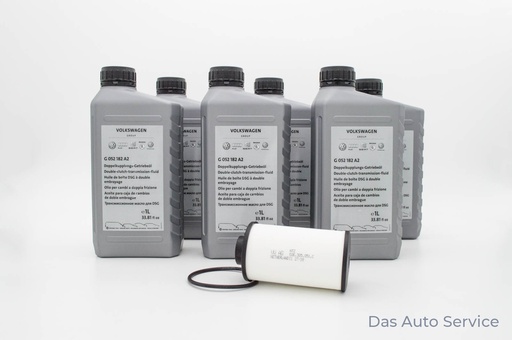
6-speed DSG service kit. The correct kit gives you the parts needed to service your particular gearbox properly.
View in shop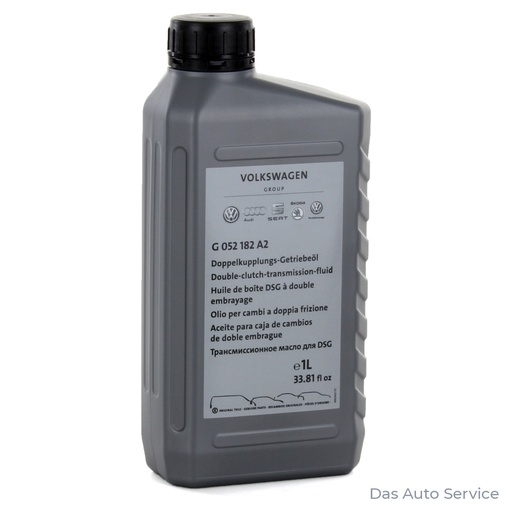
Genuine DSG gearbox oil G052182A2 1l
Genuine DSG gearbox oil. Using the correct oil is especially important for the clutches and mechatronic unit to work properly.
View in shop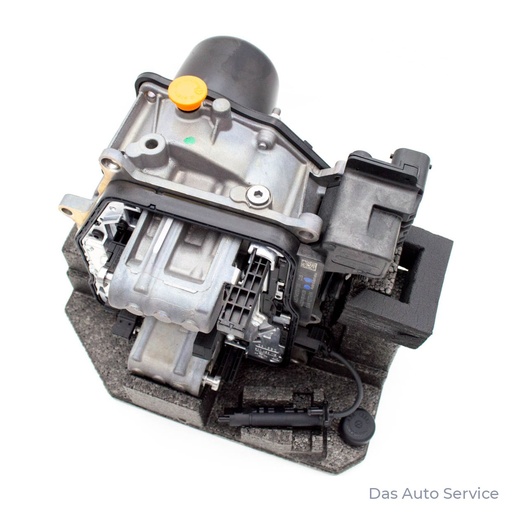
7-speed DSG mechatronic unit with dry clutch
Mechatronic unit for a 7-speed dry-clutch DSG. This is the part that controls the gearbox. We replace it when testing confirms that replacement is unavoidable.
View in shopRead more
- DSG and S tronic gearbox repair
- Gearbox servicing
- DSG DQ200 Problems: Jerking and Harsh Gear Changes
- DSG DQ250 Mechatronic Problems: Signs and Causes
- DSG DQ381 and DQ500 Oil Change: When Is It Due?
- S tronic 0B5 Problems: Mechatronics and Clutches
Frequently asked questions
How do I know which DSG gearbox my car has?
The most reliable way is to check the gearbox code in your car's documentation or with a diagnostic tool. That will tell you whether you have a DQ200, DQ250, DQ381, DQ500 or another version.
How often should DSG gearbox oil be changed?
At Das Auto Service, I recommend changing the oil every 60,000 km for all DSG and S tronic gearboxes. We use genuine oil and always carry out an adaptation after servicing.
What's the difference between a dry-clutch and wet-clutch DSG?
In a dry-clutch DSG, the clutches don't run submerged in oil. In a wet-clutch DSG, they run in oil that cools and lubricates them. The DQ200 is a dry-clutch DSG, while the DQ250, DQ381 and DQ500 use wet clutches.
Is a DSG gearbox reliable?
Yes, provided you know which version you have, service it on time and drive it properly. Not all DSG gearboxes have the same weak points, so when something goes wrong, the first step is proper diagnosis, not replacing parts based on guesswork.