Leather seats give your car's interior that lovely, premium feel. And I want yours to stay that way. But leather needs a bit of care. Over time, it dries out, cracks, starts to look shiny and loses its colour. And do you know what does the most damage? It's not age, my friend. It's cleaning it the wrong way and using the wrong products. So let me show you how to clean leather car seats without ruining them.
What should you avoid when cleaning leather car seats?
- Forget baby wipes and household cleaning wipes. The alcohol and soaps in them dry out the leather. Don't do that to your seats.
- Don't reach for glass cleaner or an all-purpose spray. They're simply not made for leather.
- Don't soak the seats with water. It gets into the stitching and perforations, and you really don't want that.
- Don't scrub hard with a brush. You'll end up stripping away the leather's protective coating instead of looking after it.
- Don't leave your car sitting in the sun for hours without a sunshade. The leather fades and starts to crack.
What's the right way to clean your leather interior?
- First, give the seats a thorough dusting. Take your time around the stitching and perforations too.
- Apply the leather cleaner to a soft cloth, not directly onto the seat.
- Work on small areas at a time, using gentle pressure. You don't need to scrub to get the leather clean.
- Then wipe away any remaining cleaner with a dry microfibre cloth.
- Finally, apply some leather conditioner. It'll help keep the leather soft and stop it drying out.

How often should you clean your leather interior?
If you use your car normally, a light clean once a month and conditioning every two to three months are plenty. If you've got children or a dog travelling with you, you'll need to do it more often. The important thing is not to let the dirt build up. Once it does, getting it off becomes a much bigger job.
And please, don't spray your leather seats or steering wheel with silicone sprays. They leave a slippery film that attracts dust. And when the steering wheel starts slipping through your hands, we're not just talking about keeping things clean any more. We're talking about safety.
What if the leather is already cracked or worn?
If the leather is already cracked, worn through or torn, no cleaning product is going to put it right. That's when you need an interior repair. Depending on how badly it's damaged, you might need to have the colour restored or the affected panel replaced. Leather conditioner is great for looking after your seats, but it won't stick torn leather back together.
A tip from Kris Mladenov: Clean your steering wheel more often than your seats. Grease from your hands builds up on the leather, and that's exactly why the steering wheel starts to look shiny. Look after it.
I want your car's leather interior to look just as good years down the line. So have a look at the care products in our shop. And if the leather is already cracked or worn, bring your car to Das Auto Service and let us take a look. We'll see what we can restore.
What will you find in our shop?
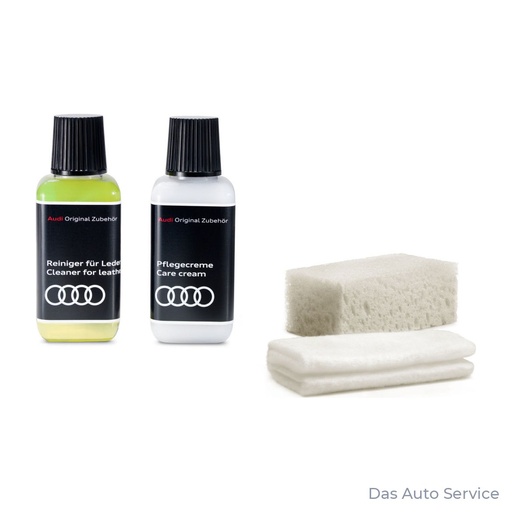
The genuine Audi leather care kit is designed to clean and condition your leather seats. Just the care they need.
View in our shop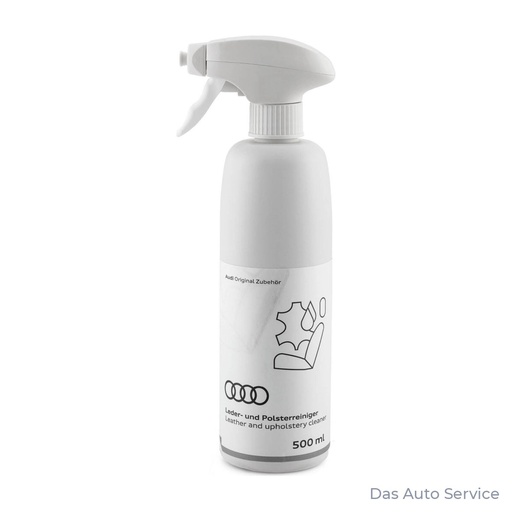
Audi leather and upholstery cleaner, 500 ml
The Audi leather and upholstery cleaner removes dirt without drying out the leather. And that's what matters.
View in our shop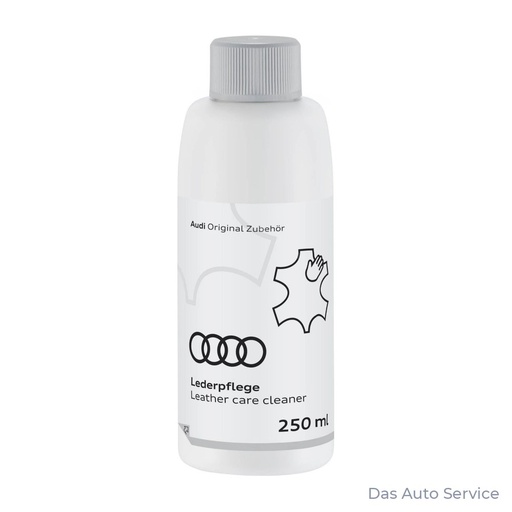
Genuine Audi leather conditioner, 250 ml
The genuine Audi leather conditioner keeps the leather soft and helps protect it from cracking.
View in our shopRead more
- Interior repairs
- Car care products in our shop
- How can I protect my car's interior with seat protectors, mats and organisers?
- How do I wash my car after winter without scratching the paintwork?
- Car displays: how to clean them without scratches
Frequently asked questions
Can I clean leather car seats with wet wipes?
I wouldn't recommend it. Wet wipes dry out the leather, and over time it starts to crack. It's just not worth it.
How often should I condition the leather?
Every two to three months is plenty with normal use. There's no need to overdo it.
What if the leather is already cracked?
Cleaning products alone won't fix it. At that point, you need an interior repair, not just cleaning and conditioning.