You turn the key, the starter motor cranks, but the engine won't fire up. Or worse, you're driving along, go to overtake, and suddenly the engine loses power, starts jerking or cuts out altogether. I hear this all the time at the workshop, and usually the owner has already read somewhere online that the injectors or high-pressure fuel pump have failed. But hang on! Sometimes the culprit is much simpler: the low-pressure fuel pump sitting inside the fuel tank. And because low-pressure fuel pump symptoms can affect both TSI and TDI engines, I want to explain how this pump works, how to spot a problem and why you shouldn't start replacing parts without knowing what's actually wrong.
What Is a Low-Pressure Fuel Pump?
Imagine your engine is thirsty, but all the fuel is sitting in the tank, waiting for someone to deliver it. That's exactly what the low-pressure fuel pump does. It's an electric pump that takes petrol or diesel from the tank and sends it towards the engine. There's another pump at the engine, the high-pressure fuel pump, which raises the pressure much further so the fuel reaches the injectors as it should. The two pumps work together. If the first one doesn't supply enough fuel, the second one has nothing to work with, no matter how perfectly it's working.
And here's something a lot of people miss. The pump in the tank doesn't just need to run and make a buzzing noise. It needs to deliver enough fuel at different engine loads. Keeping the engine running at idle is one thing. Putting your foot down while climbing a hill is quite another. So just because you can hear the pump doesn't mean it's healthy. You need to measure what it's actually delivering.
How Does the Fuel Pump Work in TSI and TDI Engines?
In both petrol TSI and diesel TDI engines, fuel has to travel from the tank to the engine. The difference is how each system handles that fuel. I'll keep it simple, because you don't need to be a mechanic to understand why your car isn't pulling properly.
- On TSI engines, the electric pump in the tank is controlled by a separate module that adjusts the fuel supply to match what the engine needs. The high-pressure fuel pump is mounted on the engine itself. If you want to understand that side of the system, have a read of my article on how the high-pressure fuel system works in TSI engines.
- On TDI engines, the pump in the tank sends diesel to the high-pressure fuel pump, which then builds the pressure needed by the injectors. If the fuel supply from the tank isn't enough, the engine starts running short of fuel. I've explained more about the injectors themselves in my article on Common Rail injectors in TDI engines.
Remember one thing. Whether you drive a petrol or diesel, the high-pressure fuel pump depends on the fuel coming from the tank. If that supply isn't right, the symptoms can make it look as though a completely different part has failed. And that's where unnecessary repairs begin, when someone starts replacing parts before finding out where the problem actually comes from.
What Are the Symptoms of a Failing Fuel Pump?
The tricky thing about this pump is that it doesn't always fail suddenly. Sometimes it gradually starts delivering less fuel, and your car gives you little warnings that something isn't right. You can feel the difference, but you don't know what's causing it. Here are the signs I want you to look out for.
- Longer cranking before the engine starts. Your car used to fire up straight away, but now the starter motor has to turn for longer before the engine catches. One possible cause is an insufficient fuel supply.
- Stalling or spluttering under load. You press the accelerator, the engine starts jerking, doesn't pull like it used to or cuts out completely. When the engine needs more fuel, the pump might not be able to keep up.
- Low fuel pressure fault code. A diagnostic scan might show a fault relating to fuel pressure. But that fault code alone doesn't automatically mean the pump needs replacing.
- Whining noise from the fuel tank. If you start hearing an unusual whining sound coming from the tank, pay attention. It could be a sign that the pump isn't working properly.
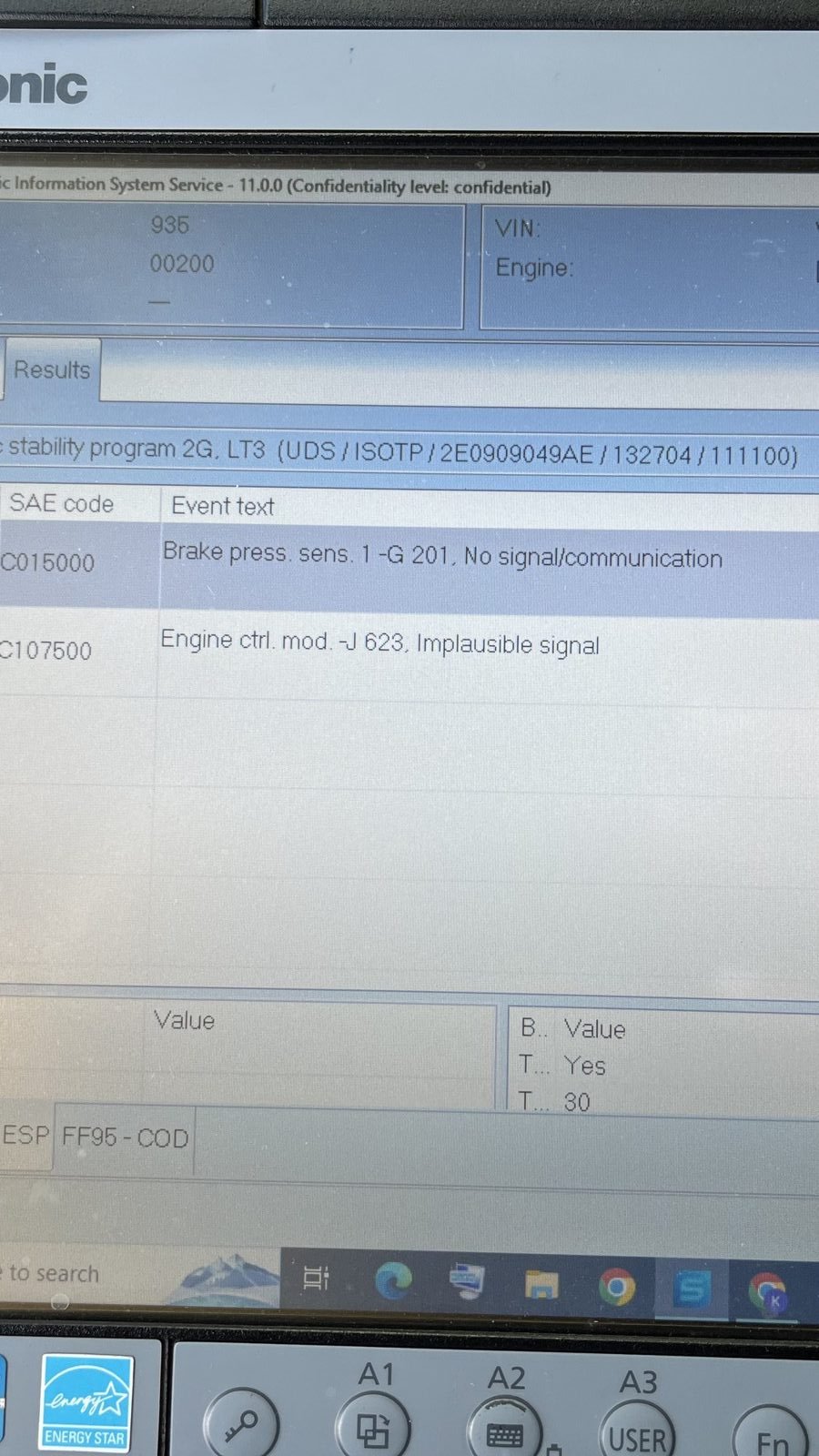
The important thing is not to jump to conclusions based on one symptom. Difficulty starting, for example, doesn't prove the pump has failed. And a low fuel pressure fault code isn't a death sentence for the pump either. We need to see what's happening to the fuel supply while the engine is running. Otherwise, you could pay for a brand-new pump and still have exactly the same problem afterwards.
When Is the Fuel Pump NOT the Problem?
I really want you to pay attention to this bit, because this is where a lot of diagnostic mistakes happen. The car has lost power, there's a low fuel pressure fault stored, and someone immediately declares the pump faulty. But other problems can cause very similar symptoms. And if you don't check those possibilities, you're just replacing parts and hoping you get lucky.
- Blocked fuel filter. If the filter isn't letting enough fuel through, the engine can run short of fuel even though the pump itself is working. I've explained this in more detail in my article about diesel fuel and the fuel filter.
- Pump control module or wiring. The pump is electric, so it depends on its control system and electrical supply. If there's a problem there, the pump might not work properly even though there's nothing wrong with the pump itself.
- High-pressure fuel pump. This can also be the reason the engine isn't getting the fuel pressure it needs. That's why we have to establish which part of the fuel system isn't doing its job.
See why I keep insisting on proper diagnostics? Three completely different problems can give you the same complaint: the car has no power. And replacing parts based on a guess isn't diagnostics. It's trial and error, paid for out of your pocket.
How Do We Check Whether the Fuel Pump Is Working?
At Das Auto Service, we don't start by ordering a new pump. First, we check whether it's actually causing the problem. There are three main things we need to look at before deciding what repair is necessary.
- We compare requested and actual fuel pressure. Using diagnostic equipment, we can see what pressure the system is asking for and what pressure it's actually getting. This helps us establish whether the fuel supply is meeting the engine's needs.
- We measure the pump's fuel flow rate. Put simply, we check how much fuel the pump can actually deliver. Because a pump that buzzes away but doesn't supply enough fuel isn't doing its job.
- We check the control system and wiring. We need to make sure the pump is receiving the correct control signals and electrical supply. Otherwise, we could replace a perfectly good pump and leave the real problem untouched.
Only after these checks can we confidently say what's causing the problem. That's the difference between diagnostics and guesswork. I'd much rather tell you exactly what's faulty than have you paying for parts that might have been perfectly fine all along.
WARNING! Don't make a habit of driving with an almost empty fuel tank. The fuel helps cool the pump, and when there's very little left, the pump can run hotter and wear out faster. Before you know it, one bad habit has turned into a repair bill you could easily have avoided.
Tip from Kris Mladenov: Fill up when the fuel gauge reaches a quarter of a tank instead of waiting for the low fuel warning light. That helps the pump work under better conditions and last longer. And if your car starts struggling to start, jerking or stalling, get the cause checked early rather than waiting until it leaves you stranded.
I hope you've found this article useful! If you have, I'd love you to share it with a friend who drives a TSI or TDI. You might save them an unnecessary repair bill. My mission is simple: when I know something useful, I want more people to know it too. The better you understand your car, the harder it is for someone to convince you to pay for something you don't actually need.
Read more
- Diagnostics
- Electrical faults and control modules
- TSI High-Pressure Fuel Pump: Faults and Diagnosis
- Diesel Won't Start in Cold Weather: Fuel and Filters
- 2.0 TDI Injector Problems: When to Replace All Four
Frequently asked questions
What are the symptoms of a failing fuel pump?
The most common signs are difficulty starting, jerking, loss of power or stalling under load. You might also get a low fuel pressure fault code or hear an unusual whining noise from the fuel tank. But proper diagnostics are needed to confirm the cause.
Where is the low-pressure fuel pump located?
In the TSI and TDI systems we're talking about, the electric low-pressure fuel pump sits inside the fuel tank. It sends fuel towards the engine, where the high-pressure fuel pump takes over the next stage of the job.
Can you drive with a faulty fuel pump?
I wouldn't recommend it, because the engine could lose power or stall under load. The sensible thing is to get the problem checked early, before the car leaves you stranded.
If I can hear the fuel pump running, does that mean it's working properly?
No. The pump can run and make noise without delivering enough fuel. That's why we check fuel pressure and flow rate instead of relying on what we can hear.