If you drive a Škoda Karoq 1.5 TSI, you've probably wondered exactly what needs changing, when to change it and which oil to use. People ask me about this all the time. You read one thing in the owners' groups, your dealer tells you something else, and your local garage gives you a third answer. In the end, you don't know who to believe. So I've put together this Škoda Karoq 1.5 TSI service schedule to help you look after your car properly. No unnecessary theory. Just the things you really need to know to keep your Karoq in good shape. We're talking about these versions:
- Škoda Karoq 1.5 TSI 150 hp (2017–present), EA211 evo engine with code DADA or DPCA, featuring ACT – a system that switches off two cylinders when the engine is under light load
- With a 6-speed manual gearbox or a 7-speed DSG DQ200 with dry clutches
- Front-wheel-drive versions, plus the small number of 4x4 models from 2018–2019 fitted with Haldex
How do you choose the right engine oil for your Karoq 1.5 TSI?
This is where a lot of people get confused, and I can understand why. In the Karoq 1.5 TSI documentation, you'll find two oil specifications – VW 504 00 (5W-30, LongLife III) and VW 508 00 (0W-20, LongLife IV). But here's the important bit! That doesn't mean you can just choose whichever one you fancy. The correct oil depends on your engine code and the year of your car. Check the oil filler cap and service book. At Das Auto Service, we check whether your engine is a DADA or DPCA and use exactly the oil specified for it. We don't guess, substitute one for the other or mix them. And if you're wondering whether 0W-20 is too thin, have a read of what I've written about 0W-20 oil meeting VW 508/509.
Under the factory LongLife service schedule, you can run the same engine oil for up to 30,000 km or 2 years. Personally, I wouldn't do that, especially with the way we drive here in Bulgaria. Short journeys around town, cold starts, dust and endless traffic jams. All of that ages the oil, even if you don't cover many miles. That's why at Das Auto Service we recommend changing the engine oil and oil filter every 10,000 km or once a year, whichever comes first, regardless of which oil you use. Whatever the onboard computer tells you. Not 15,000 km. Not 30,000 km. Every 10,000 km.
Which filters should you change, and when?
- Oil filter – change it every time you change the engine oil. No exceptions.
- Crankcase ventilation filter – change it every 60,000 km.
- Air filter – we change it alongside the engine oil every 10,000 km or once a year. The factory interval is 90,000 km or 6 years. But with the dust we get here, that's often far too long. So we inspect it at every check-up and replace it sooner if needed.
- Cabin filter – we change it together with the engine oil every 10,000 km or once a year.
- Fuel filter – it's located inside the fuel tank, and the factory service schedule doesn't specify a replacement interval.
When should you change the spark plugs on the 1.5 TSI?
Every 60,000 km or 4 years, whichever comes first. I know what you're thinking – if the engine is running perfectly well, why bother changing the plugs? Let me explain. As spark plugs wear, they need more and more voltage to produce a good spark. The ignition coils have to work harder to provide it, until eventually one of them gives up. And then you get the familiar symptoms – the engine starts shaking, and the check engine light comes on or begins flashing. All of that could have been avoided with a simple spark plug change. That's why we fit genuine spark plugs with the exact part number for your engine code. Not just any plugs with 1.5 TSI written on the box.
Why does the Karoq 1.5 TSI hesitate when pulling away cold?
This is one of the questions I hear most often about this engine. Owners usually describe it like this: "In the morning, while the engine is cold, it jerks and hesitates as if it's struggling. Once it's warm, everything's fine." With this well-known problem, the cause isn't a broken part. It's the way the software manages the engine while it's warming up, including how it works with ACT – the system that switches off two cylinders. In February 2020, the VW Group released a software update for affected models. If you've got an early Karoq and it's doing this, the first thing we do is check the software version with our VAS diagnostic tester. We're not going to start replacing injectors and spark plugs on a guess. I've explained this in more detail in my separate article about the 1.5 TSI hesitating when cold.
Do you need to change the oil in the 7-speed DSG DQ200?
If you've spent any time reading the forums, you've probably come across the claim that the DQ200 doesn't need servicing. Well, that's not true. This DSG has two separate oils – one lubricates the mechanical part of the gearbox, where the gears are, while the other is hydraulic fluid inside the mechatronic unit, the gearbox's "brain" that controls everything. At Das Auto Service, we change the oil in the mechanical part every 60,000 km, using genuine oil. We also check the mechatronic unit and carry out clutch adaptation after the service. Even if the gearbox is changing gears perfectly. Every single time.
If your DSG jerks or shudders when you pull away, we start with diagnostics and look at the live data in the measuring blocks. We don't replace parts just because someone in an owners' group had similar symptoms. With a DSG, the same shudder can have several different causes. And this is where things can get expensive. Because when someone starts replacing parts without knowing what's wrong, you're the one who ends up paying the bill, not the garage. That's why we need to be sure of the fault before doing anything else. I've explained more in my article about the DSG DQ200 with dry clutches.
With the 6-speed manual gearbox, the manufacturer describes the oil as filled for the lifetime of the vehicle. We still check for leaks at every inspection, though, and I recommend changing it every 60,000 km using genuine oil. It's a straightforward job, and quite often the gears feel easier to engage afterwards, especially on cold mornings.
What needs servicing if your Karoq is a 4x4?
These Karoq models are less common, but they do exist. The rear wheels are engaged through the Haldex system. We change the Haldex oil every 40,000 km, and we always remove the pump and clean its strainer. Because simply draining the old oil and pouring in fresh oil isn't enough. If you skip this service, the strainer gets clogged, the pump starts overheating, and eventually you're left with front-wheel drive only and warning lights on the dashboard. I've also explained why I say 40,000 km rather than 60,000 km in my article about Haldex Gen5.
Does the 1.5 TSI have a timing belt or a chain?
It has a timing belt. The factory service schedule doesn't specify a fixed replacement interval, but it does call for inspections. Even so, I recommend replacing the complete genuine timing belt kit every 180,000 km or 5 years, whichever comes first. That means the belt, rollers, tensioner and water pump. Why do I pay attention to the age as well as the mileage? Because rubber ages whether you drive the car every day or leave it sitting in the garage. And if the timing belt snaps, the valves hit the pistons. On a TSI engine, that usually means a major engine repair. And unfortunately, you're the one who has to pay for it.
When should you change the brake fluid and coolant?
We change the brake fluid every 2 years. The factory schedule calls for the first change after 3 years, then every 2 years after that. I prefer not to wait until the third year, even for the first change. The reason is simple – brake fluid gradually absorbs moisture, which lowers its boiling point. Under heavy braking, the pedal can start to feel soft. Just when you need your brakes the most. That's why we test the fluid with a brake fluid boiling-point tester. We don't just look at its colour and make a guess.
Newer Karoq models use G12evo coolant, while on the earlier cars you'll find G13. The two are compatible, but I'd rather replace all the coolant than keep topping up one with the other. I recommend doing this every third heating season and checking the frost protection every autumn. And it's not just about stopping the coolant from freezing. Over time, it loses the additives that protect the metal, and this engine has an aluminium block. Corrosion can start, tiny pits form in the aluminium, and quite often you don't realise anything is wrong until it starts leaking.
IMPORTANT! Don't top up with just any universal coolant from a petrol station without checking the specification first. The wrong coolant can cause serious problems for your aluminium engine. And if that ends in an expensive repair, you'll be paying the bill, not the garage. I'm telling you this because I'd rather help you avoid it.
What about the air conditioning and tyre repair kit?
Every spring, I recommend checking the air conditioning and replacing the cabin filter. And there's something else that's easy to forget. Most Karoq models don't have a spare wheel. Instead, they come with a compressor and a tyre repair sealant bottle. But that sealant has an expiry date. Check it once a year. Because the last thing you want is to discover it's expired when you're stuck on the motorway in the middle of the night.
Why do I recommend a check-up every 6 months?
At Das Auto Service, we try to get our customers into one simple habit – bringing their cars in for a check-up every 6 months. We check the fluid levels, look for leaks, inspect the brake pads, discs, tyres and suspension, then scan every control module for fault codes. Why so often? Because so many of the expensive repairs I see started with something small that nobody noticed in time. One of these check-ups could save you a repair bill big enough to pay for a lovely holiday. And the inspection itself costs roughly the same as a tank of fuel.
What should you remember about servicing your Karoq 1.5 TSI?
- Engine oil and oil filter – every 10,000 km or once a year, whichever comes first. Always use the correct oil specification for your engine code.
- All the main filters – oil, air and cabin – change them alongside the engine oil every 10,000 km or once a year.
- Spark plugs – every 60,000 km or 4 years.
- DSG DQ200 oil – every 60,000 km, together with a mechatronic unit check and clutch adaptation.
- Haldex on 4x4 models – every 40,000 km, always cleaning the pump strainer as well.
- Timing belt, rollers, tensioner and water pump – every 180,000 km or 5 years.
- Brake fluid – change it every 2 years.
- Coolant – change it every third heating season.
- Full vehicle check-up – every 6 months.
A tip from Kris Mladenov: If I could give you just two pieces of advice, they'd be these. First, be careful who you trust with your car. Don't choose a garage purely on price. Look for people who can explain what they're doing and why. Second, use genuine service parts and consumables. Yes, you'll pay around 20% more, but you'll save yourself a lot of headaches and uncertainty. Because saving a little money by cutting corners on proper servicing today can easily turn into a major repair tomorrow. And when that happens, the money comes out of your pocket.
I hope you've now got a clearer idea of how to look after your Karoq 1.5 TSI. If you've got a friend or know someone who drives the same car, send them this article. I've always believed that if I've learnt something useful from working in the garage, there's no reason to keep it to myself. The more people understand how to maintain their cars properly, the less they'll spend on repairs that could have been avoided.
The solution in our shop
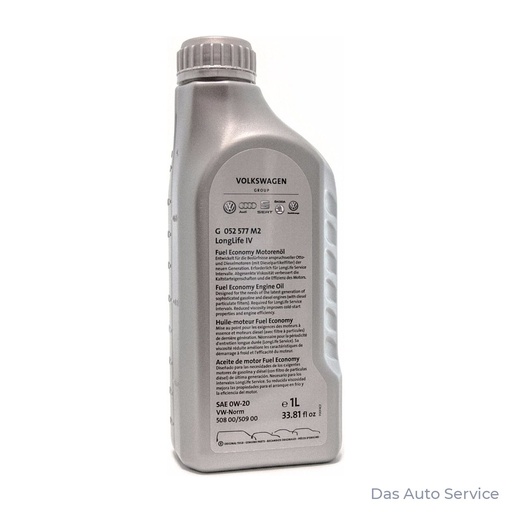
Genuine LongLife IV 0W20 engine oil G S60577M2 1l
Genuine 0W-20 engine oil meeting VW 508 00 (LongLife IV) – for Karoq models that require the VW 508 00 specification. Check your engine code first, then choose the oil.
View in our shop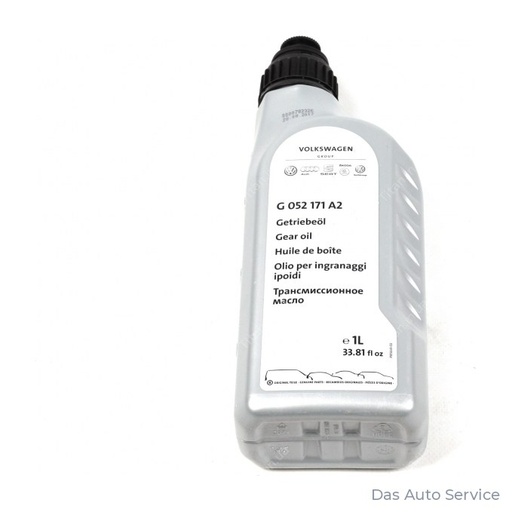
Genuine manual gearbox oil G052171A2 1l
Genuine oil for the mechanical part of the DSG DQ200 – I recommend changing it every 60,000 km.
View in our shop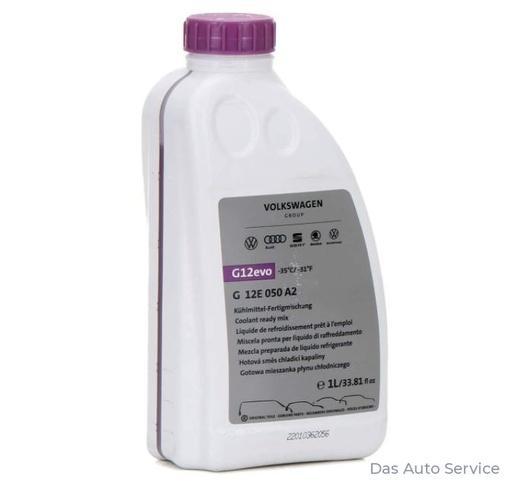
Genuine VAG G12Evo coolant G12E050A2 1.0l
Genuine G12evo coolant – change it every third heating season.
View in our shop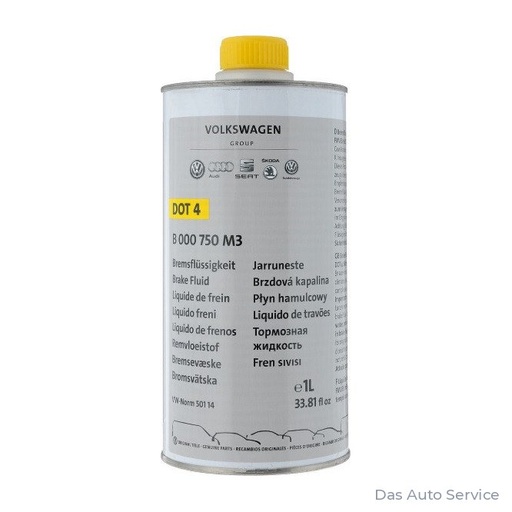
Genuine DOT 4 brake fluid B000750M3 Audi/Volkswagen 1l
Genuine DOT 4 brake fluid – change it every 2 years.
View in our shopRead more
- Routine servicing
- Gearbox servicing
- 1.5 TSI (EA211 evo): why does it hesitate when pulling away cold?
- DSG DQ200 with dry clutches: why does the gearbox jerk and shudder?
- VW Golf 8 1.5 eTSI service schedule
Frequently asked questions
Which engine oil should you use in a Škoda Karoq 1.5 TSI?
It depends on the engine code and year. Your car may need oil meeting VW 504 00 (5W-30) or VW 508 00 (0W-20). Check the oil filler cap and service book. My advice is to change the engine oil and oil filter every 10,000 km or once a year, whichever comes first.
Does the Karoq 1.5 TSI have a timing belt or a chain?
It has a timing belt. I recommend replacing the complete genuine timing belt kit, including the rollers, tensioner and water pump, every 180,000 km or 5 years, whichever comes first.
Why does the Karoq 1.5 TSI jerk when the engine is cold?
With the well-known cold-engine hesitation, the problem is usually related to the software while the engine is warming up, rather than a mechanical fault. That's why we check the software version with a diagnostic tester first. A software update was released for affected models in February 2020.
How often should you service the DSG in a Karoq 1.5 TSI?
With the DSG DQ200, I recommend changing the oil in the mechanical part of the gearbox every 60,000 km. We also check the mechatronic unit and carry out clutch adaptation after the service.