"Tiptronic vs DSG – which one is more reliable?" I hear this question all the time at the workshop, and I understand why. You've bought an Audi, VW or Porsche with an automatic gearbox and just want to enjoy driving it without worrying. But then you go online, and one person tells you DSG is the best gearbox ever made, while someone else swears by Tiptronic. The truth is, both are good, but they're designed for different jobs. A torque converter Tiptronic changes gear more smoothly and handles heavy loads better, while DSG shifts faster and is more fuel-efficient. Today, I'll explain everything you need to know about the 8-speed ZF 8HP Tiptronic – which cars use it, how to look after it, what can go wrong and how to avoid an expensive repair that you really don't need to pay for.
Tiptronic vs DSG – what's the difference?
Imagine two cars doing exactly the same job, but in completely different ways. One is built to carry heavy loads and drive smoothly, while the other is designed to respond quickly and change gear almost without you noticing. That's pretty much the difference between Tiptronic and DSG. They're both automatic gearboxes, but what's going on inside them is very different.
- Tiptronic – a traditional automatic gearbox with a torque converter. That's the part between the engine and gearbox that transfers power using oil. It's why the car pulls away smoothly and why the gearbox is well suited to heavy vehicles and towing.
- DSG and S tronic – imagine two manual gearboxes combined into one, with two clutches. While you're driving in one gear, the next gear is already prepared. That's why the changes are so quick.
If you drive a heavy SUV or regularly tow a trailer, Tiptronic has a real advantage. If you want quick responses and good fuel economy in a lighter car, DSG has plenty going for it. But! Don't choose a car just because of the gearbox name. What's far more important is how it's been maintained, because even the best automatic gearbox can be ruined by poor servicing.
Which Audi, VW and Porsche models use the ZF 8HP?
There's something important I want you to understand here. Not every 8-speed automatic gearbox is a ZF 8HP, even if the dashboard says Tiptronic. That's one reason people get confused when reading car forums. They come to us and say, "Mine's an eight-speed, so it must be a ZF, right?" Not necessarily.
- Audi – A4 and A5 with V6 TDI engines, A6, A7, A8, Q5 with V6 engines, Q7 4M and Q8.
- Volkswagen – Touareg CR and Amarok V6.
- Porsche – third-generation Cayenne.
There's one detail I really don't want you to miss. The Touareg 7P and second-generation Cayenne also have 8-speed automatic gearboxes, but they're made by Aisin, not ZF. From behind the wheel, you might not notice any difference because both change gear automatically. But when it comes to servicing, knowing exactly which gearbox is fitted makes a big difference. That's why we identify the gearbox first, then choose the correct oil and parts. Never the other way round.
How does the ZF 8HP work, and what should I know about it?
The ZF 8HP has eight gears and a torque converter. That's what gives it such smooth behaviour, especially when pulling away or driving at low speeds. Inside, there's also a mechatronic unit – I like to call it the gearbox's brain. It controls when and how the gears change, making sure the engine and gearbox work together properly.
- Eight gears – the gearbox selects the right gear for your speed and the load on the car.
- Torque converter – helps the car pull away smoothly and transfers power from the engine.
- Mechatronic unit – controls the gear changes inside the gearbox.
- Oil sump with built-in filter – the filter isn't replaced separately. The whole sump is replaced during servicing.
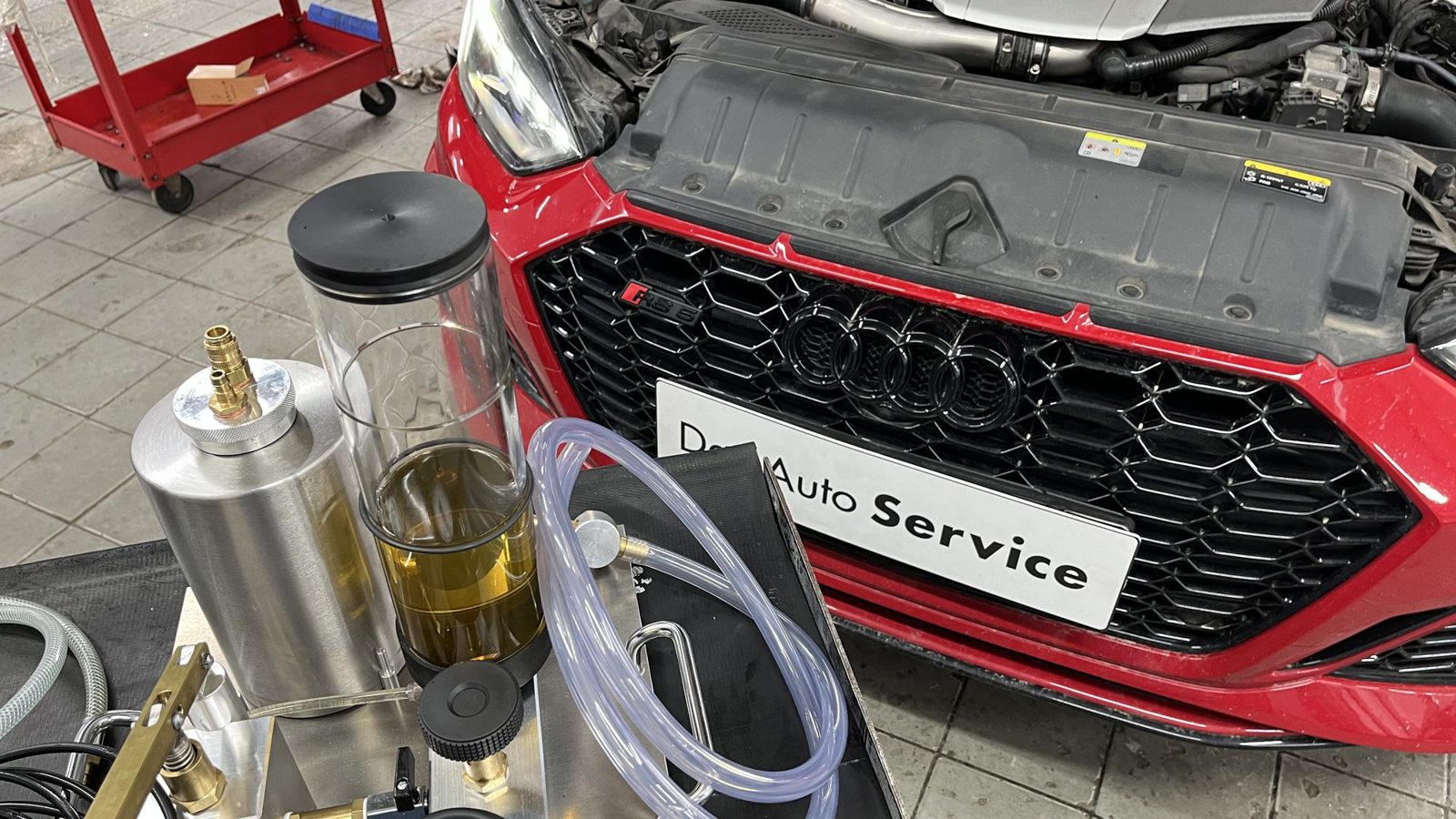
That last point is especially important. When I talk about changing the gearbox oil, I don't mean simply draining the old oil and pouring in some new oil. The filter collects dirt and contamination, and on this gearbox, it's built into the sump. If you change only the oil and leave the old filter in place, you haven't done a complete service. It's that simple.
How can I tell if my Tiptronic is developing problems?
Most owners notice something has changed long before they understand what's actually happening. "The gearbox is jerking", "It bangs when changing gear", "It never used to do that" – these are the things people tell me. And that's more than enough for us to start investigating. You don't need to understand how the mechatronic unit works to know your car isn't behaving normally any more.
Why does the gearbox jerk or change gear roughly?
This is one of the most common symptoms that worries owners. When the gearbox changes gear, you feel a thump, a jerk or a delay that wasn't there before. The good news is that sometimes new software, proper adaptation and fresh oil can sort it out. But not always. That's why I don't like the approach of "Let's replace something and see what happens." First we diagnose the problem. Then we decide what needs doing.
Where can gearbox oil leaks come from?
On the ZF 8HP, we pay particular attention to the oil sump and the seal around the electrical connector. Both are places where leaks can develop. Don't ignore even a small leak, because the oil is essential for the gearbox to work properly. If you notice oil around the gearbox, get it checked rather than waiting until it starts jerking. There's absolutely no reason to let a small leak turn into a much bigger problem.
What does it mean when the gearbox goes into limp mode?
This is a warning you really shouldn't ignore. The gearbox might get stuck in one gear and stop changing normally. That's called limp mode, and it means the car needs diagnosing straight away. Don't just clear the fault codes with a diagnostic tool and assume everything is fine because the warning has disappeared. We need to find out why it appeared in the first place.
When should I change my Tiptronic gearbox oil?
Now we come to the most important part – servicing. There's one thing I want you to remember: your automatic gearbox isn't something you should only think about when it starts jerking. The oil inside is working all the time, and changing it correctly is one of the most important things you can do to look after the gearbox. At Das Auto Service, we use specific service intervals for different vehicles rather than applying one figure to every model.
- Audi A models – change the gearbox oil every 120,000 km, using genuine oil.
- Audi S, RS and hybrid models – every 80,000 km.
- VW Touareg, Porsche Cayenne, Audi Q7 and Q8 – every 90,000 km, together with the transfer case and differential oils.
- Audi Q5 with Tiptronic – every 120,000 km.
Notice how the intervals are different. You can't take the recommendation for one Audi and automatically apply it to a Touareg or Cayenne. On the heavier SUVs, we service the transfer case and differentials at the same time as the gearbox. These are the parts that transfer power to the wheels, and they need oil too. There's no point looking after one part of the drivetrain while forgetting about the rest.
Why don't you change gearbox oil using a machine?
Because at our workshop, we service the gearbox using a genuine service kit and the correct procedure for that particular gearbox, not a flushing machine. The kit contains the parts needed for the service, including the sump with its built-in filter. I want to know exactly what has been replaced and how the job has been done, rather than simply ticking a box to say fresh oil has been pumped through the gearbox. I've explained what's included in a genuine gearbox service kit and why we don't use a machine to change gearbox oilin more detail.
If you drive a Touareg, Q7 or Cayenne, you can also read my separate article about the ZF 8HP Tiptronic and when it needs servicing. There, I focus specifically on these vehicles. It's important to understand what's being done to your car, even if you're not the one holding the tools.
WARNING! The oil level in a ZF 8HP must be checked at a precisely specified temperature. You can't judge it by eye, and you can't simply pour in roughly the right amount. We always carry out a gearbox adaptation after servicing. If the correct procedure hasn't been followed, the oil change hasn't been completed properly.
Is the ZF 8HP worth having, and how reliable is it?
Yes, absolutely. For me, the ZF 8HP is one of the best automatic gearboxes around, and there's a good reason it's used in so many different cars. It combines the smoothness of a traditional automatic with eight gears and the ability to handle heavy loads well. But don't think it's indestructible. No gearbox likes old oil, leaks or poor servicing. Look after it at the right time, and you've got every reason to expect it to work well for a long time.
Tip from Kris Mladenov: If you tow a trailer or regularly put your car under heavy load, don't wait until the end of the service interval. Have the condition of the gearbox oil checked earlier. And when it's time for an oil change, insist on a genuine service kit, a proper oil level check and gearbox adaptation afterwards. That's how you look after your gearbox before it starts causing trouble.
I hope you've found this article useful! If you have, I'd really appreciate you sharing it with a friend who drives an Audi, VW or Porsche with an automatic gearbox. I believe in something very simple – when I know something useful, I want other people to know it too. Because if you understand how to look after your car before something goes wrong, you can save yourself a lot of trouble. I'm telling you this as a friend – when you neglect servicing, you're the one who ends up paying for it out of your own pocket. And I'd much rather help you avoid that.
The solution in our shop
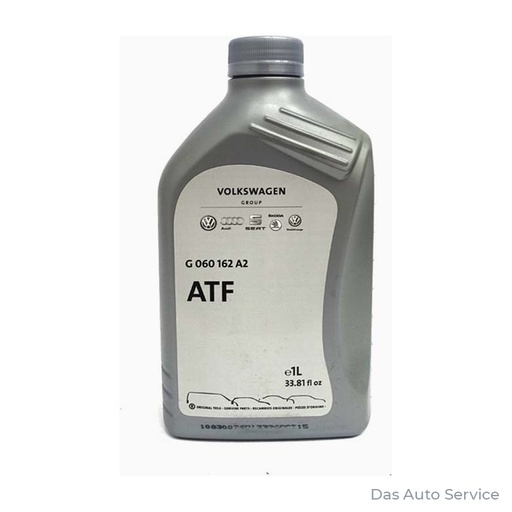
Genuine automatic transmission oil G060162A2 1l
Genuine Tiptronic gearbox oil, selected from the parts catalogue for your specific gearbox. Using the correct oil is essential for a proper ZF 8HP service.
View in shopRead more
- Gearbox servicing
- DSG and S tronic gearbox repair
- ZF 8HP Tiptronic Oil Change: When Is It Due?
- Automatic Gearbox Service Kit: What's Included?
- Why We Don’t Use a Machine to Change DSG Oil
Frequently asked questions
Tiptronic vs DSG – which is better?
It depends on the car and how you drive it. Tiptronic is smoother and better suited to heavy vehicles and towing, while DSG changes gear faster and is more fuel-efficient.
When should Tiptronic gearbox oil be changed?
For Audi A models, every 120,000 km. For S, RS and hybrid models, every 80,000 km. For the Touareg, Cayenne, Q7 and Q8, every 90,000 km. The interval for a Q5 with Tiptronic is 120,000 km.
Does the ZF 8HP have an oil filter?
Yes. The filter is built into the gearbox oil sump, so the complete sump and filter assembly is replaced during servicing.
How long does a ZF 8HP gearbox last?
It's one of the best automatic gearboxes around, but I can't promise you a particular mileage. A lot depends on how hard the gearbox works, whether the oil is changed on time and whether it's serviced properly.