You search Google for "VW Golf 7 1.4 TSI 122 reviews", and the very next suggestion is "mechatronic problem". Coincidence? I don't think so. If you're looking for a VW Golf 7 1.4 TSI review, you probably want to know whether it's reliable, what problems to expect and whether you'll regret buying one. We're talking about the VW Golf 7 (5G), produced from 2012 to 2020, with the 1.4 TSI EA211 petrol engine producing between 122 and 150 bhp. At Das Auto Service, we know this model well, so I'll explain what we see in the workshop, which issues deserve attention and what I'd check before spending my own money on one.
Who Is the Golf 7 1.4 TSI Right For?
If you're looking for a petrol car that's comfortable around town but equally enjoyable on longer journeys, the Golf 7 1.4 TSI is a very sensible choice. The engine is quiet, delivers good pulling power and doesn't need to be pushed hard to make decent progress. Fuel economy is another advantage, particularly with a mixture of town and motorway driving. It's the sort of car for someone who wants to get in, start the engine and enjoy the journey without unnecessary drama. But! Choosing the right engine is only half the equation, because the gearbox matters just as much.
Which Engines and Gearboxes Does the Golf 7 1.4 TSI Have?
For the seventh-generation Golf, Volkswagen used the 1.4 TSI engine from the EA211 family. There's an important difference compared with the older 1.4 TSI that many people overlook. The EA211 uses a timing belt rather than a timing chain. That's worth remembering when checking the service history and planning future maintenance.
- 1.4 TSI EA211 with 122 or 125 bhp – the standard engine versions, well suited to everyday driving and mixed use.
- 1.4 TSI ACT with 140 or 150 bhp – versions equipped with a cylinder deactivation system.
- 6-speed manual gearbox – the option for drivers who prefer changing gears themselves.
- 7-speed DSG DQ200 – an automatic gearbox with a dry clutch, where the condition of the mechatronic unit and clutch is particularly important.
What Problems Do We See on the Golf 7 1.4 TSI?
Now we get to the interesting part, because a car can look fantastic in photographs, have a spotless interior and drive perfectly well on a short test drive, but that doesn't mean everything is in good condition. There are several specific areas I pay attention to on this Golf. I'm not saying every car will develop these faults. I'm saying these are precisely the things I wouldn't overlook during an inspection.
DSG DQ200 Mechatronics and Clutch
This is one of the most widely discussed issues with automatic versions of the Golf 7 1.4 TSI. Owners usually describe the gearbox as jerking, juddering when pulling away or behaving strangely during manoeuvres. Sometimes the PRNDS indicator starts flashing and the car goes into limp mode. Both the mechatronic unit and the clutch need to be checked rather than replacing parts based on guesswork. I've explained the issue in detail in DSG DQ200: Why the Gearbox Jerks and Judders.
Water Pump and Thermostat
Another area worth checking is the water pump and thermostat housing. It's made of plastic and can start leaking coolant without anything particularly dramatic happening at first. You might notice a distinctive sweet smell while the coolant level gradually drops. Don't wait until the engine starts overheating before investigating the cause. I've covered this in more detail in 1.4 TSI EA211: Water Pump and Thermostat.
Turbocharger and Wastegate Control
If the engine starts making an unusual whistling noise, loses power or the engine management warning light comes on with boost-related fault codes, the turbocharger needs checking. On this engine, the problem is often associated with wastegate control. But that doesn't automatically mean the entire turbocharger needs replacing. First, you identify the actual cause, and only then do you decide what needs repairing. Otherwise, the repair quickly becomes an expensive guessing game.
What Should I Check Before Buying a Golf 7 1.4 TSI?
If you've found a car you like, I wouldn't rely solely on what the seller tells you and a quick drive around the neighbourhood. Even if the engine sounds quiet and the car looks well looked after, certain things need to be checked properly. Especially if it has DSG. Here's what I include in the inspection.
- DSG diagnostics – checking adaptation values, fault codes in the mechatronic unit and gearbox behaviour during a test drive, including pulling away on a hill.
- Cooling system – inspecting for traces of coolant around the thermostat and its housing.
- Service history – checking what maintenance has been carried out and whether previous repairs are documented.
- Cold start – observing how the engine starts and whether it maintains a steady idle.
These checks tell you far more about a car's actual condition than its appearance. If you want to reduce the risk of unpleasant surprises, you can book a pre-purchase inspection. I'd much rather find a problem before you buy the car than after you've already driven it home.
How Should I Service My Golf 7 1.4 TSI?
Proper maintenance isn't complicated, but it does need to be regular. For cars driven in Bulgaria, my recommendation for engine oil and filters is firm: change them every 10,000 km or once a year, whichever comes first. It doesn't matter which oil you use or whether the car is on a LongLife service schedule. I'm equally particular about servicing the DSG on time, and I always insist on carrying out an adaptation afterwards.
- Engine oil and filters – every 10,000 km or once a year, whichever comes first.
- DSG DQ200 – change the gearbox oil every 60,000 km using genuine oil, followed by a mandatory adaptation after servicing.
- Timing belt – replace at 180,000 km or 5 years, whichever comes first (engines built after 2015).
- Coolant – replace every third heating season.
- Brake fluid – replace every two years.
- Preventative workshop inspection – every six months.
If you'd like to see all the maintenance requirements in one place, take a look at the VW Golf 7 1.4 TSI service schedule. That way, you'll know what's coming up and what should already have been done.
WARNING! If the DSG indicator starts flashing and the car refuses to move, don't keep restarting the engine hoping the problem will disappear. Stop and have the gearbox diagnosed. Repeated attempts to pull away can finish off the clutch.
Is the Golf 7 1.4 TSI Worth Buying?
Yes, the Golf 7 1.4 TSI is a good petrol car, provided you choose the right example. The engine is enjoyable for everyday driving, but before buying one, I want to know the condition of the DSG, the mechatronic unit and the cooling system. If the gearbox has been checked and the thermostat isn't leaking, you've got a good starting point for a purchase. However, if you're concerned about DSG problems and don't want to worry about mechatronics and dry clutches, the manual gearbox is the more reassuring choice. It's that simple.
Tip from Kris Mladenov: With the DSG DQ200, the way you drive makes a huge difference. Don't hold the car on a hill using the accelerator and brake at the same time, and avoid repeatedly inching forwards in a jerky manner. Pulling away smoothly is a much better habit for the dry clutch.
I hope you've found this article useful! If you have, I'd appreciate you sharing it with a friend who drives a Golf 7 or is thinking of buying one. My mission is simple: when I know something, I want more people to know it too, so they can make better decisions about their cars.
The solution in our shop

Genuine Longlife III FE 0W30 oil 5L
LongLife III oil is a product for engine servicing. Regardless of which oil you choose, stick to the 10,000 km or one-year service interval.
View in shop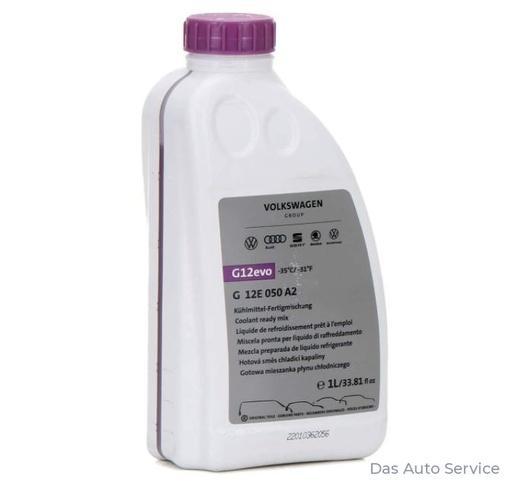
Genuine VAG G12Evo antifreeze G12E050A2 1.0l
Genuine G12evo coolant is a product for cooling system maintenance. Keeping an eye on the coolant level is particularly important if you suspect a leak from the thermostat.
View in shopRead more
- Pre-purchase inspection
- DSG and S tronic gearbox repair
- VW Golf 7 1.4 TSI Service Schedule
- 1.4 TSI EA211: Water Pump and Thermostat
- DSG DQ200 Problems: Jerking and Harsh Gear Changes
Frequently asked questions
What Is the Mechatronic Problem on the Golf 7 1.4 TSI?
The DSG DQ200 can develop juddering, harsh gear engagement, a flashing PRNDS indicator and limp mode. Both the mechatronic unit and the clutch need to be diagnosed.
Does the Golf 7 1.4 TSI Have a Timing Chain?
No. The 1.4 TSI EA211 engine in the Golf 7 uses a timing belt, unlike the older 1.4 TSI engine family, which used a chain.
Should I Choose a Manual or DSG Golf 7 1.4 TSI?
If you want an automatic, only choose a DSG after thorough diagnostics and a proper test drive. If you'd prefer a more reassuring option without worrying about the mechatronic unit and dry clutch, choose the manual gearbox.
How Often Should I Change the Oil in a Golf 7 1.4 TSI?
For cars driven in Bulgaria, I recommend changing the engine oil and filters every 10,000 km or once a year, whichever comes first, regardless of the LongLife service interval. DSG oil should be changed every 60,000 km using genuine oil, followed by an adaptation.