Driving a Golf 8 1.5 eTSI and wondering exactly what needs servicing, when to do it and which parts and fluids to use? I get asked this all the time. It's a mild hybrid, the service book is digital, and you'll always find someone in the owners' groups saying, "Modern cars hardly need any servicing." If only that were true! 🙂 So I've put together this VW Golf 8 1.5 eTSI service schedule, covering what the manufacturer says and what I recommend based on our experience at Das Auto Service. I want you to enjoy your car without worrying about expensive repairs caused by missed servicing.
Everything I'm about to explain applies to these models:
- VW Golf 8 hatchback and Golf 8 Variant, from 2020 onwards
- 1.5 eTSI 130 hp (96 kW)
- 1.5 eTSI 150 hp (110 kW)
Both engines belong to the EA211 evo family. They have a variable-geometry turbo, can shut down two cylinders under light load, and use a 48-volt mild hybrid system with a belt-driven starter-generator. That's where the "e" in eTSI comes from. And while we're here, let me answer another question I hear a lot: the eTSI only comes with a 7-speed DSG. There's no manual gearbox option.
VW Golf 8 1.5 eTSI service schedule: which engine oil?
This engine needs 0W-20 oil meeting VW 508 00, also known as LongLife IV. The familiar 5W-30 meeting VW 504 00, which you'll find almost everywhere, isn't suitable here. You can't simply replace the newer 508 00 and 509 00 specifications with the older ones. If someone fills your engine with whatever oil they happen to have, you might later find yourself wondering why it's burning oil. I've explained the differences in detail in my article about 0W-20 oil meeting VW 508/509.
VW uses a flexible service interval. The car's computer works it out based on how you drive, up to a maximum of 30,000 km or 2 years. But what do I recommend? Not 30,000, not 15,000, but every 10,000 km or once a year, whichever comes first! That's my recommendation for engine oil and the oil filter in Bulgaria, regardless of which oil you use. We do plenty of short journeys, spend ages sitting in traffic, and with the eTSI, the engine keeps stopping and starting – at traffic lights, when you come to a stop, and even when the car is coasting. Every restart puts extra strain on the oil. Little by little, it all adds up. You won't notice anything straight away. But eventually, you're the one who gets the bill.
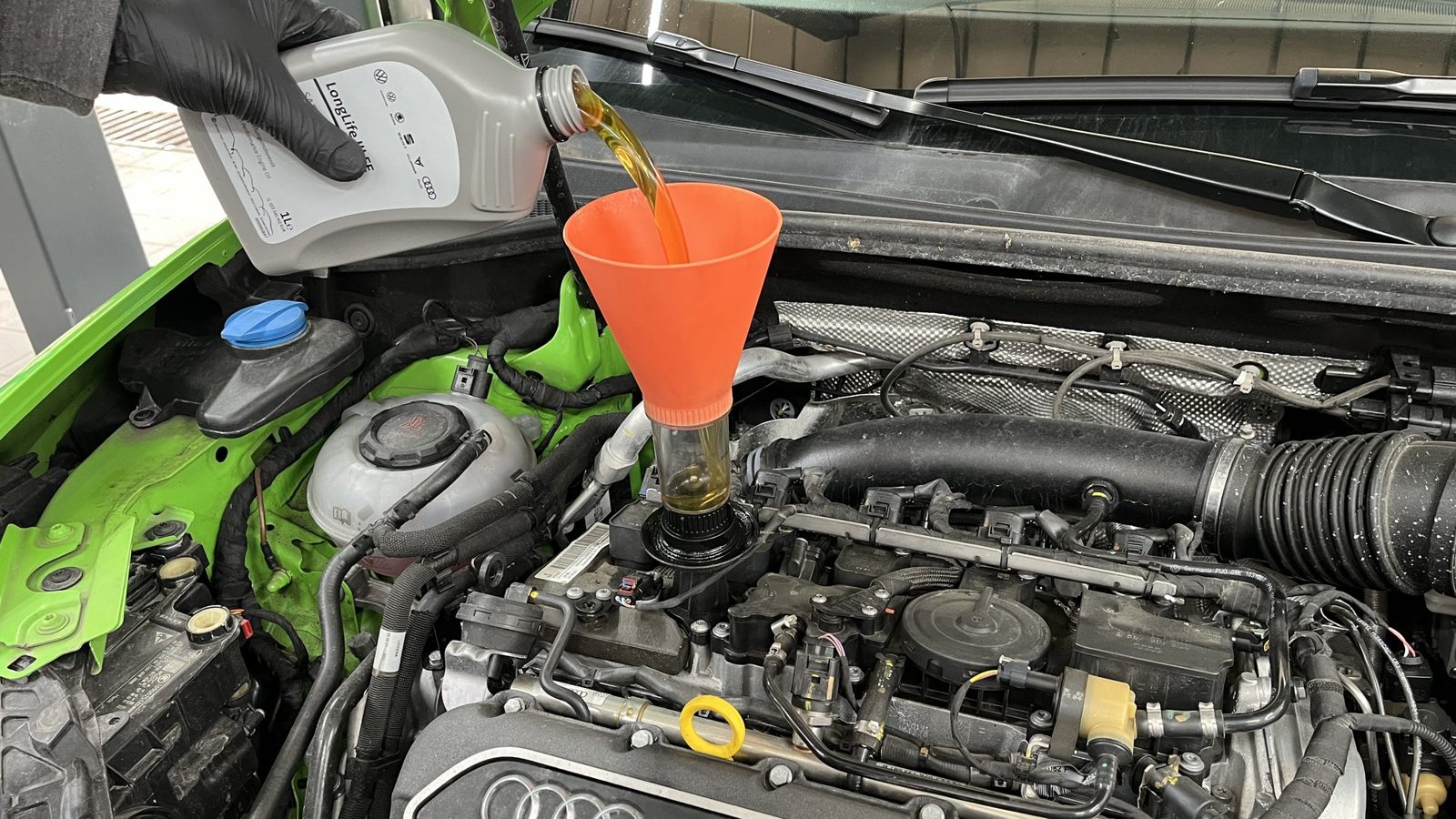
Advice from Kris Mladenov: If you need to top up the oil between services, only use oil meeting VW 508 00. Don't just grab the first bottle of 5W-30 you see at a petrol station. Check the specification in your service book too. And if a workshop doesn't know the difference between VW 504 00 and VW 508 00, I'd rather you found another workshop than risked putting the wrong oil in your engine.
Which filters need changing, and how often?
- Oil filter – change it with every engine oil change. No exceptions.
- Crankcase ventilation filter – every 60,000 km.
- Air filter – we change it with the engine oil every 10,000 km, even though VW specifies 90,000 km or 6 years. We also inspect it at every check-up, because the dust and road conditions here in Bulgaria are quite different from what the factory service schedule assumes.
- Cabin filter – we change it alongside the engine oil every 10,000 km or once a year.
If you mainly drive around town, the air filter gets dirty much faster than the factory schedule would suggest. Don't ignore it. Your engine has a turbo and direct injection, and it needs plenty of clean air to run properly. When the filter gets clogged with dust, you might even notice the difference when you fill up at the petrol station.
When should you replace the spark plugs?
VW specifies spark plug replacement every 60,000 km or 4 years, whichever comes first. This is one area where I wouldn't cut corners. As a spark plug wears out, it needs more voltage to produce a spark. That puts extra strain on the ignition coil, and before you know it, you're paying for coils as well as plugs. If the engine starts shaking, the car doesn't pull like it used to, or the Check Engine light starts flashing, get it diagnosed promptly. A flashing Check Engine light means the engine is misfiring. And every kilometre you drive with a misfire puts the catalytic converter at risk.
Does the 7-speed DSG need servicing?
The Golf 8 1.5 eTSI uses the DQ200 gearbox with a dry clutch. I bet someone's already told you it "doesn't need servicing". I hear that all the time too. But there's no such thing as oil that lasts forever. I recommend changing the oil in the mechanical section every 60,000 km, always using genuine oil. The mechatronic unit – basically the gearbox's brain – has its own separate hydraulic fluid. We check that whenever we service the DSG. Afterwards, we always carry out a clutch adaptation.
If the DSG starts jerking or juddering when you pull away, especially in traffic, we start with diagnostics. We don't immediately order a new clutch or replace the mechatronic unit on a guess. We need to find the actual cause. Otherwise, you could end up paying for parts that were perfectly fine in the first place. I've explained this in detail in my article about the DQ200 and why the gearbox jerks and judders.
IMPORTANT! If the car only judders on cold mornings and everything goes back to normal once it's warmed up, the problem often isn't the DSG at all. It can be the engine software. I've covered this in a separate article about the 1.5 TSI juddering when cold. Don't let someone replace your clutch just because they think it might be the problem. When the diagnosis is wrong, you're the one paying for that expensive repair, not the workshop.
Does the Golf 8 1.5 eTSI have a timing belt or chain?
A timing belt. Not a chain. VW doesn't specify an exact replacement interval for the timing belt on petrol Golf 8 models. But that doesn't mean the belt lasts forever. It ages over time, even if you don't cover many kilometres. We treat it the same way as the 1.4 TSI from this engine family and recommend a genuine timing belt kit, including the rollers, at 210,000 km or 5 years, whichever comes first. Why? Because if the timing belt snaps, the valves hit the pistons. And then we're no longer talking about routine servicing. We're talking about a major engine repair.
There's another belt I want you to keep an eye on – the starter-generator belt. On the eTSI, it doesn't just drive the generator; it also helps start the engine. That means it works under considerably more strain than a conventional belt. At every inspection, we check both the belt and its tensioner.
What do we check on the 48-volt system?
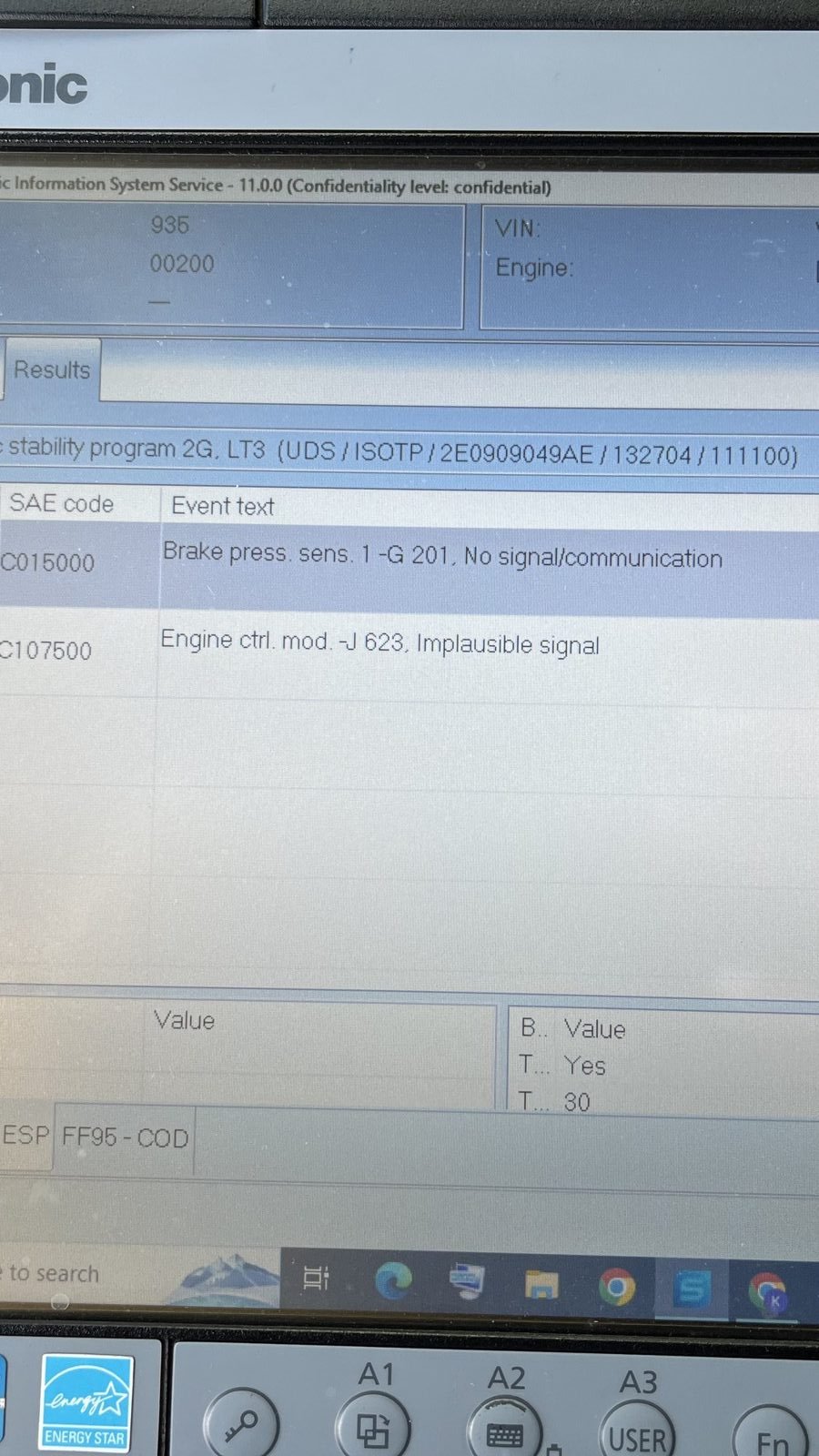
The small 48-volt lithium-ion battery doesn't have a specified replacement interval. But your Golf 8 eTSI also has a conventional 12-volt battery. And don't underestimate how important that one is. When it gets weak, the Start/Stop system might stop working, the car might stop coasting, and sometimes even the DSG can start behaving strangely. That's why, at every inspection, we scan all the control modules for fault codes, not just the engine ECU. We also look at live data from both batteries – in other words, what they're actually doing while the systems are running. Otherwise, you're only seeing part of the problem.
When should we change the brake fluid and coolant?
According to VW's service schedule, the first brake fluid change is due after 3 years, then every 2 years after that. My advice is to change it every 2 years. No exceptions. Over time, brake fluid absorbs moisture, which lowers its boiling point. Under heavy braking, the pedal can start to feel spongy. And that's exactly when you need your brakes to work properly. I've explained why this matters so much in my article about brake fluid in VAG cars.
The coolant is G12evo. I recommend replacing it every third heating season and checking its protection every autumn. As the years go by, the additives gradually lose their effectiveness. Old coolant can cause tiny corrosion pits in the aluminium engine block. And that's not the sort of problem you want to discover after the damage has already been done.
What about the air conditioning and tyre repair kit?
I recommend servicing the air conditioning every spring. And I don't mean simply "topping up the refrigerant". We check the whole system and replace the cabin filter. There's something else that's easy to forget too – most Golf 8 models don't have a spare wheel. Instead, they come with a tyre repair kit. That kit has an expiry date. Check it every year, so you don't discover it's unusable just when you've got a puncture.
Why do I insist on checking the car every 6 months?
At Das Auto Service, we often tell our customers to have their car inspected every 6 months. We check the oil level and condition, look for leaks, inspect the brake pads, discs, tyres and suspension, and read any fault codes stored in the control modules. Half an hour on a ramp can save you a lot of money and frustration. We see it all the time. Plenty of the expensive repairs that come through our doors started with something small that nobody spotted in time. And once that little problem turns into a big one, you're left paying the bill.
What should you remember about servicing your Golf 8 1.5 eTSI?
- 0W-20 engine oil meeting VW 508 00 and a new oil filter – every 10,000 km or once a year, whichever comes first.
- All filters – oil, air and cabin – are changed with the engine oil every 10,000 km or once a year.
- Spark plugs – every 60,000 km or 4 years.
- DSG DQ200 – change the oil in the mechanical section every 60,000 km, followed by a mandatory adaptation.
- Timing belt and rollers – at 180,000 km or 5 years, using only a genuine kit.
- Brake fluid – every 2 years.
- Coolant – every third heating season.
- Full vehicle inspection – every 6 months.
Advice from Kris Mladenov: there are two things I want you to remember about your Golf 8 1.5 eTSI. First, be careful who you trust with your car. Don't choose a workshop based on price alone. Make sure the person working on it actually knows what they're doing and can explain why they're doing it. Second, always use genuine parts and fluids. Yes, it costs around 20% more, but at least you know exactly what's going into your car. And that peace of mind is worth it. If you'd like us to look after your Golf 8, you're welcome to visit us for routine servicing or for gearbox servicing.
I'm Kris Mladenov, and I write these articles because I want you to understand what's happening with your car before a small problem turns into an expensive repair. I hope I've helped. And if you've got a friend with a Golf 8, send them this article. You might save them quite a bit of trouble 🙂
The solution from our shop
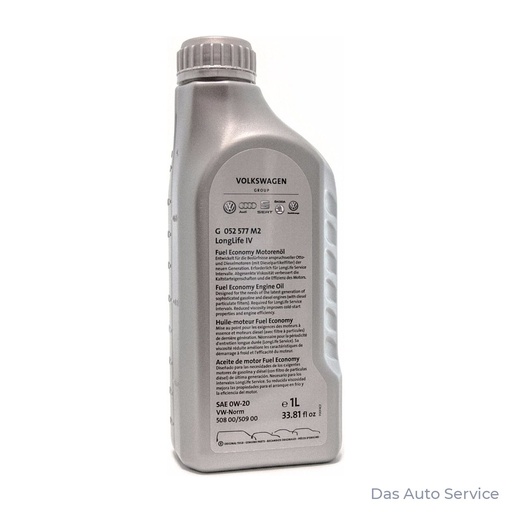
Genuine LongLife IV 0W20 engine oil G S60577M2 1l
Genuine 0W-20 LongLife IV engine oil meeting VW 508 00 – exactly what the 1.5 eTSI needs.
View in our shop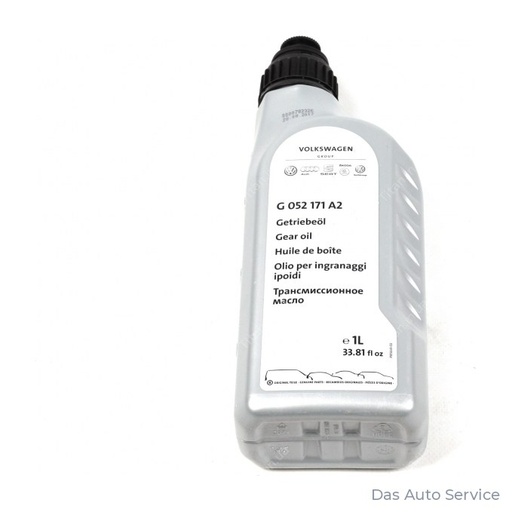
Genuine manual gearbox oil G052171A2 1l
Genuine G 052 171 oil for the mechanical section of the DSG DQ200.
View in our shop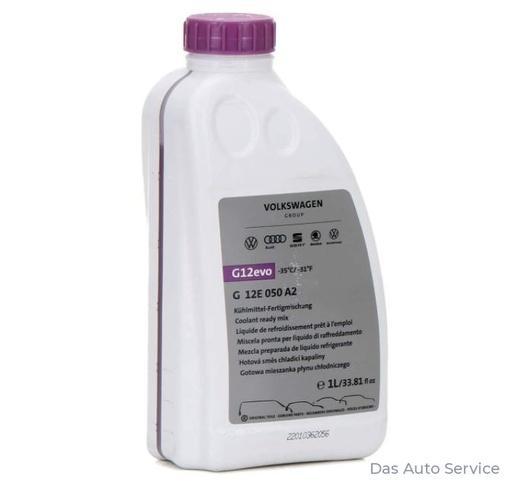
Genuine VAG G12Evo coolant G12E050A2 1.0l
Genuine G12evo coolant – we replace it every third heating season.
View in our shop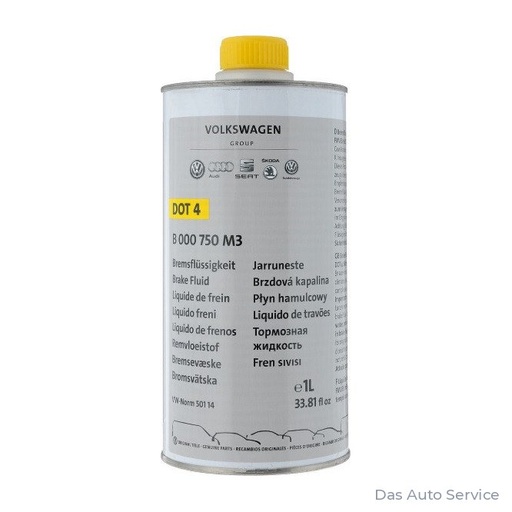
Genuine DOT 4 brake fluid B000750M3 Audi/Volkswagen 1l
Genuine DOT 4 brake fluid – we change it every 2 years.
View in our shopRead more
- Routine servicing
- Gearbox servicing
- DSG DQ200 with a dry clutch: why does the gearbox jerk and judder?
- 1.5 TSI (EA211 evo): why does it judder when pulling away cold?
- 0W-20 oil meeting VW 508/509: can you use it in an older engine?
- VW Golf 7 1.4 TSI Service Schedule
Frequently asked questions
VW Golf 8 1.5 eTSI service schedule: which engine oil?
0W-20 oil meeting VW 508 00 (LongLife IV). I recommend changing it every 10,000 km or once a year, whichever comes first, always with a genuine oil filter.
Does the Golf 8 1.5 eTSI have a timing chain or a belt?
A timing belt. VW doesn't specify a replacement interval, but I recommend a genuine timing belt kit, including the rollers, at 180,000 km or 5 years, whichever comes first.
Is the Golf 8 1.5 eTSI available with a manual gearbox?
No. The eTSI only comes with the 7-speed DSG DQ200 with a dry clutch. I recommend changing the oil in the mechanical section every 60,000 km, followed by a mandatory clutch adaptation.
When should you replace the spark plugs on a Golf 8 1.5 eTSI?
Every 60,000 km or 4 years, whichever comes first. Don't put it off, because worn spark plugs put extra strain on the ignition coils.