If you've been searching for a VW Passat B7 2.0 TDI review, you've probably already come across plenty of conflicting opinions. Especially if you've heard all the stories about the Passat B6 and you're wondering whether the B7 is finally the one VW got right. My short answer is: for the most part, yes! The VW Passat B7 (3C), built from 2010 to 2014, is a much better-made car than its predecessor, and the 2.0 TDI common rail engine from the EA189 family is a good choice if you cover a lot of miles. But there are a few things you really need to know before handing over your money. I'll tell you what we see with these cars at the workshop, because I'd much rather you knew about the problems before buying than hear about them from your mechanic afterwards.
Who is the Passat B7 2.0 TDI right for?
If you've got a family, travel regularly or need a car for work, the Passat B7 is definitely worth a look. There's plenty of room, the engine is quiet for a diesel and it doesn't use much fuel. You can also feel that it's better put together than the B6. It's not a car that's supposed to blow you away with anything spectacular. It's a car that gets the job done, day after day. And that's exactly what makes it good.
But don't confuse a good model with a good individual car. One Passat that's been serviced regularly and another that's only seen a workshop when a warning light came on can look equally good from the outside. Under the bonnet, though, they can tell two completely different stories. That's why, with the B7, its condition and genuine mileage matter much more than a shiny interior.
What engines and gearboxes does the Passat B7 have?
We're talking about the 2.0 TDI common rail engine from the EA189 family. Common rail means the diesel injectors are supplied from a shared high-pressure fuel rail. It's a different system from the older PD engines you've probably read about on the forums. You'll find a few versions in the B7, with the 140 hp being the most common. There are more powerful versions too, if that's what you're after.
- 2.0 TDI common rail, 140 hp – the most common version.
- 2.0 TDI, 170 hp – the more powerful version, later increased to 177 hp.
- Gearboxes – a 6-speed manual or a 6-speed DSG DQ250 automatic gearbox.
- 4MOTION – four-wheel-drive versions are also available.
Which combination would I choose? I'd start with the car's history, not its horsepower. A well-maintained 140 hp Passat is a much smarter buy than a neglected 170 or 177 hp one. And if you want a DSG, you need to check more than just how smoothly it changes gear. You also need to know how it's been serviced.
VW Passat B7 2.0 TDI review: what problems do we see?
EGR and its cooler – why is the engine warning light on and the car losing power?
Customers come to us saying, "The engine warning light is on, the car has no power and sometimes goes into limp mode." One of the systems we check is the EGR, which sends some of the exhaust gases back into the engine. On these engines, both the EGR and its cooler can cause trouble. But we don't start replacing parts just because someone read on a forum that "they all have this problem". Diagnosis first, repairs second. I've explained it in more detail here: 2.0 TDI EA189: EGR, cooler and limp mode.
DPF – why is city driving bad for it?
The DPF is the filter that traps soot from the exhaust gases. If your Passat is mostly driven on short journeys around town, the filter can start filling up and causing problems. If the car was a company vehicle that spent most of its life covering motorway miles, things are usually better. That's why I don't just look at the mileage on the dashboard. I also want to know how those miles were covered. It matters!
Oil pump – what's the hexagonal drive problem?
On versions with balance shafts, there's one problem I never like to underestimate. The hexagonal shaft that drives the oil pump can wear out, causing the oil pressure to drop. And engine oil is what protects your engine from wear. You really don't want to discover that the oil pressure has been too low only when the engine starts rattling. I've explained more in my article about the oil pump problem on the 2.0 TDI with balance shafts.
DSG DQ250 and the dual-mass flywheel – why does it jerk and rattle?
"The gearbox jerks when changing gear." You'll see that complaint quite often in owners' groups. With the DSG DQ250, one of the first things I ask is when the gearbox oil was last changed. At our workshop, we change it every 60,000 km using genuine oil, and we always carry out an adaptation afterwards. Separately, the dual-mass flywheel can start rattling at idle. Don't confuse the two problems, and don't let anyone replace parts based on guesswork.
What should I check before buying a Passat B7?
If you've found a car you like, don't rush to leave a deposit just because it looks well looked after. A lot of Passat B7s were company cars and have covered some serious mileage. That doesn't automatically make them bad cars, but it does mean there are a few things you need to check. Here's where I'd start.
- Get a full diagnostic check. Check the EGR, DPF and engine oil pressure.
- If it's a DSG, check the adaptations and make sure you take it for a test drive. Pay attention to whether the gearbox jerks, thumps or hesitates when changing gear.
- Ask for proof that the timing belt and water pump have been replaced. Don't just accept someone saying, "They've been done."
- Check the genuine mileage and service history. Many Passat B7s come from company fleets.
I always recommend booking a pre-purchase inspectionbefore paying for the car. Not afterwards, when you've already driven it home and started discovering the surprises. A proper inspection can save you a lot of headaches. I'm telling you this as a friend, because you'll be the one paying for those repairs later.
How should I service my Passat B7 2.0 TDI to make it last?
I'm going to be very clear about this. I'm not a fan of long engine oil change intervals, regardless of what the LongLife service schedule says. For cars driven in Bulgaria, I recommend changing the engine oil and all filters every 10,000 km or once a year, whichever comes first. Not just the oil filter, but the fuel, air and cabin filters too. The manufacturer's recommendations also take environmental regulations into account. My priority is keeping your engine healthy.
- Engine oil meeting VW 507 00 and all filters – every 10,000 km or once a year, whichever comes first.
- DSG DQ250 – genuine gearbox oil every 60,000 km, followed by a mandatory adaptation.
- Timing belt and water pump – follow the prescribed replacement interval for your specific engine and keep proof of the work.
- Crankcase ventilation filter – every 80,000 km on diesel engines.
- Brake fluid – every 2 years, and coolant – every third heating season.
- Workshop inspection – every 6 months, even if the car seems to be running perfectly.
If you want everything in one place, have a look at the Passat B7 and CC service scheduleI put together a few years ago. This is how I prefer us to look after these cars – regular maintenance, rather than waiting until something breaks.
IMPORTANT! The 30,000 km LongLife service interval is one of the most common reasons we see tired Passat B7s at 250,000 km. Don't leave it that long between engine oil changes.
Is a used Passat B7 2.0 TDI worth buying?
Yes! For me, the VW Passat B7 2.0 TDI is still one of the most sensible used family cars you can buy, provided it has a proper service history and a clean diagnostic check. The engine is economical, the car is comfortable over long distances and, overall, it's better made than the B6. But don't buy a car just because of its model, year or appearance. Buy that particular car only after you've checked how it's been treated throughout its life. That's the difference between a good purchase and an expensive mistake.
Tip from Kris Mladenov: If you're looking at a Passat that's come from a company fleet, ask for a printout of its service records. I don't care how shiny it looks. I care how often its oil has been changed over the years. A well-maintained car with higher genuine mileage can be a better choice than one with a lovely number on the dashboard and no history whatsoever.
I hope you've found this article useful! If you have, I'd really appreciate you sharing it with a friend who's thinking about buying a Passat B7. My mission is simple – when I know something, I want more people to know it too. Because the better you understand your car, the harder it is for someone to mislead you, and the less money you'll waste on repairs you never needed.
The solution in our shop

Genuine Longlife III FE 0W30 oil 5L
LongLife III engine oil for servicing your engine. Use oil with the correct specification and don't extend the oil change interval.
View in shop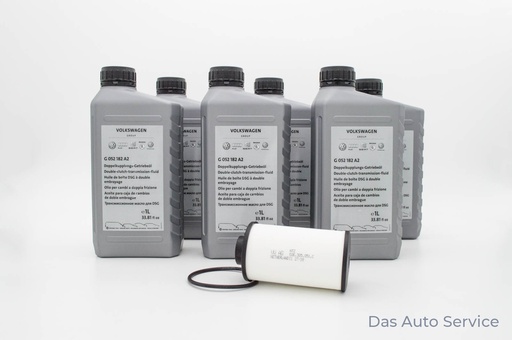
Genuine service kit for the 6-speed DSG DQ250 – oil, filter and seals. An adaptation must always be carried out after the oil change.
View in shopGenuine service kit for the 6-speed DSG DQ250 – oil, filter and seals. An adaptation must always be carried out after the oil change.
View in shopRead more
- Pre-purchase inspection
- Routine servicing
- VW Passat B7 and CC Service Schedule – 1.6 & 2.0 TDI
- 2.0 TDI Oil Pump Failure: The Balance Shaft Problem
- 2.0 TDI EGR Problems (EA189): Cooler and Limp Mode
Frequently asked questions
Passat B6 or B7 – which should I buy?
I'd choose the B7 because it's generally a better-made car. But if the B7 has no service history and the B6 has proof of proper maintenance, I wouldn't make my decision based on the generation alone.
140 or 170 hp in the Passat B7?
The 140 hp version is the most common and a perfectly sensible choice. There's also the 170 hp version, later increased to 177 hp, but for me, condition matters more than power.
What are the common problems with the Passat B7 2.0 TDI?
Mainly the EGR and its cooler, DPF problems caused by city driving, the oil pump drive on certain versions, the DSG DQ250 and the dual-mass flywheel. That doesn't mean every car will have these problems, which is exactly why a proper diagnostic check matters.
How often should I change the engine oil on a Passat B7 2.0 TDI?
My recommendation is every 10,000 km or once a year, whichever comes first, together with all filters. On the DSG DQ250, the gearbox oil should be changed every 60,000 km using genuine oil, followed by an adaptation.