VW Passat tailgate not opening fully? Here's why.

▶ Passat electric tailgate failure – an expensive repair or a simple fix?
Is your VW Passat tailgate not opening fully, and has your garage told you that both electric struts need replacing? I hear this quite often from customers who come to us after visiting several garages because their tailgate only opens halfway or refuses to close. And do you know what's interesting? In most cases, there's absolutely nothing wrong with the struts! In the video below, I show you where the fault actually lies and how you can save yourself the cost of a completely unnecessary repair.
Why is my garage telling me I need new tailgate struts?
The electric tailgates on the Passat, Golf and other Volkswagen Group models are fitted with two electric struts that raise and lower the tailgate. When the tailgate stops opening fully, it seems perfectly logical to assume that one of the struts has failed. After all, they're responsible for lifting the tailgate, aren't they? Well, not quite!
One of the biggest problems in our industry is that many mechanics think diagnostics simply means reading and clearing fault codes with a diagnostic tool. But that's precisely where the real work begins. You need to look at the live data in the tailgate control module and see what information it's receiving from the individual sensors.
In the vast majority of cases I see at our workshop, both struts are in perfect working order. The reason the tailgate refuses to open or close properly lies in a component you probably haven't even considered. The latch!
How can a faulty latch stop my tailgate from opening?
There are several microswitches inside the tailgate latch. These are small switches that tell the control module what position the latch is in and whether the tailgate is open or closed. Think of them as the eyes of the control module that operates the struts. If one eye can't see properly, how do you expect the module to know what to do?
Over time, one of these microswitches wears out and starts sending incorrect signals. That's when the tailgate starts behaving strangely – sometimes it opens, sometimes it stops halfway, and sometimes you have to press the button several times to get it to close. In the case I show you in the video, we didn't touch either of the struts. The latch was the sole cause of the problem.
VW Passat tailgate not opening fully – how can I identify the fault?
I'll describe the four most common problems that customers bring to our workshop. See if you recognise any of these symptoms from your own tailgate. The last one is slightly different, but I'll explain why in a moment.
- You press the close button and the tailgate starts to lower, but stops halfway. You press the button again, but instead of closing, the tailgate starts opening.
- The tailgate closes without any problems, but when you try to open it, it stays shut. You have to give it a helping hand to get it moving.
- The tailgate opens in stages. You press the button, it rises part of the way, stops and waits for you to press it again. This continues until you finally manage to open the boot fully.
- The dashboard indicates that the tailgate is open, even though you've closed it. You grab hold of the tailgate and can feel some movement. You push it a little harder, hear a click and the warning disappears. In this case, the problem is with the striker.
What is the tailgate striker, and why can I hear a rattle from the rear?
The striker is the component that the latch engages with when you close the tailgate. On the Passat, it has plastic bushes that wear out over the years, allowing play to develop. Even when the latch is closed, the tailgate is no longer held firmly in place and starts rattling as you drive. From the driver's seat, it's very easy to mistake this noise for a rattle coming from the rear suspension.
I've had a customer who'd replaced half the rear suspension on his car because of this very rattle. He kept replacing parts in an attempt to track down the noise, but the tailgate just kept rattling. In the end, the culprit turned out to be nothing more than the tailgate striker!
Volkswagen has revised the part number for this component no fewer than 15 times, and the latest version is also used on the Audi A3. I recommend replacing the striker whenever you replace the latch, and vice versa. That way, you know both components are in good condition and neither will damage the other.
How will you find out what's causing the problem with my car?
At Das Auto Service, diagnostics go beyond simply reading fault codes. We access the live data in the tailgate control module and monitor the signals from the microswitches inside the latch. We also check the condition of the striker. This allows us to establish whether the fault lies with the latch or the striker, or whether the electric struts really are faulty.
If you drive a VW Passat B8 or another model with an electric tailgate and recognise any of the symptoms above, don't rush into ordering new struts. First, have the electrical system checked. There's no point in replacing the struts until you know they're actually faulty.
IMPORTANT! If your tailgate rattles, don't put off the repair just because it still opens and closes. A loose striker puts extra strain on the latch every time the tailgate moves and will eventually damage it. Instead of simply replacing the striker, you'll then have to replace the entire latch assembly, including its electric motor.
Advice from Kris Mladenov: Before agreeing to have both struts replaced, ask the garage to check the signals from the microswitches inside the latch and the condition of the striker. I'm telling you this because, at the end of the day, you're the one who'll be paying for the unnecessary replacement of perfectly good parts, not the person who told you to replace them. First we find the fault, then we fix it!
I hope you've found this article useful! If so, I'd be delighted if you shared it with a friend who drives a Passat or another Volkswagen Group car with an electric tailgate. My mission has always been the same – if I know something, I want to share that knowledge with as many people as possible.
The solution in our shop
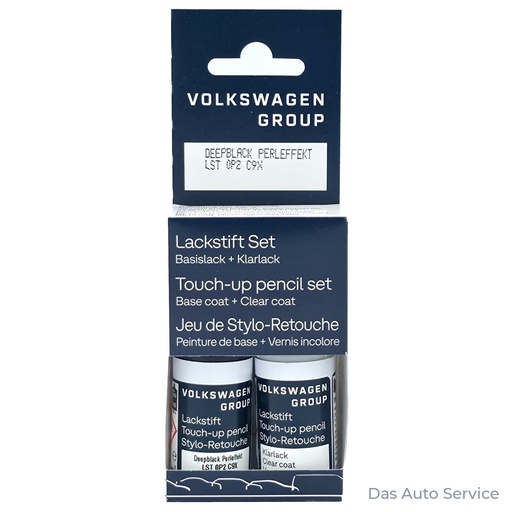
Audi / VW LC9X touch-up paint, Deep Black Pearl
A worn striker often causes scuff marks on the paintwork around the tailgate latch. If your Passat is finished in Deep Black Pearl, you can touch up those scratches in minutes with this paint.
View in shop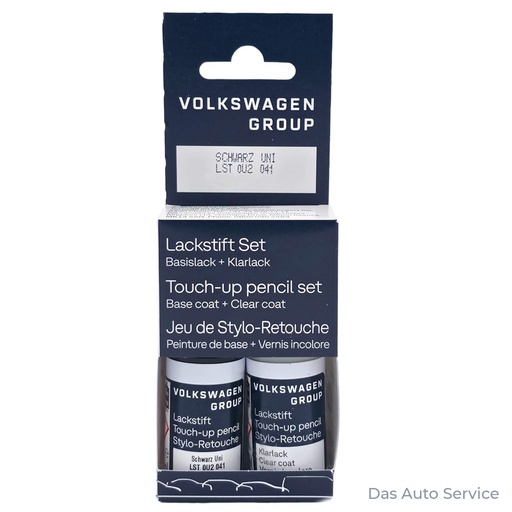
Audi / VW L041 touch-up paint, solid non-metallic black
If your car is finished in solid black with the paint code L041, this is the touch-up paint you need.
View in shopFurther reading
- Diagnostics
- Electrical fault finding and control module repairs
- Passat B8 2.0 TDI review – is it worth buying?
- VW and Audi towbars: coding, lighting and trailer stabilisation
- Passat B6 fuses – where are they and how do you replace them?
Frequently asked questions
How long do electric tailgate struts last?
Under normal use, they last around 150,000–200,000 km or 8–10 years. If your tailgate does not open fully, check the latch and striker first.
Can I replace the tailgate latch myself?
You can, but the new latch must be coded to the control module after replacement. Without proper diagnostics and coding, the system will not work correctly.
Why does my tailgate rattle whilst driving?
The most common cause is worn plastic bushes in the striker. This allows the tailgate to move even when the latch is closed.
Does this problem only affect the Passat?
No, I also see it on the Golf, Tiguan, Touareg and other models with an electric tailgate. The latch, its microswitches and the striker all work on the same principle.