When should you replace the water pump? I get asked this a lot at the workshop, especially when it's time for a timing belt replacement and the owner wonders whether the water pump really needs changing if it's still working. On most engines, the answer is simple: if the timing belt drives the water pump, we replace them together. Not because I want you to pay for parts that are still working, but because an old pump can damage a brand-new belt and bring you straight back to the workshop for the same job. But! Not all engines are the same. Engines with timing chains and those with plastic water pump and thermostat modules are a different story. I'll explain when to replace the water pump, how to spot a problem and why trying to save a little money now can sometimes lead to a very expensive repair later.
When to replace the water pump?
First, we need to know which engine you've got and how its water pump is driven. That matters because there's no single replacement interval that works for every car. On some engines, the pump is part of the timing belt service. On others, we replace it when it starts causing trouble. Here's how we handle it at Das Auto Service.
- On engines where the timing belt drives the water pump, we always replace the pump together with the belt. For newer engines built after 2015, our timing belt replacement interval is 180,000 km or 5 years, whichever comes first.
- On engines with a timing chain, we replace the water pump when it starts leaking or making noise. We don't automatically replace it when changing the timing chain.
- On engines with a plastic module containing both the water pump and thermostat, I recommend replacing it as soon as the first leak appears. Don't wait for the problem to get worse.
As you can see, the answer depends on the engine. That's why I'm not a fan of advice like "replace the water pump every so many kilometres" when we don't even know which engine we're talking about. First, we establish how the system is built. Then we decide what needs replacing. That way, you're not throwing money away on unnecessary parts, but you're not ignoring something that could cost you much more later either.
Why replace the water pump with the timing belt?
Imagine this. You've had the timing belt, pulleys and tensioner replaced, but you've kept the old water pump because it wasn't leaking or making any noise. A year later, it starts leaking coolant. Now what? We have to take the timing belt assembly apart again because the pump sits behind the timing belt cover. You're paying for labour you've already paid for once.
That's exactly why I recommend replacing the pump and belt together on engines where the belt drives the pump. It means I know we're not leaving an old component among all those new parts, waiting to cause trouble. And it's not just about leaks. If the pump fails, it can damage the new timing belt too. And that's no small problem.
When we're replacing the timing belt, I'd rather do everything connected with it in one go than have to open up the same area again later. If you want to know exactly what should be included in this job, read my guide to what's included in the genuine timing belt kit with water pump. I've explained it so you know what you're paying for and which parts should be replaced. To me, that's the right way to look after a car.
How can you tell if the water pump needs replacing?
A water pump doesn't always fail suddenly. Sometimes it starts with a small leak. Other times, there's a noise that's easy to ignore. And this is where I want you to pay attention, because your engine's cooling system isn't something to take chances with. If you notice any of the following signs, don't leave it until the next service.
- The coolant level keeps dropping and there's a sweet smell around the engine. This could mean coolant is leaking somewhere in the system, including from the water pump.
- There are traces of coolant underneath the pump. That's a reason for us to find exactly where the leak is coming from, rather than just topping up the coolant.
- You can hear noise coming from the pump bearing. If the pump starts making noise, don't wait for it to fail completely.
- The engine temperature starts climbing. That's a serious warning sign that the cooling system isn't doing its job, and the water pump is one of the things we need to check.
I can't tell you for certain that the water pump is to blame just from these symptoms. We need to find out exactly where the leak or noise is coming from. But if your car is losing coolant or the engine temperature is rising, don't treat it as normal. I'd much rather we find the problem early than have you wait until the engine overheats.
What's included in a water pump replacement?
Replacing a water pump isn't simply a matter of taking the old one off and fitting a new one. There are a few things we need to get right so you don't end up back at the workshop with another leak or a cooling problem. That's especially important when we're replacing the pump together with the timing belt. Here's what the job involves.
- We fit a new water pump with a new seal. That way, we're not leaving an old seal in place that could start leaking after the repair.
- When we replace the pump together with the timing belt, we also replace the belt, pulleys and tensioner. The idea is to avoid leaving old parts in the timing belt assembly we've just serviced.
- We fill the system with fresh coolant and bleed it. That means removing trapped air from the cooling system so it can work properly.
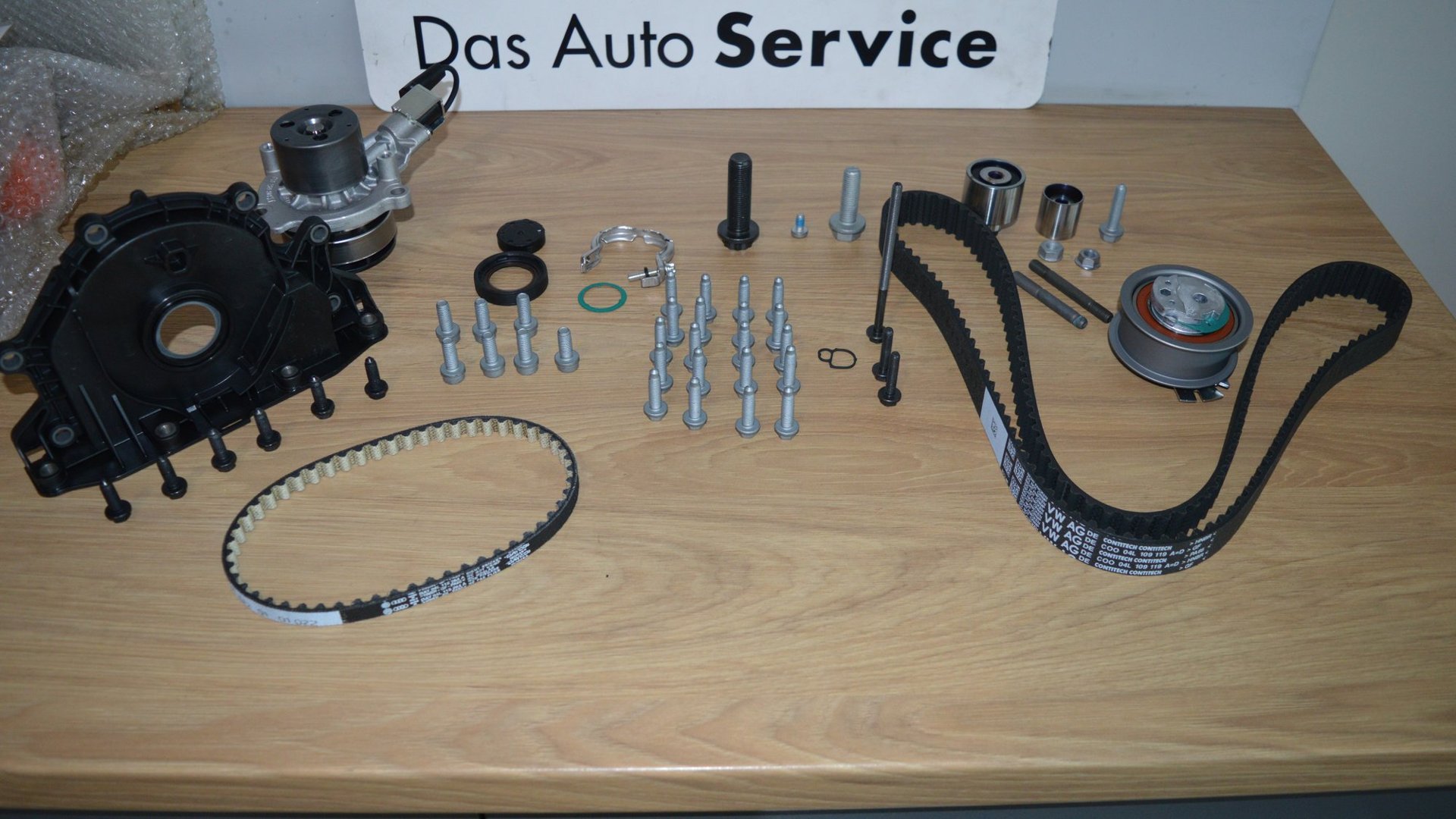
For me, a repair is finished when the whole job has been done properly, not just when we've tightened the last bolt. The new pump needs to be fitted correctly, and the cooling system needs to be filled and properly bled. These are things you might not see when you collect your car, but they matter to how your engine runs.
What's different about engines with plastic pump modules?
I want to pay particular attention to the 1.4 TSI EA211 and 1.8/2.0 TSI EA888 Gen3 engines here. On these engines, the water pump and thermostat are housed together in a plastic module that can start leaking coolant over time. And when the first leak appears, I recommend dealing with it straight away rather than waiting. Because a small leak today can become a much bigger problem tomorrow.
If you drive a 1.4 TSI, have a read about the water pump and thermostat on the EA211. If you've got a 1.8 or 2.0 TSI, I've also explained water pump and thermostat leaks on the EA888 Gen3. The point is the same in both cases: recognise the problem early and don't wait until your engine starts overheating.
WARNING! Keeping an old water pump when fitting a new timing belt is a false economy. If the pump fails, it can damage the new belt as well. Don't put the whole repair at risk just to save the cost of replacing one part.
Tip from Kris Mladenov: When you're having the timing belt replaced, ask for the genuine timing belt kit with water pump if the pump is driven by the belt. Keep the invoice for the work, too. It's proof that the job has been done and could help increase your car's value when you decide to sell it.
I hope you've found this article useful! If you have, I'd really appreciate you sharing it with a friend who drives a VW, Audi, Škoda, SEAT, Cupra, Porsche, Bentley or Lamborghini. My mission is simple: when I know something useful, I want more people to know it too, because it helps you make better decisions about your car. I'm telling you all this as a friend, because I care about you and your car. And when you skip an important bit of maintenance, remember that you're the one who ends up paying the bill, not the workshop.
The solution in our shop
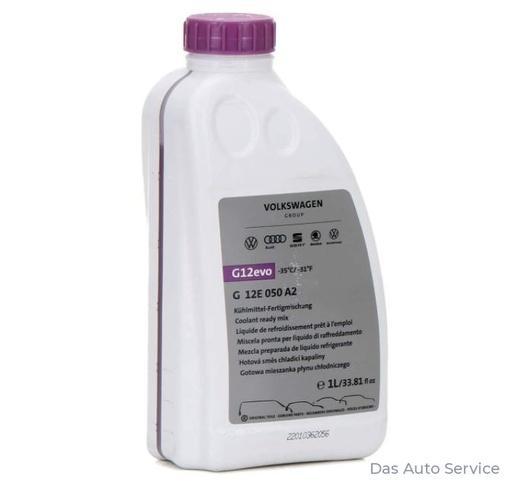
Genuine VAG G12Evo antifreeze G12E050A2 1.0l
Genuine G12evo coolant is used to refill the cooling system after replacing the water pump. We use fresh coolant and bleed the system to make sure the job is completed properly.
View in shopRead more
- Routine servicing
- Engine overhauls
- 2.0 TDI Timing Belt Kit: What's Included?
- 1.4 TSI EA211 Water Pump and Thermostat Problems
- EA888 Gen3 Water Pump Leak: Causes and Fix
Frequently asked questions
When to replace the water pump?
On engines where the timing belt drives the water pump, we replace them together. For newer engines built after 2015, our timing belt replacement interval is 180,000 km or 5 years, whichever comes first. On engines with a timing chain, we replace the water pump when it starts leaking or making noise.
Should the water pump be replaced with the timing belt?
Yes, if the timing belt drives the pump. That way, we won't have to take the timing belt assembly apart again if the old pump starts leaking, and we avoid the risk of it damaging the new belt.
What are the signs of a failing water pump?
The coolant level drops, there's a sweet smell, you can see signs of a leak underneath the pump, or you can hear noise from its bearing. The engine temperature may also start climbing.
Do I need to replace the water pump on an engine with a timing chain?
We don't automatically replace the water pump together with the timing chain. On these engines, we replace the pump when it starts leaking or making noise.