Between 2008 and 2013, you could find the little 1.2 TSI and 1.4 TSI turbo engines from the EA111 family in just about everything: Golf 6, Polo, Jetta, Touran, Octavia 2, Fabia 2, Yeti, A1, A3 8P, Ibiza and Leon. Economical, lively and with a decent amount of power. Lovely little engines, really. But they've got one problem we know by sound at the workshop, even before we've opened the bonnet. The timing chain. And that's exactly what I want to talk to you about.
What causes 1.4 TSI timing chain problems?
On the EA111, a timing chain drives the camshaft. The idea was that the chain would last as long as the engine itself. Sounds great, doesn't it? Trouble is, it doesn't always work out that way. On some of these engines, the chain stretches and the tensioner can no longer keep it tight. That's when it starts rattling against the guides. Leave it like that and the chain can jump a tooth. And if that happens on these direct-injection engines, the valves can hit the pistons. At that point, we're talking about a lot more than just replacing a timing chain.
How can you tell if your timing chain has stretched?
- You start the car from cold in the morning and hear a rattling or metallic clattering noise from the engine. It disappears after a few seconds.
- Over time, that rattle gets louder and lasts longer.
- The check engine light comes on, and a diagnostic scan shows faults relating to the camshaft position compared with the crankshaft.
- The car becomes harder to start, or the engine runs unevenly while it's cold.
If your engine rattles for a few seconds every morning, please don't tell yourself it'll sort itself out. It won't. If the chain breaks or jumps, we almost always end up having to repair the cylinder head. And that's when things get expensive.
What if the rattling is coming from the turbo?
There's another noise that a lot of people mistake for a timing chain rattle. This one comes from the turbo. There's a valve that controls the boost pressure, with a rod that operates it. Over time, the connection between them wears and starts making a metallic rattling noise, usually when you lift off the accelerator or drive at low revs. Sometimes you'll also get a fault code for low turbo boost pressure. That's why we don't rush into replacing parts at our workshop. First, we listen carefully to work out where the noise is coming from and check the live diagnostic data. Otherwise, you could end up paying for a repair you never needed.
How do we fix the timing chain problem?
Once we've confirmed that the chain has stretched, we replace the complete timing chain kit. Chain, tensioner, guides and seals. We fit the latest revision of the parts. Because as far as I'm concerned, replacing just the chain and leaving the old tensioner in place isn't a proper repair. Afterwards, we check the valve timing with a diagnostic tester to make sure everything is exactly as it should be.
But if the rattle is coming from the turbo, we take a different approach. We check how badly worn the valve linkage is. Sometimes it can be repaired, but other times we have to replace the turbo.
Why is engine oil so important for these engines?
Because the timing chain tensioner relies on oil pressure to work properly. Drive around with old oil, miss your oil changes or use oil that doesn't meet the correct specification, and you'll shorten its life. That's why, for these engines driven in Bulgaria, I recommend changing the engine oil and oil filter every 10,000 km or once a year, whichever comes first, regardless of the oil used. Always choose oil that meets the manufacturer's specification. I've explained more about this in my article on changing engine oil and service parts. Don't wait until your oil causes trouble before you start paying attention to it.
From 2012 onwards, VW started replacing these engines with the newer EA211 generation. Those engines use a timing belt instead of a chain. They've got their own quirks, of course, but at least the stretched timing chain problem is no longer an issue.
A tip from Kris Mladenov: If you've found a car you like with a 1.2 or 1.4 TSI from those years, ask the seller to start it in front of you when the engine is completely cold. And listen carefully during those first few seconds. If you hear rattling, factor in the cost of replacing the complete timing chain kit when you're negotiating the price. Or simply look for another car. I'm telling you this because I don't want you paying for an expensive repair out of your own pocket later.
I hope you now know what to listen for when starting the engine from cold, and why you shouldn't put off getting it checked. If you've found this helpful, send the article to a friend who drives a small TSI. You might just save them from a seriously expensive repair.
What you'll find in our shop
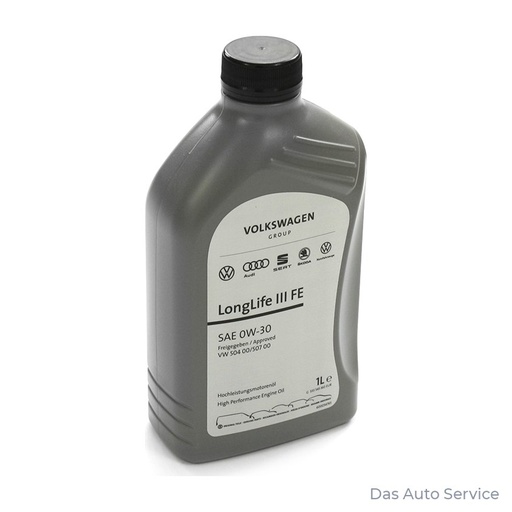
Genuine LongLife III FE 0W30 engine oil
Genuine LongLife III FE 0W30 engine oil, 1 litre. For topping up, provided it meets your engine's required specification.
View in our shop
Genuine LongLife III FE 0W30 engine oil, 5 litres
Genuine LongLife III FE 0W30 engine oil, 5 litres.
View in our shopRead more
- Complete engine rebuilds
- Vehicle diagnostics
- How can you tell if your 1.8 or 2.0 TFSI has a timing chain problem?
- When should I change the oil and service parts on my VAG car?
- Carbon build-up on TSI and TFSI valves: why it happens and how we clean it
- 1.5 TSI (EA211 evo): why does it jerk when pulling away from cold?
- VW Polo 6R 1.2 and 1.4 TSI service schedule
Frequently asked questions
How can I tell if my 1.4 TSI timing chain has stretched?
The easiest sign to spot is a rattling noise during the first few seconds of a cold start. A diagnostic scan may also show fault codes relating to the camshaft position.
Can I replace just the timing chain?
I wouldn't recommend it. When we do this repair, we replace the complete timing chain kit: the chain, tensioner, guides and seals. And we always use parts from the latest revision.
Which TSI engines have a timing belt instead of a chain?
Those are the newer EA211 engines, which VW started fitting from around 2012.