You open the bonnet of your 2.0 TDI and spot oil around the back of the cylinder head. There's oil on the gearbox too, and after a longer drive, you notice that familiar smell of burning oil. Quite often, the culprit is the vacuum pump. It's a relatively small part that doesn't cost a fortune compared with the rest of the engine. But here's the thing! Leave it leaking, and what started as a small problem can turn into something much more serious. That's why I want you to know how to recognise a 2.0 TDI vacuum pump oil leak before it gets worse.
What does the vacuum pump actually do?
A diesel engine doesn't produce enough vacuum in the intake manifold, so it needs a separate pump. That pump supplies vacuum to the brake servo, which makes braking easier, and also helps control the flaps and the turbo. On the 2.0 TDI common rail (EA189), you'll find it at the gearbox end of the cylinder head, driven by the camshaft. Things are slightly different on the older 1.9 and 2.0 TDI PD engines. They use a tandem pump, which combines the vacuum pump and fuel pump in one unit.
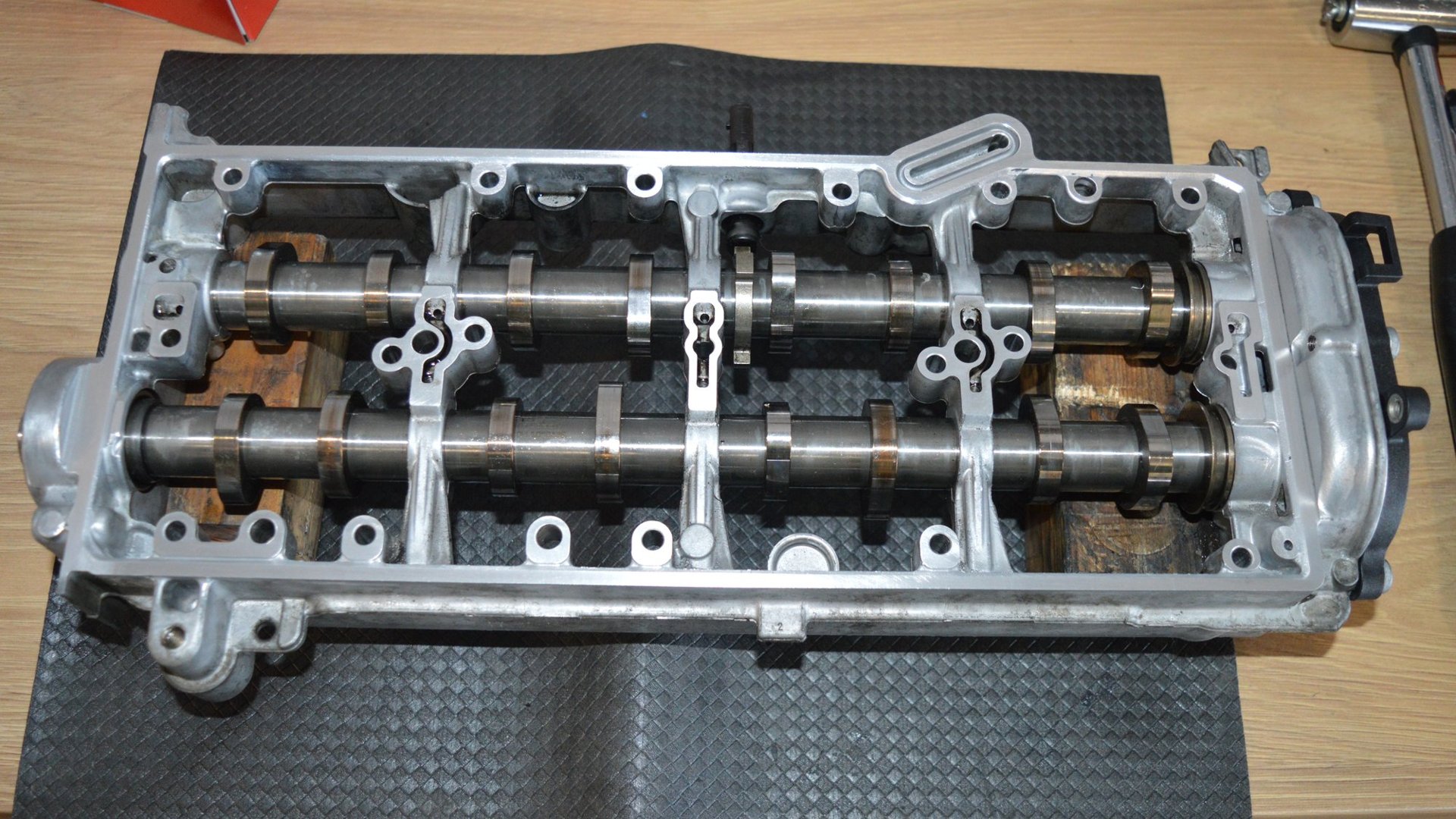
Where does the oil leak start?
- From the seal between the pump and the cylinder head. Over time, it hardens, loses its flexibility and starts letting oil through.
- From the O-ring on the pump shaft.
- From the pump housing itself when the pump is worn internally.
The oil starts running down the back of the engine and onto the gearbox. And no, this isn't just about having an oily engine. If oil starts dripping onto hot exhaust components, you'll smell burning oil and might even see smoke. In the worst case, there's also a risk of fire. So when I tell you not to ignore this leak, I mean it.
How can you tell if it's the vacuum pump leaking?
- You notice a wet, oily patch at the gearbox end of the cylinder head.
- You can see oil streaks running down the gearbox casing.
- After driving, you notice that distinctive smell of burning oil.
- The brake pedal becomes hard if the pump can no longer produce enough vacuum.
But oil stains alone aren't enough to be certain. We need to get the car on a ramp, clean the engine and see exactly where the oil is coming from. Because those same oily marks could be caused by the rocker cover or the oil pulley seal. That's why we find the leak first and only then decide what needs replacing. Otherwise, you could end up paying for a perfectly good part while the oil keeps leaking. And guess who pays for that mistake? You do, out of your own pocket, not the garage.
If the brake pedal suddenly becomes hard and you notice the car is difficult to stop, don't carry on driving. The vacuum pump may have failed, leaving the brake servo unable to assist you.
How do we fix a 2.0 TDI vacuum pump oil leak?
- First, we find exactly where the oil is escaping and check whether there's any oil in the hose leading to the brake servo.
- If the pump is healthy and working properly, we replace only the seals.
- If it's worn internally or no longer produces enough vacuum, we replace the complete pump.
- We clean the old oil off the engine and gearbox. Then we take the car for a test drive and check everything again for leaks.
If the pump needs replacing, we fit a genuine one with new seals. We tighten the bolts with a torque wrench to the exact specified torque, then top up the engine oil to the correct level using oil that meets the required specification. There's no "give it another little turn, that should be tight enough" nonsense here.
Advice from Kris Mladenov: Change your engine oil and oil filter every 10,000 km or once a year, whichever comes first, regardless of which engine oil you use. That's my recommendation for cars driven in Bulgaria. I'm telling you this because it helps protect not just your engine, but the vacuum pump too. Old, dirty oil wears its shaft and seals faster. And when that happens, you're the one paying to put it right.
If you spot oil around the end of the cylinder head on your 2.0 TDI, don't wait until there's a puddle underneath the car. Bring it to Das Auto Service in Sofia, Bulgaria. We'll get it on a ramp and find exactly where the leak is coming from. First we inspect and diagnose, then we repair. Never the other way round.
The solution in our shop

Genuine Longlife III FE 0W30 engine oil 5L
Genuine Longlife III engine oil for the 2.0 TDI common rail. Fresh oil helps protect the vacuum pump shaft and seals.
View in our shop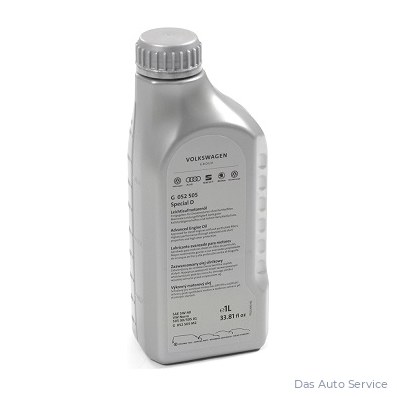
Genuine Volkswagen SpecialD 5W40 diesel engine oil 1L
Genuine 5W-40 engine oil for older 1.9 and 2.0 TDI PD engines fitted with a tandem pump.
View in our shopRead more
- Diagnostics at Das Auto Service
- Complete engine rebuilds
- 2.0 TDI (EA189): EGR, cooler and limp mode
- 2.0 TDI with balance shafts: the oil pump problem
- TDI hard to start when cold: glow plugs and checks
- 1.9 and 2.0 TDI PD engines: the legend and its weak points
- Timing belt kit with water pump: what's included in the genuine kit
Frequently asked questions
Can I still drive if the vacuum pump is leaking oil?
If it's a small leak, you can drive for a short while, but keep an eye on the oil level. If oil starts dripping onto hot engine parts or you notice the brake pedal getting hard, stop driving. It's simply not worth the risk.
Can you replace just the vacuum pump seal?
Yes, of course, provided the pump itself is in good condition and still produces enough vacuum. But if it's already worn internally, a new seal alone won't solve the problem. That's when we need to replace the whole pump.
Do the 1.9 and 2.0 TDI PD engines have the same problem?
Yes. These engines have a tandem pump, which produces vacuum and supplies fuel at the same time. It can develop leaks too.