Winter is over, but we're still seeing owners of A4, A5, A6, Q5, Q7 and Touareg models with the 3.0 TDI coming into the workshop with the same complaints. Some tell me, "My car takes ages to warm up, and the heater only blows lukewarm air." Others are worried because "the temperature gauge is climbing higher than it should." Both are worth taking seriously. And if you're looking into 3.0 TDI thermostat problems, there's something I want you to understand. On these V6 TDI engines, the cooling system isn't just a radiator, a water pump and a thermostat. There are a few clever bits in there, and I want to explain how they work so you know what's happening to your engine.
How does the 3.0 TDI cooling system work?
The idea is to get the engine up to temperature as quickly as possible. That way, it uses less fuel and produces fewer harmful emissions. That's why newer 3.0 TDI engines have a water pump that can effectively be "switched off". While the engine is cold, a special cover stops the coolant flowing so the engine block warms up faster. This cover moves using vacuum, controlled by a solenoid valve. There's also a separate thermostat that lets coolant flow through the radiator once the engine is warm.
Why do 3.0 TDI thermostat problems cause slow warm-up?
Most of the time, it's because the thermostat is stuck open. Instead of holding the coolant back while the engine warms up, it lets it flow through the radiator straight from a cold start. So what happens? The engine struggles to reach its normal operating temperature, especially if you're driving on the motorway in winter. The engine ECU notices something isn't right and stores fault code P0128. That means the coolant temperature is staying below what the thermostat should be maintaining.
But a cold heater is the least of your worries. When a diesel engine constantly runs cold, it uses more fuel, produces more soot and fills the DPF faster. On top of that, fuel gets into the engine oil and dilutes it. See how something as simple as a thermostat can cause much bigger headaches? That's why I'm telling you not to ignore it.
So why does the temperature start climbing too high?
Now we're talking about the opposite problem. The switchable water pump, or the system controlling it, gets stuck in the "off" position. The vacuum valve might have failed, a hose might have split, or the pump itself might be faulty. The coolant isn't circulating properly, so the engine temperature starts climbing when you put it under load. Say you're towing a trailer uphill or driving in really hot weather. That's when the problem shows its ugly side.
If you see the temperature climbing above normal, stop. Don't keep driving with an overheating engine. A warped cylinder head on a V6 TDI is a repair you really don't want to be paying for out of your own pocket. Trust me.
How do we tell whether it's the thermostat, water pump or something else?
- First, we read the fault codes stored in the engine ECU. That gives us a starting point.
- We use diagnostics to watch the live coolant temperature readings and see how they change as the engine warms up.
- We check whether the water pump cover moves properly and whether it's getting vacuum.
- We also check the temperature sensor. Sometimes it's the sensor giving the ECU false readings, while the thermostat itself is perfectly fine.
- We inspect the coolant too. We check the level, the colour and whether there are any signs of oil or fluids mixing.
How do we fix the problem?
First, we find out exactly what's failed. We're not going to start replacing parts blindly, are we? If it's the thermostat, we replace the thermostat. If it's the vacuum valve, a hose or the water pump, we fix that particular fault. At Das Auto Service, when we replace the thermostat, we fit a new seal too, fill the system with the correct coolant and bleed it using a diagnostic tester. That's especially important on a V6 TDI. If air gets trapped inside the cooling system, the car can behave just as though something is genuinely broken. And then you're left wondering why the temperature is climbing again.
If your car has already covered a lot of miles and the timing belt and water pump are due according to the service schedule, we do everything together. I've explained the service intervals in more detail in my Audi A4 B8 3.0 TDI service schedule article.
Advice from Kris Mladenov: If your 3.0 TDI has started taking longer to warm up than it used to, don't leave it until next winter. I'm telling you this because I care about you and your engine. Replacing a thermostat is a small job compared with the trouble a diesel engine that's constantly running cold can cause. And if it starts overheating, that's a completely different story. That's when things get expensive.
I hope you now have a better idea of why your V6 takes so long to warm up or why its temperature sometimes climbs too high. If I've helped you understand what's going on, share this article with your friends who drive a 3.0 TDI too. It's worth making sure they know what to watch out for.
The solution in our shop
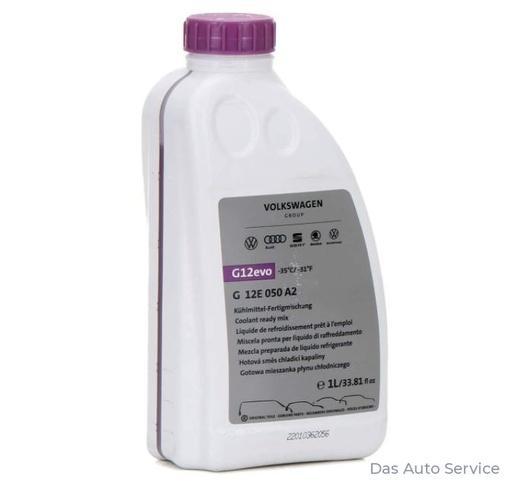
Genuine VAG G12Evo coolant G12E050A2 1.0 l
Genuine G12evo coolant concentrate, compatible with G13. Dilute it with distilled water.
View in our shopRead more
- Diagnostics at Das Auto Service
- Major engine repairs
- Audi A4 B8 3.0 TDI service schedule
- G12, G12++, G13 and G12evo coolant: can you mix them?
- 1.8 and 2.0 TSI (EA888 Gen3): water pump and thermostat leaks
- 3.0 TDI: why does the engine have to come out to replace the timing chains?
- Hot engine and water: what not to do when your car overheats
Frequently asked questions
What does fault code P0128 mean on a 3.0 TDI?
It means the coolant isn't reaching the temperature the thermostat should maintain. Most often, the thermostat is stuck open and won't close.
Why is my 3.0 TDI overheating?
It's often a problem with the switchable water pump or the vacuum system that controls it. If the pump stays in a position where the coolant can't circulate, the engine starts to overheat.
Is it a problem if my engine takes ages to warm up?
Yes, my friend, and a cold heater is the least of your worries. A diesel engine running cold uses more fuel, produces more soot, fills the DPF faster and allows fuel to dilute the engine oil.