The DPF warning light comes on. You open the owner's manual and it tells you to "drive for longer at higher revs". Sounds easy enough, doesn't it? Except your daily commute is 15 minutes each way, mostly sitting in traffic. Sound familiar? DPF regeneration in city driving can be a real headache. Diesels and short city journeys aren't exactly best friends. But here's the good news! A few simple driving habits can save you a lot of trouble.
What does the DPF actually do?
The DPF is a filter that catches soot from your diesel engine instead of letting it escape through the exhaust. Over time, it fills up and needs to clear itself out. That's where regeneration comes in. Your car raises the exhaust gas temperature to burn off the accumulated soot. The catch? The engine needs to be properly warmed up, and you need to keep driving for a while without stopping. And that's exactly where city driving makes life difficult.
Why does the DPF fill up so quickly in town?
- You're making short journeys, so the engine simply doesn't have enough time to warm up properly.
- Regeneration starts, but you've already reached your destination. You switch off the engine and interrupt it.
- When you're stuck in traffic, the engine revs are low and the temperature doesn't get high enough.
- If the EGR valve, injectors or a sensor are playing up, the engine produces more soot.
How can you tell when your DPF is regenerating?
- The cooling fan keeps running even after you've stopped.
- The engine idles at slightly higher revs than normal.
- Start/Stop stops switching off the engine.
- You notice a distinctive smell coming from the exhaust.
If you notice these signs, don't rush to switch off the engine. Keep driving for a few more minutes and give the regeneration a chance to finish. Otherwise, you'll interrupt it again, and that's doing your DPF no favours.
How should you drive to stop your DPF getting blocked?
- Once every week or two, get out of town and drive at a steady speed for at least 20 minutes.
- Choose a gear that keeps the engine at around 2,000–2,500 rpm. You don't have to be in the highest gear.
- If you notice the DPF is regenerating, don't switch off the engine until it's finished.
- Use engine oil that meets VW 507.00. It's a low-ash oil, and that matters because ash doesn't burn away during regeneration. Instead, it slowly builds up and blocks the filter.
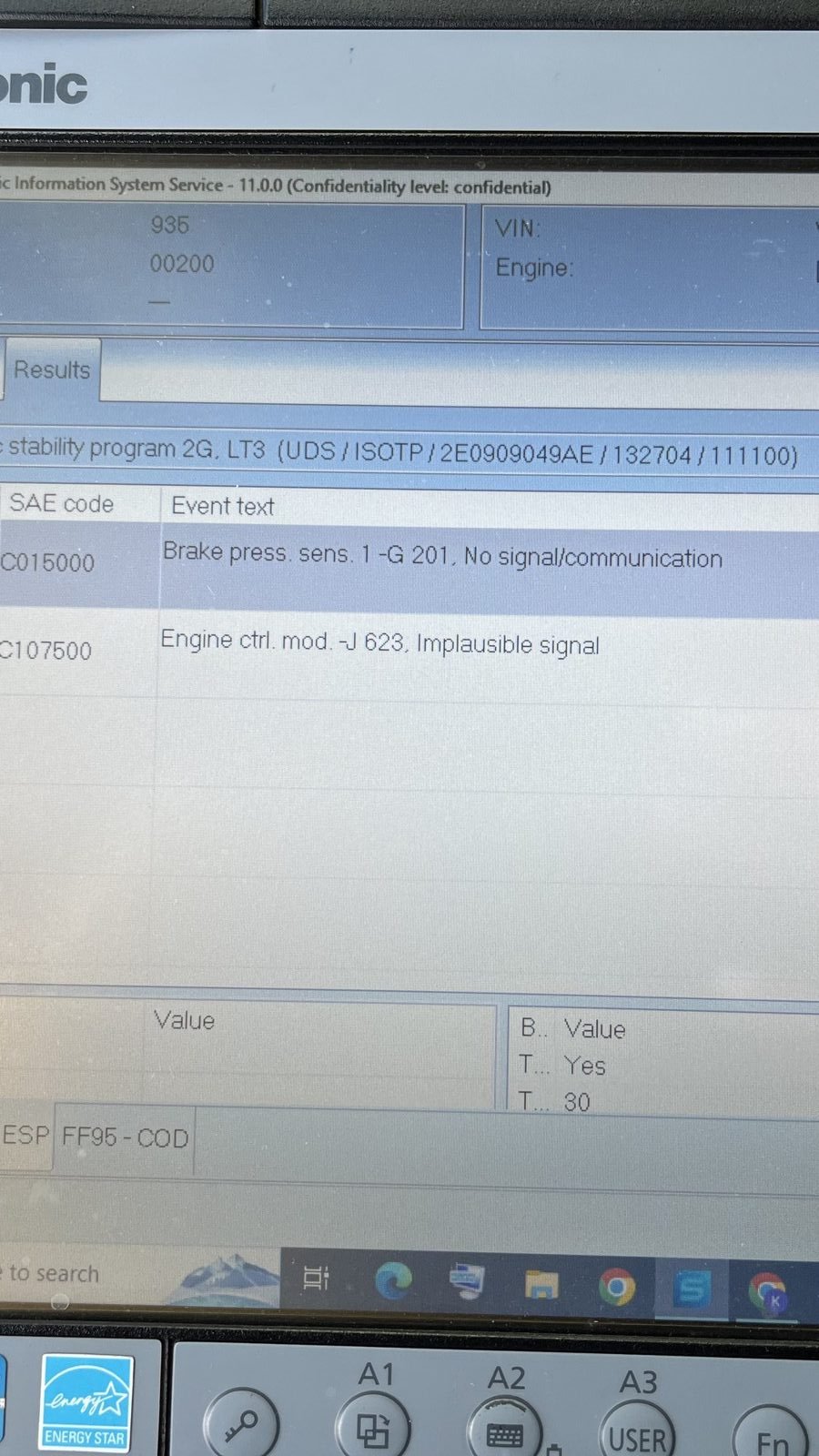
Don't remove the DPF. It's illegal, your car won't pass its roadworthiness test, and the engine may start throwing up fault codes that are difficult to sort out afterwards. I'm telling you this because I don't want you getting into trouble. At the end of the day, you'll be the one paying for that expensive mistake out of your own pocket, not the garage.
What can we do if your DPF is already blocked?
At Das Auto Service, the first thing we do is find out why the DPF has filled up. We check the EGR valve, injectors, pressure sensor and how the car is being driven. Because what's the point of carrying out a regeneration if we leave the original problem untouched? Once we've checked everything, and if the filter's condition allows it, we carry out a forced regeneration using diagnostic equipment. But! There's something important you need to understand. Soot and ash are two completely different things. If your DPF is full of soot, regeneration may clear it. But if ash has built up inside, it won't burn away. At that point, the filter needs cleaning or replacing.
A tip from Kris Mladenov: If you only drive around town, it's worth asking yourself whether a diesel is really the right car for you. For short journeys, a petrol or hybrid is often a better choice. Diesels don't like being started, driven a short distance and switched off again, over and over.
If your DPF warning light keeps coming on, don't wait until the filter is completely blocked. Bring your car to Das Auto Service for a diagnostic check. We'll find out why it's filling up and explain what you can do to stop the problem coming back.
The solution in our shop

Genuine LongLife III FE 0W-30 engine oil, 5L
Genuine LongLife III engine oil meeting VW 507.00 — low in ash to help protect your DPF from getting blocked.
View in our shopRead more
- Car diagnostics at Das Auto Service
- Routine servicing at Das Auto Service
- 2.0 TDI (EA189): EGR valve, cooler and limp mode
- 1.6 TDI (EA189): what you need to know before buying
- AdBlue on the 2.0 TDI (EA288): no engine start in 1,000 km
Frequently asked questions
How often should I drive out of town to help my DPF?
I'd recommend taking your car out for a steady 20-minute drive at least once every week or two. That gives the DPF a chance to finish regenerating.
Can a blocked DPF be cleaned?
It depends on what's blocking it. If it's soot, regeneration may help. But if ash has built up, it won't burn away. The filter will need cleaning or replacing.
Why does Start/Stop stop working during DPF regeneration?
Because the engine needs to keep running while the DPF regenerates. Your car temporarily disables Start/Stop so it doesn't interrupt the process of burning off the soot.