Most modern VAG cars now have a button instead of a traditional handbrake lever. Small electric motors on the rear brake calipers press the pads against the discs. Convenient, isn't it? But there's a catch. When it's time to change the rear pads, tools alone aren't enough. You need diagnostics and Audi electronic parking brake service mode. Otherwise, you risk breaking the motor or damaging the caliper itself. And guess who's paying for that repair? You are.
How does the electronic parking brake work?
You press the button, and the electric motors on the rear calipers operate a mechanism that presses the pads against the discs. The control module, basically the brain of the system, monitors how much current the motors draw. That's how it knows when the parking brake is fully applied. It also remembers the position of the pistons and how worn the pads are. Everything is controlled electronically.
Why is Audi electronic parking brake service mode necessary?
When we change the rear brake pads, we need to push the caliper piston all the way back. But if you start forcing it back while the motor is still in its normal operating position, you could break the gears inside. That's where things go wrong. So we first activate service mode using the diagnostic equipment. The control module releases the mechanism, we retract the pistons, and only then do we change the pads. This is one step you absolutely cannot skip.
How do we change rear brake pads at Das Auto Service?
- We activate service mode through the diagnostic equipment, release the mechanism and retract the pistons.
- We fit the new rear brake pads and replace the discs too, if necessary.
- We deactivate service mode so the pistons return to the pads.
- We carry out the basic settings so the control module learns the new position.
- We check that the electronic parking brake works properly and take the car for a test drive.

Never force the rear brake caliper pistons back with a clamp before activating service mode. You could break the electric motor or the mechanism inside the caliper. And instead of paying for a set of brake pads, you'll end up paying to repair the caliper as well. I'm telling you this because I don't want you making an expensive mistake that could easily have been avoided.
What does the parking brake warning light mean?
You've just had the rear brake pads changed, and suddenly the parking brake warning light comes on? Or perhaps the car has been standing for a long time and is now showing a fault? Most often, either the basic settings were skipped or one of the motors isn't working properly. And don't think clearing the fault code means you've fixed the problem. It doesn't. Don't keep driving around with that warning light on. Come and see us so we can connect the diagnostic equipment and find out exactly what's wrong.
A tip from Kris Mladenov: If you're leaving your car parked for a long time during winter, somewhere level and secure, you can leave it in P or in gear. But ask us first whether it's advisable to leave the electronic parking brake released on your particular model. That way, you can avoid the risk of the pads sticking to the discs.
Need your rear brake pads changed, or has the electronic parking brake warning light come on? Come and see us at Das Auto Service. We'll connect the diagnostic equipment, check the system, carry out the necessary settings and make sure everything is working properly. No risky experiments that end up costing you money.
The solution in our shop
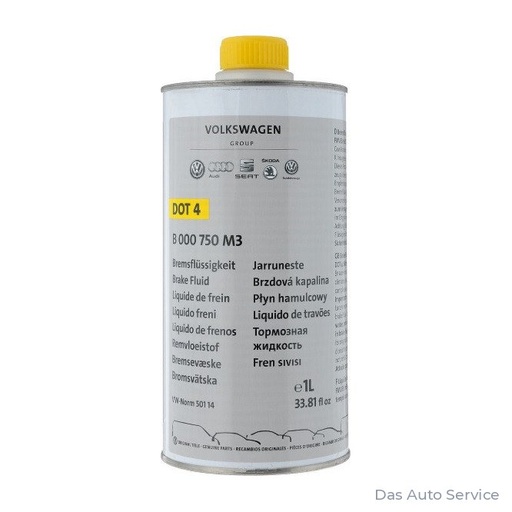
Genuine Audi/Volkswagen DOT 4 brake fluid B000750M3 1 litre
Genuine DOT 4 brake fluid. We change it every two years and whenever we work on the braking system.
View in our shopRead more
- Routine servicing at Das Auto Service
- Diagnostics at Das Auto Service
- VAG brakes: when should you replace the discs and pads together?
- Audi RS brakes: bleeding and brake fluid
- TPMS: why is the tyre pressure warning light on after changing tyres?
Frequently asked questions
Can I change the rear brake pads without diagnostics?
I wouldn't recommend it. Without service mode, you could damage the electric motor on the brake caliper. And suddenly, what should have been a straightforward pad change turns into a major repair. That's going to hurt your wallet.
Why is the parking brake warning light on after changing the pads?
Most often, it's because the basic settings weren't carried out after the pads were changed. We need to connect the diagnostic equipment, check the system and make sure everything is working as it should.
Can the electronic parking brake freeze in winter?
Yes, it can. In freezing, damp conditions, the pads can sometimes stick to the discs. If that happens, don't try to break them free by accelerating. Give us a call before you end up causing more damage.