We often have customers come in saying, "Something's clicking at the front when I turn." You notice it most in a car park, with the steering on full lock. If you've looked through car forums or owners' groups, you've probably seen people talking about "CV joints", "clicking when turning left" or "clicking on full lock". It's one of the most recognisable noises you can hear from the front of a car. But you need to know what you're listening for. In this guide to VAG clicking noise when turning, I'll show you how to tell a worn CV joint from a rumbling wheel bearing or a knocking suspension arm. And why ignoring one little torn rubber boot can eventually leave you needing a complete driveshaft.
What's actually clicking when you turn?
The driveshaft transfers power from the gearbox to the wheel. There's a CV joint at each end, also called a constant velocity joint. The outer CV joint sits by the wheel, while the inner one is next to the gearbox. These joints allow the wheel to keep turning while you steer. When they're in good condition, you won't even hear them. But once they start wearing out, they'll soon let you know.
The noise itself can give you a clue about which CV joint is causing trouble:
- Rhythmic clicking or rattling when turning, especially on full lock at low speed — most likely the outer CV joint.
- A dull clunk when pulling away, lifting off the accelerator or engaging a gear — more likely the inner CV joint.
Here's an easy way to remember it. The outer CV joint usually clicks when you steer. The inner CV joint tends to make itself heard when you accelerate or lift off the throttle. On a tighter turn, the outer joint works at a greater angle, which makes the clicking even more noticeable. It's as simple as that.
Why does a CV joint start clicking in the first place?
Most of the time, the culprit is the CV boot. That's the ribbed rubber cover protecting the joint. Inside the joint are balls running along specially shaped tracks, all properly lubricated with grease. As long as the boot is intact, the grease stays where it belongs, and dirt and water stay outside.
But here's where the trouble starts! Once the boot tears, things go downhill. It might have deteriorated with age, been hit by a stone or caught on something. The grease escapes, and dirt and water get in. From there, wear is only a matter of time. Imagine dust mixed with grease. It becomes a bit like fine sandpaper, slowly grinding away at the tracks and balls. Play develops, and the balls start knocking against the tracks and the CV joint cage. That's the clicking you hear when turning. And before you know it, that little rubber boot you didn't replace in time has cost you a CV joint or even a complete driveshaft.
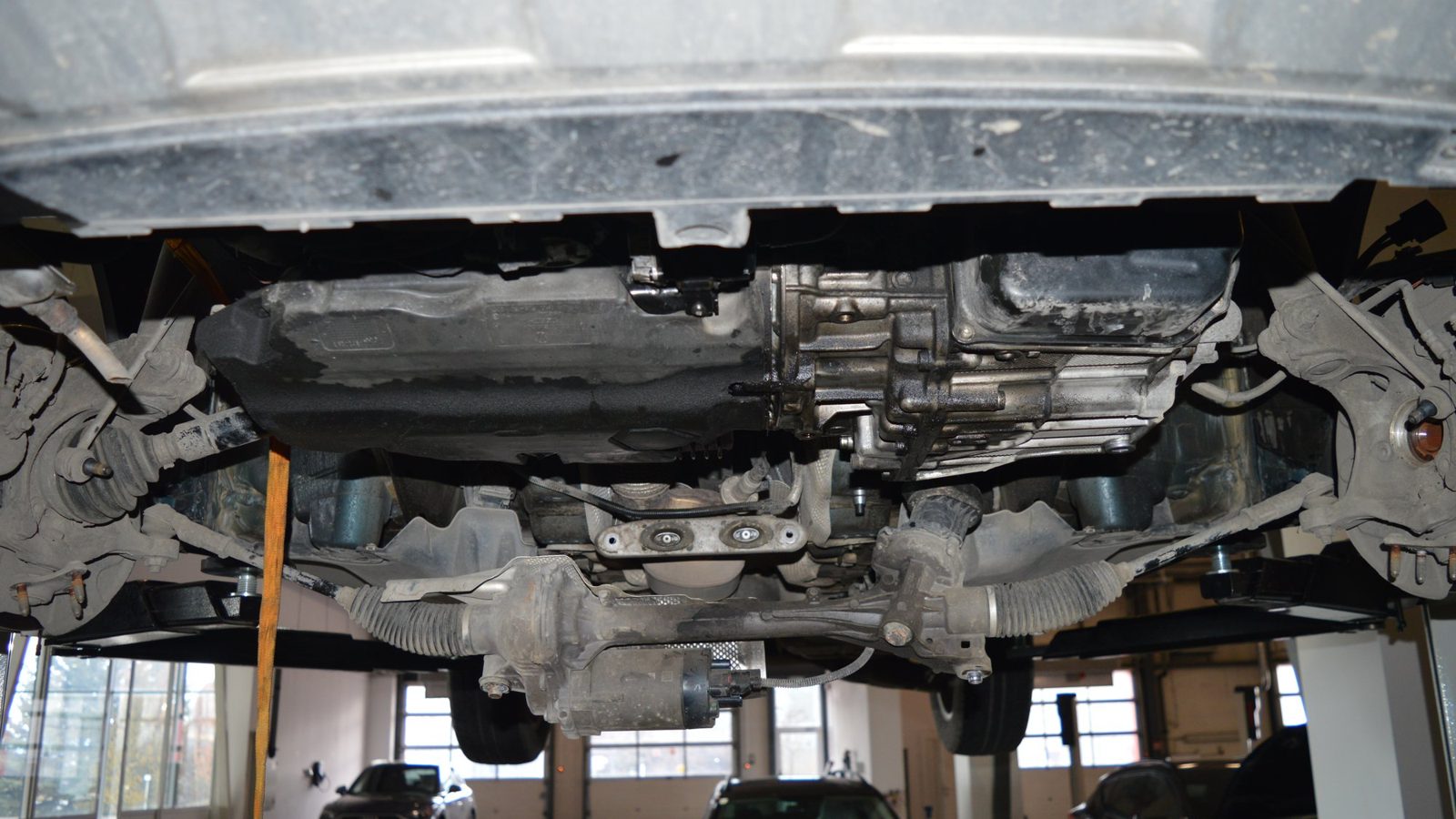
How can you check for a torn CV boot yourself?
There's a really simple check you can do in about a minute. Turn the steering wheel all the way to one side, get out and look behind the tyre, towards its inner edge. You're looking for two things:
- The CV boot is torn or has started cracking.
- There's dark, sticky grease splattered over the suspension or around the inside of the wheel rim.
If you spot grease that's been thrown around, the CV boot is no longer doing its job. Even if the joint isn't clicking yet, wear may already have started. Have a look at the other wheel too. If one boot has failed, it's worth checking the other one.
IMPORTANT! A torn CV boot isn't something to leave until later. Just one day of driving with an exposed CV joint on a wet or dusty road can cause more damage than months of driving with a healthy boot.
VAG clicking noise when turning: CV joint, bearing or arm?
An outer CV joint makes a pretty distinctive clicking noise. But not every noise you hear when turning comes from a CV joint. There are other parts of the front suspension that can knock, rattle or rumble too. Here's how we tell them apart:
- You hear a humming or rumbling noise that gets louder with speed and changes when you steer left or right — that's more likely the wheel bearing, not the CV joint.
- You hear a sharp, dry rattling noise over bumps or when turning slowly, without that rhythmic clicking — that's when we check the suspension arms and ball joints.
That's why, at Das Auto Service, we don't replace parts just because someone has described a particular noise. We put the car on the lift, check the CV joint for play, inspect the boot and turn the wheel by hand. A few minutes of checking can save you from replacing a perfectly good part. Because if someone starts replacing parts at random, you're the one who ends up paying for their mistake. Out of your own pocket. Not the garage.
When is a new CV boot enough, and when does the whole joint need replacing?
It depends on how early we've caught the problem. There are usually two possibilities:
- If the boot is still intact or has only just torn, and the CV joint hasn't worn out yet, we replace the boot and pack it with fresh grease. That's the straightforward option.
- If the CV joint is already knocking and has play in it, a new boot won't save it. We need to replace the joint. On most VAG models, I prefer a complete driveshaft that's been assembled and greased at the factory. It's the more sensible and reliable option.
I'm firm on this one — a genuine CV joint or a genuine complete driveshaft. With cheap aftermarket replacements, you often don't even know what grease has been used, and the boot might start cracking after just one winter. A few months later, you're right back where you started. Another repair, another bill. I'd much rather we did the job properly the first time than had to take the same thing apart twice.
And there's something else worth knowing. A torn CV boot is exactly the sort of problem we can catch early during a routine suspension inspection. That's why I advise our customers to have their cars checked every 6 months, for example in spring and autumn. Catch a torn boot early enough, and you might only need to replace the boot itself. Leave it too long, and next time we could be talking about a complete driveshaft.
Frequently asked questions
One piece of advice from me, Kris Mladenov: if you hear clicking when turning, don't sit around hoping it'll disappear on its own. It won't. These problems often start with something small and end with a much bigger repair. Check your CV boots twice a year. And if a CV joint starts clicking, don't wait until you can hear it on every turn. Don't cut corners on the quality of the parts either. After all, we're talking about the driveshaft that transfers power to your wheel.
If your car clicks when turning, or you've spotted grease splattered behind a tyre, bring it to us at Das Auto Service. We'll inspect the CV boots, check the joints and tell you what actually needs replacing. Just the boot, the CV joint or the complete driveshaft. You can also have a look at our routine servicing and suspension repairs. And if you're thinking of buying a car, a torn CV boot is one of the things we look for during a pre-purchase inspection.
I hope you've now got a better idea of where that clicking noise comes from and why you shouldn't ignore it. If this article has helped you, send it to a friend who's having the same problem. You might save them quite a few headaches.
Read more
- Routine Servicing and Suspension Repairs for VAG Cars
- Pre-Purchase Inspection
- Audi A3 8P 2.0 TDI Service Schedule
- Car Key Battery: How to Replace It Without Losing Your Key
- Hot Weather and Your Car: Battery, Tyres and Air Conditioning
Frequently asked questions
Can I keep driving with a torn CV boot for a while?
You can, my friend, but I really wouldn't recommend it. I'm not saying your car will break down tomorrow. The trouble is, every day you drive with a torn CV boot, dirt and water get into the joint. Before you know it, what started as a damaged rubber boot can turn into a complete driveshaft replacement. And if it's already clicking loudly, there's a safety issue too. A badly worn CV joint can fail, leaving that wheel without drive. It's simply not worth putting off.
How do I know whether to replace the CV boot or the whole CV joint?
If the boot has only just torn, the CV joint isn't clicking and there's no play in it, we can usually get away with a new boot and fresh grease. But if it's already clicking, there's wear inside the joint. A new rubber boot can't repair worn tracks and balls. At that point, we need to replace the CV joint or the complete driveshaft.
How can I tell CV joint noise from wheel bearing noise?
A CV joint usually makes a rhythmic clicking noise when you turn, especially with the steering on full lock. A wheel bearing is more likely to make a humming or rumbling noise that gets louder as your speed increases. If you're not sure which one it is, don't rush out and buy parts. Give us ten minutes with your car on the lift and we'll work out exactly where the noise is coming from.