How much punishment can a VW Caddy 3 take before it starts needing serious repairs? It's the little workhorse that sets off fully loaded every morning, spends all day driving around town, stopping, starting, unloading and heading off again. Day after day. The Caddy 3 and Caddy 4 are tough, reliable work vans, but there's something we often forget: they work much harder than your average family car. I'll show you where their weak points are, what to check and how to avoid repairs that really don't need to happen.
Which Caddy generation do I have, and what's under the bonnet?
First, we need to work out exactly which Caddy we're talking about, because underneath that familiar shape you'll find some very different engines and gearboxes. And when it comes to problems, that makes a huge difference. Saying "I've got a diesel Caddy" isn't enough. You need to know exactly what's under the bonnet.
- VW Caddy 3 (2004–2015) – originally fitted with the 1.9 TDI PD (Pumpe Duse) engine, followed later by the 1.6 TDI and 2.0 TDI common rail engines. Petrol versions include the 1.2 TSI and 1.4 TSI.
- VW Caddy 4 (2015–2020) – diesel versions use the 2.0 TDI EA288, while petrol options include the 1.0 TSI and 1.4 TSI.
The differences aren't just about power. These engines have different fuel systems, different characteristics and different things you need to watch out for. So when you're buying a used Caddy, don't just look at the year and mileage. What really matters is how the van has been used and how well it's been maintained.
What are the most common VW Caddy 3 and Caddy 4 problems?
Why do the clutch and dual-mass flywheel rattle?
Picture a Caddy setting off fully loaded every day, stopping at the next delivery address and pulling away again. The clutch is constantly working, while the dual-mass flywheel absorbs engine vibrations so you don't feel them as much. Eventually, all that hard work takes its toll. You start hearing rattling, feeling judder when pulling away or noticing other unpleasant noises. Don't wait until it becomes unbearable, because this problem isn't going to fix itself.
Why do the DPF and EGR cause problems around town?
A diesel Caddy often spends its entire working day making short journeys. The engine runs for a bit, you stop, switch it off and start it again a few minutes later. That's not ideal for the DPF, which needs to burn off the soot it collects. The EGR system also suffers from deposits building up inside it. Then you come to me and say, "The engine warning light is on, it's lost power and sometimes the glow plug light flashes." Have a read of how to protect your DPF when driving around town, because the way you drive really does make a difference.
What should I expect from the diesel engines?
The older 1.9 TDI PD engine has its own quirks, and you shouldn't rely entirely on its reputation for being bulletproof. I've covered the 1.9 and 2.0 TDI PD enginesin detail. There are also a few things worth knowing about the 1.6 TDI, especially if you're buying a used one. Take a look at what to check when buying a 1.6 TDI EA189. My advice is simple: don't buy an engine because people on the internet say it's good. Buy it because you've checked its actual condition.
Why does the DSG gearbox jerk and judder?
If your Caddy has the DSG DQ200 gearbox, pay close attention to how it behaves. When pulling away or driving around town, you might notice jerking, juddering or harsh gear changes. That's not something you should simply accept as normal. The gearbox has clutches and a mechatronic unit – basically its brain, which controls the gear changes. I've explained the common faults in detail in my article about the DSG DQ200 dry-clutch gearbox.
Why do the rear suspension and sliding doors wear out?
A working Caddy often carries a lot of weight over its rear axle. The leaf springs and rubber bushes take that punishment every day, and eventually they start showing signs of wear. The sliding doors don't last forever either – their rollers wear out from being opened and closed constantly. If a door becomes difficult to slide, doesn't close properly or the locking mechanism starts playing up, pay attention. These might seem like small things, but when you depend on your van for work, you need them working properly every single day.
What should I check before buying a used Caddy?
I wouldn't buy a working van after just one quick drive around the block. An empty Caddy might feel perfectly fine, but load it up and you could discover a completely different story. That's why your inspection needs to focus on the parts that take the most punishment. Here's where I'd start.
- Test the clutch with the van loaded. Check how it pulls away, whether it judders or slips, and whether you can hear the flywheel rattling.
- Check the DPF and EGR with proper diagnostics. Someone saying "I've plugged in a scanner and there are no fault codes" simply isn't enough.
- Inspect the rear suspension. Pay attention to the leaf springs, rubber bushes and how the rear of the van behaves.
- Open and close the sliding door several times. Check the rollers, how smoothly the door moves and whether it locks properly.
How should I maintain my Caddy to make it last longer?
There's no great secret here. A working van needs regular servicing, not just attention when a warning light comes on. These are the service intervals I recommend for vehicles driven in Bulgaria. I don't care whether the engine oil says LongLife on the bottle – that label doesn't make your engine immortal.
- Engine oil and all filters – oil, fuel, air and cabin – every 10,000 km or once a year, whichever comes first, regardless of the oil used.
- DSG – change the gearbox oil every 60,000 km using genuine oil, followed by a mandatory adaptation.
- Brake fluid – every 2 years.
- Coolant – every third heating season.
- Workshop inspection – every 6 months.
WARNING! You can't maintain a working Caddy the same way you'd maintain a personal car that only comes out at weekends. More weight, more town driving and more stopping and starting mean you need to pay more attention. Don't wait until you're stranded at the roadside before you start looking after your van.
Is a VW Caddy 3 or Caddy 4 worth buying?
Yes, the Caddy is a tough, dependable workhorse when it's serviced on time. But if you try to save money on oil, filters and brakes, sooner or later you'll pay for it out of your own pocket. And the worst part? A breakdown could leave you without your van exactly when you need it for work. That's why I'd always rather prevent a problem than wait for it to turn into a big repair.
Tip from Kris Mladenov: If you mainly drive your Caddy around town, set aside 20 minutes once a week for a drive outside the city. That gives the DPF system better conditions to do its job. And don't skip your regular checks – your work van needs to be ready for work, not sitting around waiting for repairs.
I hope you've found this article useful! If you have, I'd really appreciate you sharing it with a friend who drives a Caddy. My mission is simple – when I know something useful, I want more people to know it too. That way, we can all look after our cars better and avoid repairs we never needed in the first place.
The solution in our shop
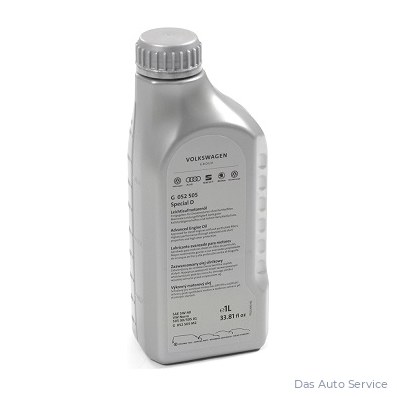
Genuine SpecialD 5W40 Volkswagen diesel oil 1L
Genuine SpecialD 5W40 oil meeting VW 505 01 is suitable for the 1.9 TDI without a DPF. It's important to use oil with the correct specification for your engine.
View in shop
Genuine Longlife III FE 0W30 oil 5L
Genuine LongLife III oil meeting VW 507 00 is suitable for engines with a DPF. Using the correct specification matters, but it doesn't replace the need to change the oil every 10,000 km or once a year.
View in shopRead more
- Diagnostics
- Routine servicing
- 1.9 TDI PD Common Problems and Weak Points
- 1.6 TDI EA189 Common Problems: What to Check
- 2.0 TDI Dual-Mass Flywheel: Signs of Failure
- DSG DQ200 Problems: Jerking and Gearbox Faults
- DPF Problems in City Driving: How to Prevent Blockages
Frequently asked questions
What are the most common problems with the Caddy 3?
The main things to watch are the clutch and dual-mass flywheel, the DPF and EGR on diesel models, the DSG gearbox, the rear suspension and the sliding door rollers. A lot depends on how the van has been used.
Should I choose a Caddy 1.9 TDI or 2.0 TDI?
I wouldn't choose based on the engine alone. Both have their own characteristics, so what matters more to me is the van's actual condition, its service history and a proper inspection before you buy.
How long does a Caddy clutch last?
There's no single mileage that applies to every van. If it's constantly carrying heavy loads around town, the clutch and flywheel take far more punishment than they would with gentle driving.
How often should I change the oil in my Caddy?
I recommend changing the engine oil and all filters – oil, fuel, air and cabin – every 10,000 km or once a year, whichever comes first. That applies regardless of whether you use LongLife oil.