Do you drive a Golf, Octavia, Leon, A3 or Polo with a petrol TSI engine and wonder whether you've got one of the good engines or an expensive repair waiting to happen? I hear this question all the time at the workshop, especially from owners who remember the older 1.4 TSI engines with their troublesome timing chains. The thing is, Volkswagen Group introduced the new EA211 engine family in 2012, and quite a lot changed. If you drive a petrol TSI from the last ten years or so, there's a good chance you've got one under the bonnet. The good news is that it's one of the more reliable petrol engines Volkswagen Group has made. But! It still has a few weak points worth knowing about before the engine management warning light comes on or the temperature starts climbing.
What is the EA211 and how is it different from the older TSI?
The EA211 is a newer family of petrol engines introduced in 2012 to gradually replace the older 1.2 and 1.4 TSI engines from the EA111 series. The biggest difference is the timing system. The older engine uses a timing chain to drive the camshafts, while the EA211 uses a timing belt. That's an important change because the old chains and their tensioners caused plenty of headaches. If you've ever heard that familiar rattling noise when starting the engine, you'll know exactly what I mean.
But the changes don't stop at the timing belt. The newer engine has an aluminium engine block, and the exhaust manifold is built directly into the cylinder head. Put simply, some parts that used to be separate are now integrated into the engine itself. Some versions also have ACT, a system that switches off two cylinders when you don't need the full engine power. For example, when you're cruising gently without pressing hard on the accelerator.
If you want to understand why the older generation has such a bad reputation, read my article on 1.2 and 1.4 TSI EA111 – timing chain rattle, tensioner and turbo problems. The two engines have almost identical names, but they're built differently. That's why we shouldn't treat them as the same engine.
Which EA211 versions are there, and how do I identify mine?
This is where things get confusing, because the TSI badge on the boot doesn't tell you exactly which engine you've got. Two cars with a 1.4 TSI can have different engine codes, different power outputs and different equipment. That's why at Das Auto Service we check the engine code rather than guessing from the badge. Here are the main versions in the family.
- 1.4 TSI with 122–125 hp – found with engine codes CMBA, CZCA and others. These are among the more common EA211 versions.
- 1.4 TSI with 140–150 hp – includes CHPA, CPTA, CZDA and CZEA. Some of these versions have ACT, which switches off two cylinders when the engine is under light load.
- 1.5 TSI evo with 130 and 150 hp – the newer generation introduced in 2017. It builds on the EA211 design with changes to how the engine operates.
- 1.0 TSI – this three-cylinder petrol engine also belongs to the EA211 family, even though it has one fewer cylinder.
So how do you find out which one you've got? The engine code can be found on the vehicle information sticker in the boot and in the service book. We can also check it with a diagnostic tester. This matters because when we're looking for parts or investigating a particular fault, the exact engine code makes a difference. Simply saying "I've got a 1.4 TSI" isn't enough.
How is the EA211 engine built?
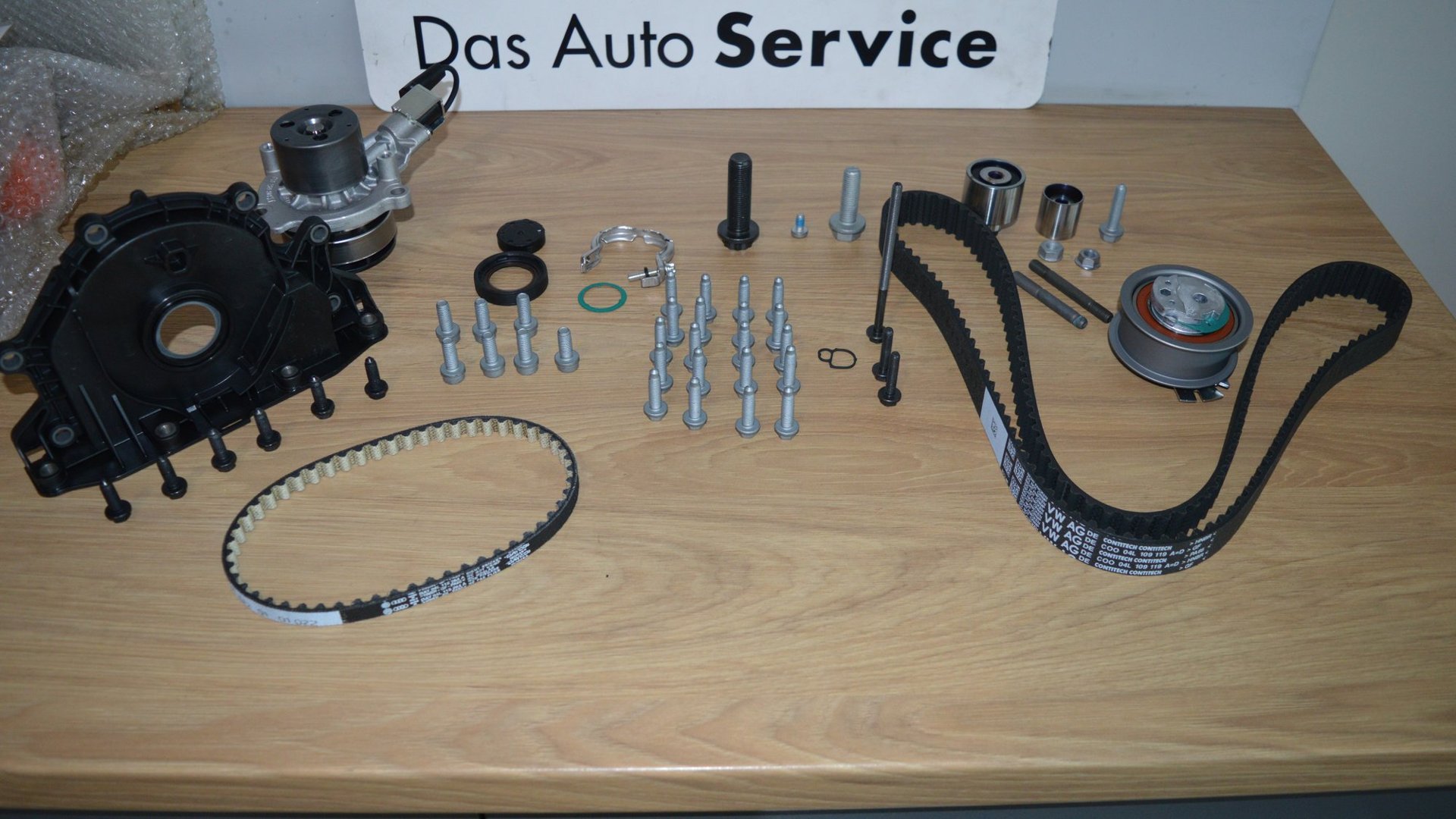
The 1.4 and 1.5 TSI are four-cylinder petrol engines with a turbocharger and direct fuel injection. Direct injection means the fuel is injected straight into the cylinder, while the turbo helps the engine produce power. The camshafts are driven by a timing belt. The water pump and thermostat are housed together in a plastic module that plays an important part in keeping the engine cool. And that's exactly where one of the best-known weak points lies.
The newer 1.5 TSI evo has additional changes designed to improve efficiency. It uses a different combustion cycle, and some versions have a variable-geometry turbocharger. That means the turbo can adjust how it uses the exhaust gases. You don't need to remember every technical detail. What's important is that the 1.5 TSI isn't simply a 1.4 TSI with a slightly bigger engine capacity.
What are the common 1.4 TSI EA211 problems?
There's no such thing as an engine without weak points. The difference is whether those problems are well known and can be caught early, or whether you only discover them when you're stranded at the side of the road. There are a few things I pay particular attention to on the EA211. That doesn't mean every car will develop these faults. It means we know where to look.
Water pump and thermostat
This is one of the most common places for an EA211 to start losing coolant. The plastic water pump and thermostat module can develop leaks. At first, you might notice the coolant level dropping in the expansion tank, and sometimes there's a distinctive sweet smell around the engine. Plenty of owners simply top it up and carry on driving. But that doesn't fix anything. It just puts off the repair. I've explained this in detail in 1.4 TSI EA211 – water pump and thermostat problems.
Turbo wastegate control
The wastegate is a valve that helps control turbo boost pressure. When there's a problem with its operation, you might hear rattling around the turbo, a whistling noise, or notice that the car doesn't pull as strongly as it used to. Sometimes the engine management warning light comes on, and diagnostics show turbo boost pressure fault codes. I don't like replacing parts on guesswork. First, we find out what's actually causing the problem. Then we decide what needs repairing.
Cold engine hesitation on the 1.5 TSI
The 1.5 TSI has a well-known issue where the car hesitates or even kangaroos when pulling away with a cold engine. It's particularly annoying because it feels as though something isn't working properly, yet the behaviour can change once the engine warms up. Checking the software and the overall condition of the car is important here. Don't rush into replacing parts before having a proper diagnostic check. I've written a separate article on 1.5 TSI – why it jerks when pulling away cold.
Carbon build-up on the valves
Direct fuel injection has its advantages, but it also comes with one particular issue: carbon deposits can build up on the intake valves over time. These are hard deposits that can interfere with the engine's normal operation. On higher-mileage cars, one possible symptom is a rough idle. The engine runs unevenly even though you're not touching the accelerator. Of course, that symptom alone isn't enough to say for certain that carbon build-up is the cause.
How should I service my 1.4 TSI EA211 to make it last?
Now we come to the most important part. You can have a very good engine, but if you don't maintain it properly, its advantages quickly become meaningless. I believe in clear service intervals and regular checks rather than waiting for something to go wrong. Here's what I recommend for EA211 engines driven in Bulgaria.
- Engine oil and all filters – every 10,000 km or once a year, whichever comes first. Replace the oil filter, fuel filter, air filter and cabin filter together with the engine oil. The oil must meet the correct VW specification for your particular engine. This applies regardless of LongLife service intervals or which approved oil you use.
- Timing belt and water pump – on engines built after 2015, replace them every 180,000 km or 5 years, whichever comes first. I recommend using a genuine timing belt kit.
- Coolant – replace every third heating season. Check the coolant level in the expansion tank every month.
- DSG – if your car has this gearbox, change the gearbox oil every 60,000 km using genuine oil. Always carry out a gearbox adaptation after the service.
- Spark plugs – inspect and replace according to the requirements for your particular engine.
- General vehicle inspection – every 6 months to catch leaks and other problems before they get worse.
Why am I so particular about changing the engine oil every 10,000 km? Because the driving conditions we have in Bulgaria are no reason to stretch service intervals. Long service intervals are partly linked to environmental requirements, but I'm more interested in what's best for the engine over the long term. The same goes for the filters. There's no point putting fresh oil in the engine while putting off the rest of the service.
WARNING! If the coolant level on your EA211 keeps dropping, don't just top it up and think it'll be fine until the next service. You need to find out where the coolant is going. If the engine overheats, what started as a cooling system problem can turn into a much more serious repair.
Is a car with an EA211 engine worth buying?
Yes, definitely. In my opinion, the EA211 is one of Volkswagen Group's most successful mainstream petrol engines. It has some clear weak points, but they're well known and can be checked before they turn into major problems. If I were buying one, I'd pay particular attention to the service history, coolant level and how smoothly the engine runs. I certainly wouldn't rule out a car just because it has a 1.4 or 1.5 TSI engine. How well it's been maintained matters far more.
Tip from Kris Mladenov: With the EA211, keep an eye on two things above all: the coolant level and the engine oil change history. If the coolant keeps disappearing, find the cause rather than simply topping it up. If the oil has been changed regularly and the engine has been serviced properly, you've got a good foundation for many years of reliable driving.
I hope you've found this article useful! If you have, I'd appreciate you sharing it with a friend who drives a 1.4 or 1.5 TSI. My mission has always been simple: when I know something useful, I want more people to know it too. Because an informed owner can make better decisions about their car.
The solution in our shop

Genuine Longlife III FE 0W30 oil 5L
Genuine LongLife III engine oil is an option for servicing your car, provided it meets the specification required for your particular engine. Even with LongLife oil, I recommend changing it every 10,000 km or once a year, whichever comes first.
View in shop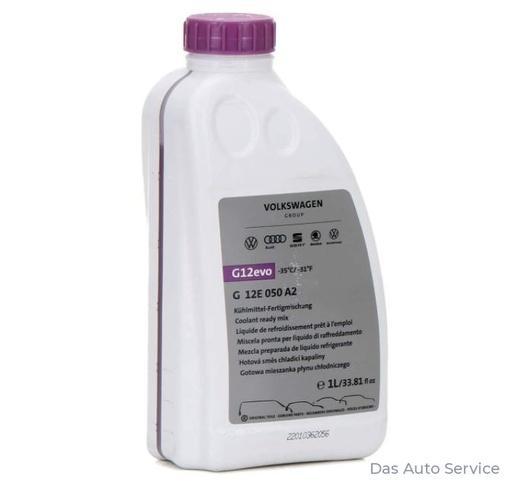
Genuine VAG G12Evo antifreeze G12E050A2 1.0l
Genuine G12evo coolant is suitable for the cooling system when specified for your vehicle. Using the correct coolant matters, but it won't fix a leaking water pump.
View in shopRead more
- Routine servicing
- Diagnostics
- 1.4 TSI EA211 Water Pump and Thermostat Problems
- 1.5 TSI Cold Start Judder: Causes and Fixes
- 1.0 TSI Engine Problems: Vibrations and Maintenance
Frequently asked questions
Does the 1.4 TSI have a timing chain or a timing belt?
It depends on the generation. The older 1.4 TSI EA111 uses a timing chain, while the newer 1.4 TSI EA211 uses a timing belt.
What are the most common problems with the 1.4 TSI EA211?
The best-known problems are leaks from the water pump and thermostat module, turbo control faults and carbon build-up on the intake valves. Not every engine develops these problems, but they're worth checking.
When should the timing belt be replaced on a 1.4 TSI EA211?
For engines built after 2015, I recommend replacing the timing belt every 180,000 km or 5 years, whichever comes first. It's also worth servicing the water pump at the same time, using a genuine kit.
What's the difference between the 1.4 TSI and 1.5 TSI?
Both belong to the EA211 engine family, but the 1.5 TSI evo is the newer generation, introduced in 2017. It has changes designed to improve efficiency, and some versions use a variable-geometry turbocharger.