"5W30 or 5W40 engine oil?" I hear this question all the time. And not just at the workshop. It's probably the most common question people ask when buying oil to service their own car. Some say 5W40 is better for diesels, others reckon 5W30 is for newer engines, and some choose based on how many kilometres the car has done. The truth is, with VW, Audi, Škoda and SEAT, there's something far more important than those two numbers. It's called the manufacturer's oil approval. And if you get that wrong, even the most expensive oil won't save you.
What do the numbers 5W30 and 5W40 mean?
I'll keep it simple. The first number, 5W, tells you how the oil behaves when it's cold. The W stands for winter. The lower the number before it, the more easily the oil flows at low temperatures. So both 5W30 and 5W40 fall into the same category when it comes to cold-weather performance.
The second number tells you how thick the oil stays once the engine is warm and running normally. Under the same conditions, 5W40 is thicker than 5W30 at operating temperature. And this is where people get confused. A lot of drivers think thicker oil must protect the engine better. But here's the thing! Your engine doesn't choose oil based on what sounds safer to us. It's designed to work with oil that has specific properties.
There's something else people often miss. Two bottles of oil can both say 5W30 and still contain very different oils. The same viscosity doesn't mean the same formulation, the same properties or the same approval for your engine. That's why I don't just look at the big numbers on the front of the bottle. I also check the small print on the back. That's actually the most important bit.
What is a manufacturer's oil approval, and why does it matter?
An oil approval is a code that tells you the manufacturer has approved that oil for certain engines. On VW Group cars, you'll see specifications such as VW 504 00 / 507 00, VW 505 01 and VW 508 00 / 509 00. Those aren't random numbers printed on the bottle for decoration. Each one represents specific requirements the oil has to meet. And if your engine needs a particular approval, that's exactly what you should look for.
Imagine you've got two bottles of 5W30 in front of you. They look pretty much identical, but one has the correct approval for your engine and the other doesn't. Which one would you choose? Easy. Not the one with the nicer label, but the one that meets your engine's requirements. If you want to know more, I've explained what VW 504/507 means on an oil bottlein detail.
Which oil is right for my diesel or petrol engine?
Now we're getting to the real question. There isn't one oil that's right for every diesel and another that's right for every petrol engine. Different generations of VW, Audi, Škoda and SEAT engines have different requirements. Let me give you a few examples so you can see why the approval matters more than whether the bottle says 5W30 or 5W40.
- Most TSI and TDI engines with a DPF – VW 504 00 / 507 00. These oils are usually 5W30 or 0W30. It's a good example of why you shouldn't simply divide oils into petrol and diesel categories.
- Pump-injector diesel engines – VW 505 01. You'll usually find this approval on 5W40 oils. With these engines, using the correct oil is especially important for protecting the camshaft.
- The latest engines – VW 508 00 / 509 00. Here we're talking about 0W20 oil. But that doesn't mean you can pour it into any older engine. I've explained why in my article can you use 0W-20 in an older enginein detail.
I want to make one thing clear. These are general guidelines, not a reason to choose oil based only on your car's model. The exact approval is listed in your service book and owner's manual. If you're not sure, the right approach is to check using the VIN, your car's chassis number. That way, you're not guessing which group your engine belongs to.
How often should I change my engine oil?
I'm very clear on this. For cars driven in Bulgaria, I recommend changing the engine oil every 10,000 km or once a year, whichever comes first. It doesn't matter whether you're using 5W30, 5W40, 0W30 or LongLife oil. We change all the filters at the same time – the oil filter, fuel filter, air filter and cabin filter. We don't wait until one of them looks visibly dirty.
People often ask why I recommend changing the oil so frequently when the manufacturer allows longer service intervals. It's because the manufacturer's recommendations also take environmental regulations into account, while I'm looking at the long-term health of your engine. Oil doesn't last forever just because the bottle says LongLife. If you'd like to understand more, read my guide on when to change your oil and service partsin detail.
What happens if I use oil with the wrong approval?
Now we're talking about more than a small difference between two bottles. In a diesel with a DPF, the wrong oil can cause the diesel particulate filter to become blocked. In a pump-injector engine, using oil with the wrong approval can lead to camshaft wear. In both cases, the problem isn't that you've bought cheap oil. It's that you've chosen oil that isn't suitable for that particular engine.
WARNING! Don't pour oil into your engine just because the bottle says 5W30 or 5W40. In a diesel with a DPF, the wrong oil approval can lead to a blocked particulate filter. In a pump-injector engine, it can cause serious camshaft wear.
Which genuine engine oils meet these approvals?
Rather than just talking about the theory, let me show you three genuine engine oils designed for different requirements. Each one has its own purpose. I'm not ranking them from best to worst, because that wouldn't make sense. The right oil is the one that meets the requirements of your particular engine.
Tip from Kris Mladenov: Don't choose engine oil by the big numbers on the label. Choose it by the approval code. First, check what your engine requires. Only then should you look at whether the oil is 5W30, 5W40 or something else. If you don't know the exact approval, send us your VIN and we'll help you check it.
I hope you've found this article useful! If you have, I'd love you to share it with a friend who's still wondering whether to use 5W30 or 5W40. My mission is simple – when I know something, I want more people to know it too. Because having the right information can save you a lot of headaches.
The solution in our shop

Genuine Longlife III FE 0W30 oil 5L
Genuine LongLife III 0W30 engine oil meets VW 504 00 / 507 00. A suitable choice for engines that require this approval.
View in shop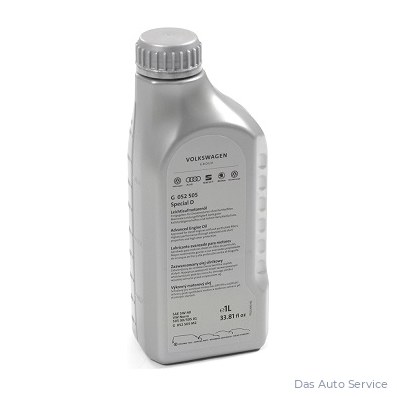
Genuine SpecialD 5W40 Volkswagen diesel oil 1L
Genuine SpecialD 5W40 engine oil is designed for pump-injector diesel engines. Make sure it meets the requirements of your particular engine before choosing it.
View in shop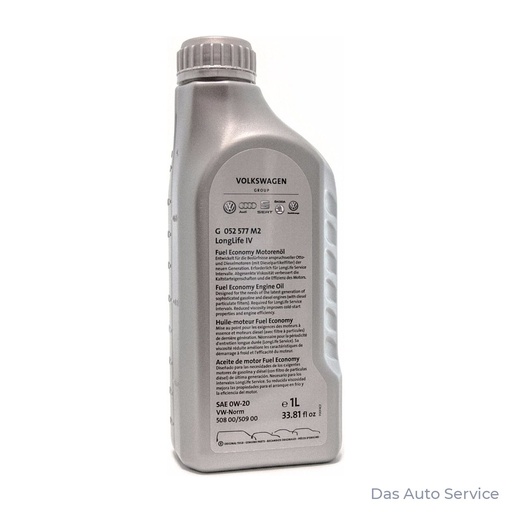
Genuine LongLife IV 0W20 oil G S60577M2 1l
Genuine LongLife IV 0W20 engine oil is for engines that require VW 508 00 / 509 00. Don't choose it for an older engine just because it's a newer generation of oil.
View in shopRead more
- Routine servicing
- VW 504 507 Engine Oil: What LongLife Really Means
- VW 508/509 0W-20 Engine Oil: Can Older Engines Use It?
- VAG Oil Change Interval: When to Service Your Car
Frequently asked questions
Is 5W30 or 5W40 better for a diesel engine?
It depends on the engine and the oil approval it requires. Most TDI engines with a DPF use VW 507 00, usually 5W30 or 0W30, while pump-injector diesels require VW 505 01, usually 5W40.
What does the VW 507 00 oil approval mean?
It's a VW approval for engine oil that meets specific engine requirements. It's used in many TDI engines fitted with a DPF.
Can I use 5W40 instead of 5W30?
Only if the oil meets an approval permitted for your engine. Don't change the oil viscosity on your own without checking the manufacturer's requirements first.
How often should I change 5W30 or 5W40 engine oil?
For cars driven in Bulgaria, I recommend every 10,000 km or once a year, whichever comes first. We change the oil filter, fuel filter, air filter and cabin filter at the same time as the engine oil.