Did you know you can buy a brand-new battery, fit it to your car and end up with exactly the same problem just a few months later? I hear it all the time at the workshop: "Kris, I've changed the battery, but Start/Stop still isn't working. What's going on?" And when we check the car, it turns out the problem isn't the car at all. It's the battery someone chose for it. You see, with a Start/Stop car, you can't just buy a battery that fits in the space and expect everything to work properly. You've got AGM batteries, EFB batteries and ordinary batteries, and they're not the same thing. Let me explain the difference so you don't end up paying twice.
Why does Start/Stop need a special battery?
Imagine you're driving through town, you reach a red light and stop. The engine switches off, but your headlights, air conditioning and everything else electrical keep running. Where's that power coming from? The battery, of course. Then the engine starts again, you drive off, and a little further down the road the whole thing happens again. Over and over, sometimes dozens of times a day.
That's the big difference compared with a car without Start/Stop. In a normal car, the battery doesn't have to go through so many charging and discharging cycles. With Start/Stop, that's part of its everyday job. It's like asking someone to sprint, stop, then sprint again, all day long. An ordinary battery simply isn't built for that kind of punishment. That's why Start/Stop cars use special batteries designed to cope with it.
AGM vs EFB battery for Start/Stop: what's the difference?
This is where a lot of people get confused, because both types are designed for Start/Stop cars. They both look like batteries, and they both do the same basic job: supplying electricity. But they're built differently inside, and they're designed to handle different levels of demand. Let me put it simply.
- EFB is a reinforced battery. Think of it as a tougher version of a conventional battery, built to cope with more frequent charging and discharging. It's used in simpler Start/Stop systems where the demands aren't quite so high. That doesn't make it a bad battery. It just means it's designed for a particular job.
- AGM is a battery where the electrolyte is absorbed into a special material inside. This design is better suited to more demanding Start/Stop systems and cars that recover energy when braking. In other words, when the car asks more of its battery, AGM is built to handle that extra workload. But that doesn't automatically mean you should fit an AGM battery to every car.
There's something important I want you to remember. AGM isn't simply the "better battery", and EFB isn't some "cheap option" you should always replace. They each have their purpose. The question isn't which one sounds more impressive. It's which one is right for your car. And that brings us to the most important part.
Which battery is right for my car?
The answer is very simple: the same type the car left the factory with. If it originally had an AGM battery, fit an AGM battery. Not EFB, not an ordinary battery, no matter how many times someone tells you, "This one will work too." Your car was designed to work with a particular battery type, and its charging system is set up accordingly. It's really not worth experimenting.
But what if your car originally came with an EFB battery? In some cases, you can upgrade to AGM, but only if the car supports that change and the correct coding is carried out afterwards. You can't just fit the battery, close the bonnet and call it a day. The car needs to know what you've fitted. Otherwise, you risk having a brand-new battery that isn't being charged properly.
Why does a new battery need coding?
Imagine replacing your battery while the car's electronics carry on behaving as though the old one is still fitted. That's exactly why battery coding matters. The car needs to know what type of battery you've installed and what its capacity is, so it can manage the charging properly. This isn't some pointless procedure workshops have invented to make extra money. It's about making sure your new battery actually works as it should.
At Das Auto Service, we don't consider a battery replacement finished just because the new battery is fitted. Correct coding is part of the job. Without it, you've only done half the work. If you'd like to understand this in more detail, have a read of my article why Start/Stop stops working in winter and why a new battery needs coding. I explain exactly how the battery and the car's electronics work together.
WARNING! If you replace an AGM battery with an ordinary battery, it might last just a few months instead of years, and your Start/Stop system may stop working. Don't be fooled just because the battery is the same size and fits perfectly in the battery tray. That doesn't mean it's the right one.
Which battery would I choose for my own car?
If it were my car, I wouldn't experiment at all. I'd choose the original battery type, make sure the capacity was correct and then carry out the necessary coding. Simple as that. There's no point trying to be clever and save a bit of money on something you might end up having to buy all over again. Especially when your car is already telling you something isn't right with Start/Stop.
And one more thing. Don't assume everything has been done properly just because the new battery is fitted and the engine starts. Starting the engine is only one part of the battery's job. What really matters is whether it can handle the daily demands and whether the car is charging it correctly. That's why I always check what the specific car was designed to use, rather than choosing a battery by guesswork.
Tip from Kris Mladenov: Before buying a new battery, have a look at the label on your old one. It'll tell you whether it's AGM or EFB, and you can check its capacity too. If you're not sure what your car needs, check before spending your money. And don't forget that the new battery needs to be coded correctly after fitting.
I hope you've found this article useful! If you have, I'd really appreciate you sharing it with a friend who drives a Start/Stop car. You might save them from buying a battery they don't actually need. My mission has always been simple: when I know something useful, I want more people to know it too. Because the better you understand your car, the harder it is for someone to talk you into spending money on something that isn't right for it. And remember, that's your hard-earned money coming out of your own pocket.
The solution in our shop
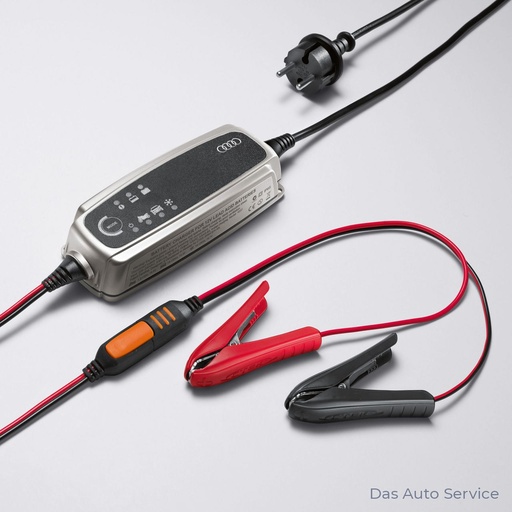
The genuine Audi battery charger is a good choice when you want to look after your battery's charge. But remember, even a good charger can't make up for fitting the wrong type of battery.
View in shopRead more
Frequently asked questions
AGM or EFB: what's the difference?
EFB is a reinforced battery designed for simpler Start/Stop systems. AGM is built to handle greater demands and is also used in cars that recover energy when braking.
Can I fit an ordinary battery to a Start/Stop car?
Don't do it. An ordinary battery isn't designed for the frequent charging and discharging that comes with Start/Stop, and it can fail much sooner.
Does a new car battery need coding?
Yes. The car needs to know the type and capacity of the new battery so it can charge it correctly.