The Audi A6 C6 2.7 TDI is the little brother of the 3.0 TDI, and it often gets overlooked. But does it deserve to? You get six cylinders, a smooth, quiet engine, slightly better fuel economy and that lovely feeling of driving a big diesel that doesn't have to work hard every time you put your foot down. There are a few things under the bonnet you need to know about, though, whether you're thinking of buying one or already own one. Timing chains at the back of the engine, piezo injectors, swirl flaps and different types of automatic gearbox. I'll explain how everything works, where the weak points are and how to look after this V6 so your lovely car doesn't turn into one repair bill after another.
Which Audi models came with the 2.7 TDI?
This engine wasn't exclusive to the A6. Audi used it in several models, always with the same idea in mind: a smooth six-cylinder diesel with enough power for relaxed, enjoyable driving. If you're looking through used car adverts, you'll come across different versions and model years. Here's where you'll find it.
- Audi A6 C6 (2004–2011) – 2.7 TDI with 163 and 180 bhp. This is the model we're usually talking about when this engine comes up.
- Audi A4 B7 (2004–2008) – also available with 163 and 180 bhp. The same smooth six-cylinder diesel idea, but in a smaller car.
- Audi A4 B8 and Audi A5 8T – the engine later appeared in these models too, this time with more power.
Don't just look at the 2.7 TDI badge on the boot. When buying one, you need to know the exact engine version and which gearbox is fitted. Two cars with the same badge can need different maintenance. And that matters when it's time for a service.
How do I identify my 2.7 TDI engine code?
People often ask me whether all 2.7 TDI engines are the same. Not quite. The most reliable way to find out exactly what's under your bonnet is to check the engine code. You don't need to take anything apart. You can find the information in several places.
- BPP – 2.7 TDI with 180 bhp.
- BSG – 2.7 TDI with 163 bhp.
You'll find the code on the vehicle information sticker in the boot, in the service book or through diagnostics. If you've bought the car second-hand and aren't sure exactly which engine you've got, start there. It's far more reliable than a seller telling you they're all the same. They're not.
What's under the bonnet of the 2.7 TDI?
Now we're getting to the interesting bit. We're talking about a 2,698 cc V6 engine with common rail fuel injection and piezo injectors. In simple terms, fuel is supplied at high pressure, and the injectors deliver it into the engine with great precision. This helps the engine run smoothly and quietly. It's exactly why a six-cylinder TDI feels different from a smaller diesel.
- Six cylinders arranged in a V, 2,698 cc capacity and common rail injection with piezo injectors.
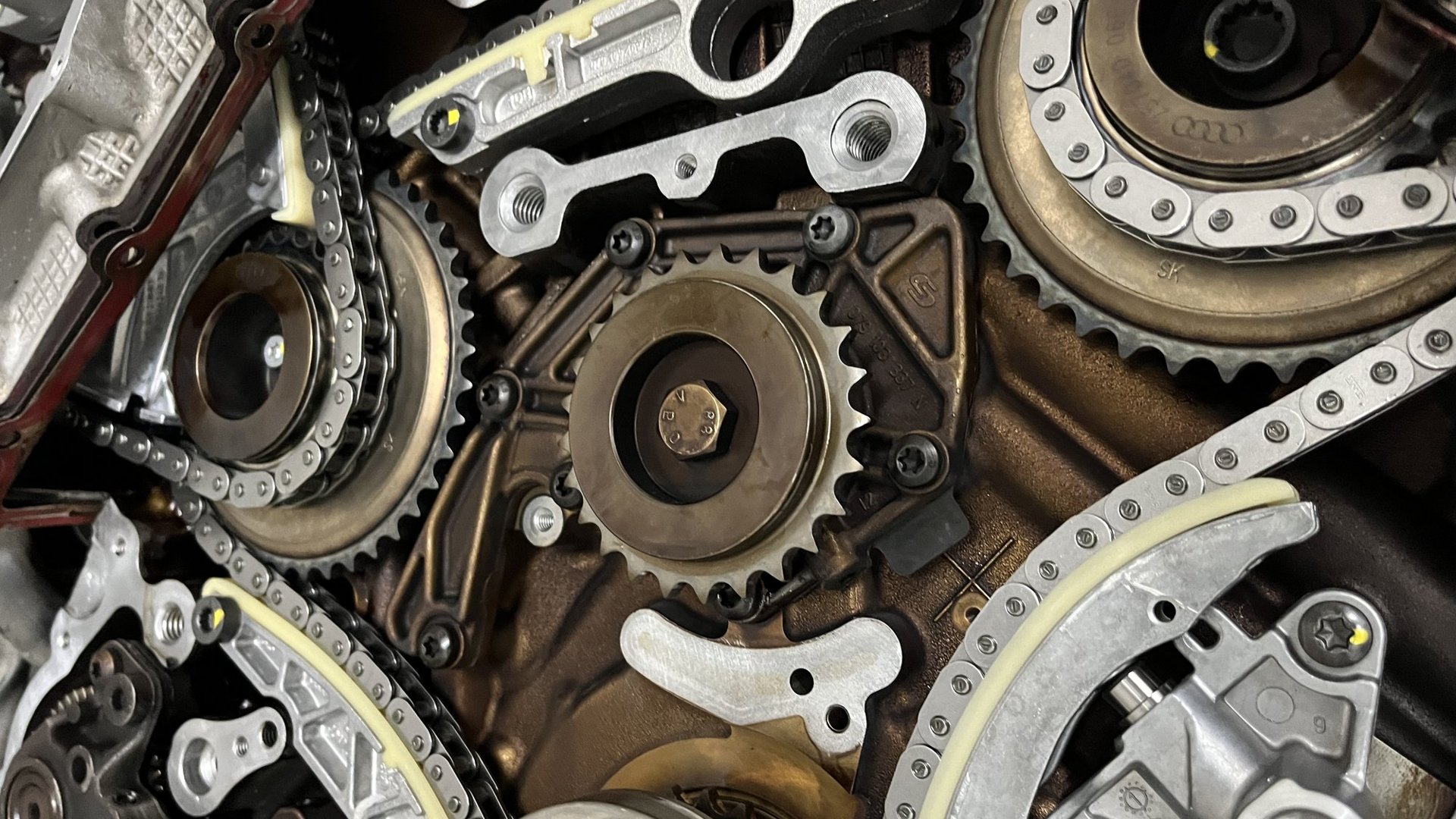
- Timing chains positioned at the rear of the engine, on the gearbox side.
- Manual gearbox, Multitronic on front-wheel-drive models and Tiptronic on quattro models.
The most important thing here is where those timing chains sit. On many engines, the timing system is at the front, where it's relatively easy to reach. On this V6, the chains are at the back, between the engine and gearbox. So when they need repairing, it's not a job you can finish by simply removing a cover.
What are the common Audi A6 C6 2.7 TDI problems?
I'm not going to tell you this is a bad engine, because it isn't. But I'm not going to promise that a V6 will run forever without repairs either. Once the mileage starts climbing, there are a few areas that deserve extra attention. The trick is to recognise the symptoms early, rather than waiting for the car to give up altogether.
Why do the timing chains rattle?
Over time and with increasing mileage, the timing chains can stretch. Owners usually describe it quite simply: "There's something rattling in the engine." The trouble is that the chains are at the back, and replacing them means removing the engine. That makes it a major repair. I've explained why this is necessary in more detail in my article 3.0 TDI: why the engine has to come out to replace the timing chains.
Why won't the engine warm up in winter?
If you've been driving for ages and the temperature gauge still refuses to climb, pay attention to the thermostat and cooling system. It's a familiar issue with the V6 TDI family. Don't automatically assume that an engine struggling to warm up is normal just because it's cold outside. It's not that simple. Have a look at 3.0 TDI not warming up – thermostat or cooling systemtoo, because these engines belong to the same family.
What goes wrong with the swirl flaps?
Inside the intake manifold are swirl flaps that control how air flows into the engine. When they start playing up, the check engine warning light may come on, the car might lose power or the engine may run unevenly. Owners often come in saying, "I plugged in a diagnostic tool and cleared the faults, but the light came straight back." Clearing a fault code doesn't fix a swirl flap. First, we need to find out what's actually causing the problem.
How can I tell if the injectors are faulty?
The piezo injectors are a big part of what makes this V6 run so smoothly. When something goes wrong with them, you might notice difficult starting, rough running or smoke from the exhaust. But those symptoms don't automatically mean the injectors need replacing. You need proper diagnostics, not guesswork. Otherwise, you could end up replacing an expensive part without fixing the actual fault.
Why does the Multitronic gearbox judder?
On front-wheel-drive versions, you may come across the Multitronic gearbox. It's a completely different type of automatic from the Tiptronic, so don't treat them as if they're the same thing. If it starts juddering, jolting or behaving strangely, don't assume that's just what automatic gearboxes do as they get older. It isn't. I've covered the subject in detail here: Multitronic – why it judders and whether it can be repaired.
How should I service my Audi A6 C6 2.7 TDI?
This is where you make the difference between a car you love driving and one that keeps surprising you with repair bills. I don't recommend waiting until the maximum LongLife service intervals. Those intervals also take environmental requirements into account, while my priority is keeping your engine healthy. So, for cars driven in Bulgaria, my recommendations are straightforward.
- Engine oil and all filters – every 10,000 km or once a year, whichever comes first. We replace the oil, fuel, air and cabin filters together with the engine oil. Always use oil that meets the correct VW specification in the owner's manual, whether it's LongLife oil or not.
- Tiptronic – change the genuine gearbox oil every 120,000 km. We always carry out a gearbox adaptation after servicing.
- Multitronic – change the genuine gearbox oil every 60,000 km. A gearbox adaptation is essential after this service too.
- Coolant – check the level every month, use genuine coolant and replace it every third heating season.
- Crankcase ventilation filter – replace it every 80,000 km. It's an important part of looking after this diesel engine.
- Brake fluid – replace it every 2 years. Don't wait until you start having brake problems.
- Air conditioning – service it every spring. This includes checking the system and replacing the receiver-drier and the oil in the system, which help protect the compressor. Simply topping up the refrigerant isn't a complete air conditioning service.
- General vehicle inspection – every 6 months. This gives you a chance to catch problems before they become serious.
If you'd like everything laid out in one place, take a look at my Audi A6 C6 2.7 and 3.0 TDI service schedule. You don't need to memorise every service interval. What matters is having a plan and sticking to it. Especially when you're driving a car that's already covered a lot of miles.
WARNING! If you hear the timing chains rattling, don't put off getting the engine checked. A broken timing chain on a V6 TDI can mean the end of the engine. This isn't a noise you should try to drown out by turning up the music.
Is the Audi A6 C6 2.7 TDI worth buying?
Yes, absolutely, provided you find one that's been properly looked after. The 2.7 TDI is a quiet, enjoyable and durable engine when it's serviced on time. But if you're looking at a high-mileage car, you really need to think about the condition of the timing chains and which gearbox it has. Don't judge it purely by how lovely the engine feels on a short test drive. I want you to know exactly what you're buying before you hand over your money.
If you already own one, don't let that list of common problems frighten you. It doesn't mean everything is guaranteed to break. It means you know where to look and what to keep an eye on. And when you understand your car, making the right decisions becomes much easier. That's the whole point.
Tip from Kris Mladenov: With the Audi A6 C6 2.7 TDI, first find out whether the gearbox is a Multitronic or Tiptronic, because they have different servicing requirements. Check the gearbox oil service history and pay particular attention to the timing chains if the car has high mileage. Don't buy a car just because it looks good or because the seller promises the mileage is genuine. A proper pre-purchase inspection could save you a lot of trouble.
I hope you've found this article useful! If you have, I'd really appreciate you sharing it with a friend who drives a 2.7 TDI or is thinking about buying one. My mission is simple: when I know something useful, I want more people to know it too. Because the better you understand your car, the harder it is for someone to talk you into a repair you don't actually need. And remember, when the wrong decision gets made, it's your pocket that pays for it.
The solution in our shop

Genuine Longlife III FE 0W30 oil 5L
Genuine LongLife III engine oil meeting VW 507 00 is suitable for servicing this engine according to its requirements. Regardless of the LongLife designation, I recommend changing the engine oil and all filters every 10,000 km or once a year, whichever comes first.
View in shop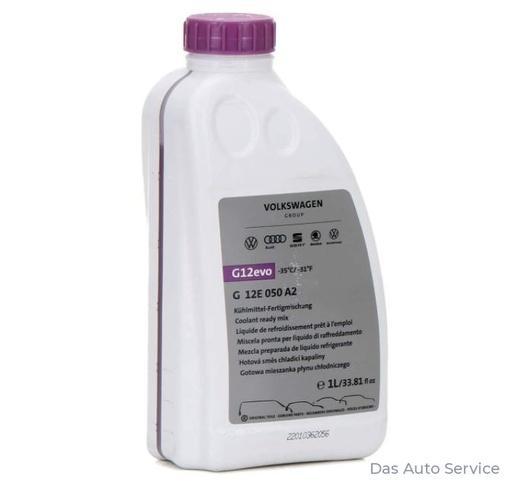
Genuine VAG G12Evo antifreeze G12E050A2 1.0l
Genuine G12evo coolant for the cooling system. Always use the correct coolant and don't skip your regular level checks.
View in shop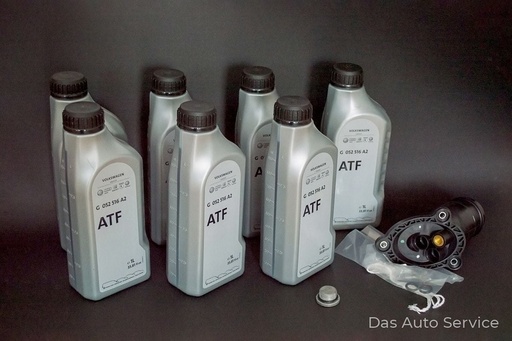
Genuine Audi Multitronic automatic gearbox service set
Genuine Multitronic service kit. We order it using the VIN to make sure we get the correct kit for your particular gearbox.
View in shopRead more
- Routine servicing
- Diagnostics
- 3.0 TDI Timing Chain Replacement: Why Remove the Engine?
- 3.0 TDI Thermostat Problems: Thermostat or Water Pump?
- Audi Multitronic Gearbox Problems: Causes and Repairs
- Audi A6 C6 3.0 TDI Service Schedule
Frequently asked questions
What are the most common 2.7 TDI problems?
The main weak points are the timing chains, thermostat and cooling system, swirl flaps and piezo injectors. If your car has a Multitronic gearbox, you also need to keep an eye on how it's behaving.
Which is better in the Audi A6 C6 – 2.7 or 3.0 TDI?
The 2.7 TDI is the little brother of the 3.0 TDI, offering slightly better fuel economy and a lovely, quiet, smooth drive. Both engines belong to the same family, so when buying one, I'd focus mainly on its condition and service history.
When should the 2.7 TDI timing chains be replaced?
There's no fixed replacement interval specified in this guide. If you hear rattling or suspect the chains have stretched, get the engine checked without delay. The chains are at the rear, and replacing them requires removing the engine.
What fuel economy does the Audi A6 C6 2.7 TDI get?
The 2.7 TDI uses slightly less fuel than the larger 3.0 TDI, but I'm not going to promise you a particular figure without knowing the car and how you drive it. What's more important is that the engine runs properly and has been serviced on time.