Battery warning light on, and your first thought is that you need a new battery? I hear this all the time at the workshop. But that red battery symbol on your dashboard doesn't necessarily mean the battery is old or faulty. It's warning you about something more serious – your car has a charging problem. When the engine is running, the alternator should be supplying the electricity. If it stops charging, the whole car starts relying on the battery. And it will keep running only until the battery runs out of charge. Then you're stuck, whether you're outside your house or in the middle of nowhere.
What does it mean when the battery warning light is on?
Put simply, the alternator isn't supplying enough voltage to the car. It's the part that generates electricity while the engine is running and keeps the battery charged. When the charging stops, the battery has to power everything – the headlights, electronics and all the other systems. But it can't supply electricity forever. Eventually, it runs flat and the engine may cut out.
There's a very important difference I want you to understand here. Your battery could be in perfect condition, even relatively new, and the warning light could still come on. That's because nothing is charging it. So replacing the battery without checking anything won't solve the problem if the alternator or belt is at fault. And that's exactly how unnecessary repairs often begin – someone replaces the most obvious part instead of checking what's actually gone wrong.
Can I drive with the red battery warning light on?
You should only keep driving far enough to reach the nearest safe place or workshop, provided the car is still running normally. But don't take that as permission to finish your journey. Switch off anything electrical that you don't need, because right now, everything using electricity is draining whatever charge is left in the battery. The more electricity you use, the sooner the car will stop.
The worst part is that there's no reliable distance you can count on. You can't assume you'll manage another few kilometres and everything will be fine. It depends on how much charge is left and how much electricity the car is using. Once the voltage drops far enough, the engine can cut out while you're driving. That's why I don't recommend taking the risk, especially if you're a long way from somewhere safe.
What causes the battery warning light to come on?
There aren't that many possible causes, but each one needs a different check. This is where proper diagnostics come in. Seeing a red warning light isn't a reason to immediately order a new battery. You need to find out why the car isn't charging.
- The auxiliary drive belt. This is the belt that drives the alternator. If it snaps, becomes loose or starts slipping, the alternator may stop charging properly. Sometimes there's nothing wrong with the alternator itself – the belt simply isn't turning it as it should.
- The alternator. The problem could be with the voltage regulator, brushes or overrunning pulley. The regulator controls the charging voltage, the brushes help the alternator work, and the pulley allows it to rotate properly. If any of these parts develops a fault, the alternator may stop charging.
- The cables and earth connections. Even if the alternator is working, a poor electrical connection can stop the current reaching the battery properly. The earth connection provides the return path for electricity through the car's electrical system. If that connection is poor, the symptoms can look just like a faulty alternator.
- The battery itself. Yes, the battery can also be responsible, but it's less common. That's why we test it rather than automatically assuming that a warning light showing a battery must mean the battery is faulty.
What do you check at the workshop when the light is on?
At Das Auto Service, we start with the simplest thing – measuring the voltage. A straightforward test can point us in the right direction much faster than replacing parts on a hunch. We then check both the mechanical and electrical sides of the charging system. The aim is to find the actual cause, not just make the warning light go out for the time being.
- We measure the voltage with the engine running. With normal charging, we'd expect a reading of around 14 V. If we measure below 13 V, that's already a strong sign of a charging problem, and we need to find out what's causing it.
- We check the belt and tensioner. We look for damage, check that the belt has the right tension and make sure it isn't slipping. The tensioner is the part that keeps the belt properly tightened. If the belt isn't driving the alternator correctly, there's no point blaming the battery first.
- We test the alternator under load. Simply seeing a voltage reading with the engine running isn't enough. We need to check whether the alternator can supply enough electricity when the car's electrical systems are drawing power. That's how we find out whether it's actually doing its job.
- We test the battery with a battery tester. This tells us what condition it's in and whether it needs replacing. If a replacement is necessary, we also check that the new battery is correctly coded to the car. I've explained why this matters in detail in my article why a new battery needs coding.
IMPORTANT! If the red battery warning light comes on together with the engine temperature warning light, pull over somewhere safe immediately and switch off the engine. On some cars, the same belt also drives the water pump. If that belt has snapped, you could lose both battery charging and proper engine cooling at the same time. At that point, it's no longer just an electrical problem.
How do I know which other dashboard warning lights are serious?
Not all dashboard warning lights mean the same thing. Some tell you it's time to book the car in for a check, while others mean you need to stop immediately. The red battery warning light is one you shouldn't ignore, because your car could lose electrical power while you're driving. If you want to know how to react to the other warnings too, read Dashboard warning lights: which are serious and which can wait.
Tip from Kris Mladenov: If the battery warning light comes on, the first thing I recommend is measuring the voltage with the engine running, if you can do so safely. If it's below 13 V, look for a charging problem instead of rushing out to buy a new battery. And remember – measuring the voltage is the start of the diagnosis, not a final verdict that the alternator is faulty.
I hope you've found this article useful! If you have, I'd appreciate you sharing it with a friend who drives an Audi, VW, Škoda or another car from the group. The reason I write these articles is simple – when I know something, I want more people to know it too. Because a car owner who understands what's going on is much less likely to pay for an unnecessary repair.
The solution in our shop
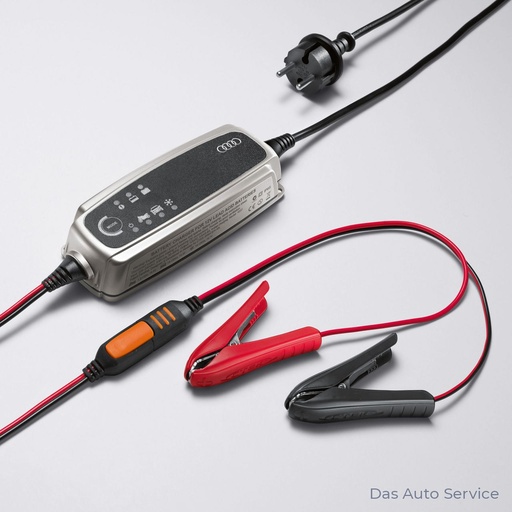
Genuine Audi battery charger. Useful for keeping your battery charged, but it won't replace a proper repair if the alternator isn't charging.
View in shop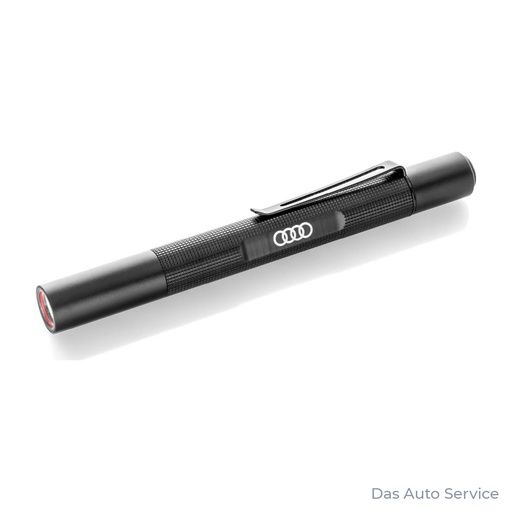
Compact LED torch that's worth keeping handy, especially if your car loses electrical power at night. One of those little things you only think about when you really need it.
View in shopRead more
- Electrical faults and control modules
- Diagnostics
- Dashboard warning lights: which are serious and which can wait
- VW Battery Coding: Why Start/Stop Stops in Winter
Frequently asked questions
Why is my battery warning light on?
Most commonly, because the alternator isn't charging properly or there's a problem with the belt that drives it. Faulty cables, poor earth connections or the battery itself can also be responsible.
Can I drive with the battery warning light on?
Only as far as the nearest safe place or workshop, provided the car is still running normally. The car is using whatever charge remains in the battery, and the engine could cut out while you're driving.
How can I tell whether the alternator or battery is faulty?
Start by measuring the voltage with the engine running and checking the charging system. Then test the battery separately and check the alternator under load.
Is it dangerous if the battery and engine temperature warning lights come on together?
Yes. Pull over somewhere safe immediately and switch off the engine, because the belt may have stopped driving the water pump as well. Continuing to drive could cause the engine to overheat.