"It cranks and cranks before it finally starts." I hear this every year at the workshop when the first cold mornings arrive. All summer, your car has started first time. Now you turn the key or press the start button and wait. Sometimes it starts on the second attempt, sometimes the third, and then it's absolutely fine for the rest of the day. You start wondering whether the battery needs replacing, the fuel is bad or something in the engine is on its way out. The truth is, when your car is hard to start when cold, the causes can be different for diesel and petrol engines. The cold simply brings out a problem you haven't noticed before. Here's what we check and why.
Why is a diesel car hard to start when cold?
A diesel engine needs high temperatures inside the cylinders to ignite the fuel. When it's cold outside, that becomes more difficult, and any weakness in the system starts to show. That's why a diesel can start perfectly all summer, then crank for so long in winter that you wonder whether it's going to start at all. There are a few places we usually look for the cause.
- Glow plugs and the glow plug control unit. Glow plugs help a cold diesel engine start. If one isn't working or there's a problem with the control unit, starting in the morning becomes difficult. Sometimes the glow plug warning light flashes on the dashboard, but don't rely on that alone. I've explained this in detail in TDI hard to start when cold – glow plugs and checks.
- Fuel and the fuel filter. At low temperatures, paraffin in diesel fuel can start causing problems as the fuel passes through the filter. The engine cranks, but it isn't getting the fuel it needs. The type of diesel you use in winter and the condition of the fuel filter are particularly important. I've written more about this in what happens to diesel at -15°C.
- The temperature sensor. This tells the engine control unit how cold it is. If it sends the wrong information, the engine may try to start as though it's warm outside. But it isn't! You end up with difficult starting, even though there might be no obvious problem afterwards.
- A weak battery. A diesel engine needs to crank fast enough to start. If the battery is getting weak, especially in cold weather, the starter motor turns more slowly and the engine struggles to fire up. The battery doesn't have to be completely flat to cause problems.
And this brings me to one of the most common mistakes. The car struggles to start, someone immediately decides it's the glow plugs, replaces them and expects a miracle. But if the real problem is the battery, fuel or temperature sensor, those new glow plugs won't help. That's why I prefer to check first and replace parts afterwards.
Why is a petrol engine hard to start when cold?
With petrol engines, things are a little different. Here we have spark plugs and ignition coils that need to produce a spark to ignite the mixture inside the cylinders. The fuel also needs to arrive at the correct pressure, and the engine control unit needs to know the engine temperature. If any of these things aren't right, you'll find yourself cranking the engine for ages in the morning.
- A weak battery. Just like with a diesel, cold weather reveals whether the battery still has enough power. Your car might start normally throughout the day but struggle after a cold night. That's why I never rule out the battery just because the engine runs on petrol.
- Fuel pressure. The pump in the fuel tank needs to deliver fuel at the correct pressure. If that pressure isn't right, the engine may crank for a long time before starting. There's no point guessing here. We check the pressure.
- Spark plugs and ignition coils. These produce the spark that ignites the fuel mixture. If they aren't working properly, a cold engine may struggle to start. But! That doesn't mean you should immediately replace every spark plug and ignition coil without someone checking what's actually wrong.
- The temperature sensor. Petrol engines also rely on this sensor to know how cold the engine is. If the information is wrong, the engine control unit might not prepare the correct fuel mixture for starting. You know the result – you keep cranking and waiting.
What do we check when a car struggles to start in the morning?
At Das Auto Service, we don't start replacing parts and hoping for the best. First, we need to understand exactly what's stopping the engine from starting. There's a big difference between a battery that can't turn the engine fast enough and an engine that cranks normally but won't fire up. That's why we work through the checks in order.
- We test the battery under load. Simply seeing that it has voltage isn't enough. What matters is how it performs when it has to turn the engine over.
- On diesel engines, we check the glow plugs and their control system. On petrol engines, we check the spark plugs and ignition coils. We want to know whether the system is working properly, not just whether a part looks old.
- We check the fuel pressure and read the temperature sensor data using diagnostic equipment. This lets us see what information the engine control unit is receiving and whether fuel is reaching the engine properly.
These checks help us separate the real problem from guesswork. Because it's very easy to tell a customer, "We'll replace this and see what happens." But they haven't come to the workshop to pay for experiments. They've come to get their car fixed.
WARNING! Don't use easy-start sprays on modern diesel engines. They can damage the engine. If your car won't start, the right solution is to find the cause, not force it to start with a spray.
How can I prevent starting problems in winter?
The best time to get your car checked for winter is in autumn, before the first really cold weather arrives. I recommend checking the battery and the condition of the plugs, because that's when any weakness starts to show. If you drive a diesel, use suitable winter diesel fuel and don't put off replacing the fuel filter. Simple things, but they can save you a very unpleasant morning in the car park.
For cars driven in Bulgaria, I recommend changing the engine oil and all filters every 10,000 km or once a year, whichever comes first. That means replacing the oil filter, fuel filter, air filter and cabin filter together with the engine oil. It doesn't matter whether you're using LongLife oil. I care about what's best for the engine, not how long we can put off servicing it.
Tip from Kris Mladenov: If your car only struggles to start when it's cold, take it as a warning. Don't wait for the morning when it won't start at all. Get the battery, plugs and fuel system checked in good time instead of blindly replacing parts.
I hope you've found this article useful! If you have, I'd be happy if you shared it with a friend who wonders every morning whether their car is going to start. My mission is simple – when I know something, I want more people to know it too. Because an informed car owner can make better decisions about their car.
The solution in our shop
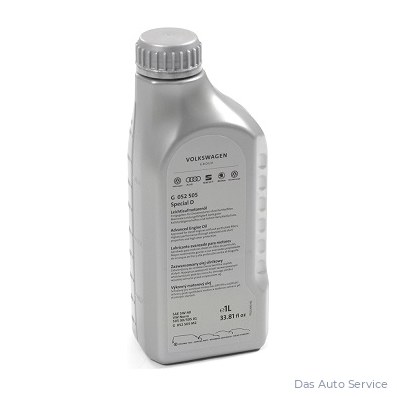
Genuine SpecialD 5W40 Volkswagen diesel oil 1L
SpecialD 5W40 engine oil is designed for diesel engines with unit injectors. It's important to use the correct oil for your particular engine.
View in shop
Genuine Longlife III FE 0W30 oil 5L
LongLife III engine oil is designed for the petrol and common rail diesel engines that specify it. Even with this oil, I recommend changing it every 10,000 km or once a year.
View in shopRead more
- Diagnostics
- TDI Glow Plug Problems: Cold Starts and Checks
- Diesel Won't Start in Cold Weather: Fuel and Filters
Frequently asked questions
Why is a diesel car hard to start when cold?
We usually start by checking the glow plugs and their control unit, the battery, fuel, fuel filter and temperature sensor. We find the cause through proper checks, not guesswork.
Are the plugs to blame when my car struggles to start?
They could be, but not necessarily. On a diesel, we check the glow plugs. On a petrol engine, we check the spark plugs and ignition coils. The problem could be somewhere else entirely.
Why is my petrol car hard to start in the morning?
It could be a weak battery, a fuel pressure problem, faulty spark plugs, ignition coils or a temperature sensor. We need to check which system isn't working properly.
Why does my car struggle to start in the morning but start fine during the day?
Cold weather can reveal a problem that doesn't show up when the engine is warmer. That's why it's worth getting the car checked before starting becomes even more difficult.