Is your car overheating quickly? The temperature gauge reaches 90°C after just a few minutes, and sometimes it keeps climbing. Is that normal? I get asked this a lot, and there's something important I want you to understand. A car warming up quickly doesn't always mean something is wrong. But if the engine temperature climbs above normal, that's a problem you really shouldn't ignore. It could be the thermostat, the water pump or simply a temperature sensor giving a false reading. But it could also be something much more serious. I want you to know how to tell the difference, because pulling over at the right moment could save you a lot of trouble.
How do I know if my car is warming up too quickly?
The first thing you'll notice is the temperature gauge. You start the car, drive off, and before you know it, the gauge is already showing 90°C. That alone isn't necessarily a problem. What worries me is when the temperature keeps rising or the car behaves differently from usual. Especially if it never used to warm up like this.
Another sign is the radiator fan running almost constantly. You might also notice something odd with the cabin heating. One minute it's blowing cold air, the next it's suddenly blowing really hot air. That's when I start wondering whether the coolant is circulating properly through the engine. Because the cooling system isn't just a radiator at the front of the car. Everything has to work together to keep the engine at its normal operating temperature.
What causes a car to start overheating quickly?
Let me walk you through the most common causes without drowning you in technical jargon. Just because the engine temperature is climbing doesn't automatically mean we need to replace the thermostat. That's one of the biggest mistakes I see in our trade. Someone guesses which part is faulty and replaces it without proving anything. You pay the bill and hope the problem goes away. That's not how I want us to repair your car.
- The thermostat is stuck closed. Think of it as a little door that needs to open so the coolant can flow through the radiator and cool down. If that door stays shut, the hot coolant can't follow its normal route. The engine starts getting hotter, even though the radiator at the front of your car is perfectly fine.
- The water pump isn't working properly. Its job is to move coolant around the engine and cooling system. If the pump's impeller is damaged or there's a leak, cooling can suffer. This is a well-known issue on certain engines. Have a look at my guides on the EA888 Gen3 and EA211, where I explain the problems with their water pumps and thermostats.
- There's air trapped in the cooling system after a repair. Perhaps the coolant, water pump or another cooling system component has been replaced, but the system wasn't bled properly afterwards. Air pockets form and stop the coolant flowing as it should. Your car can start behaving strangely as it warms up, even though every component is working perfectly well.
- The coolant level is low. Sounds obvious, doesn't it? But if there isn't enough coolant, the system simply can't do its job properly. And it's not enough just to discover that coolant is missing. We also need to find out why the level has dropped.
- The temperature sensor is giving a false reading. In this case, the engine might not actually be anywhere near as hot as the dashboard suggests. That's why I don't immediately blame the thermostat or water pump. First, we need to check whether the temperature being displayed matches the real temperature.
- There's a problem with the radiator fan. The fan helps the radiator cool the coolant. If it isn't working properly, the temperature can rise. And if it runs constantly without switching off, that's worth investigating too. I've explained this in detail in my article about the radiator fan that won't stop running.
- The head gasket is allowing combustion gases into the coolant. Now we're talking about something more serious. Gases enter the cooling system and interfere with the way it works. That doesn't mean every overheating engine has a failed head gasket. But it's something we need to rule out before we start replacing parts blindly.
Will removing the thermostat solve the problem?
You might come across this advice in online groups and forums: "Just remove the thermostat and the engine will run cooler." Sounds easy, doesn't it? But it's not a solution. Without a thermostat, the engine can run too cold, while the real cause of the problem remains untouched. It's a bit like throwing away your thermometer because you don't like the temperature it's showing. I wouldn't do that to your car. And I really don't want you doing it either.
How can we tell if it's the thermostat, pump or sensor?
This is where proper diagnostics come in. And I don't mean simply plugging in a diagnostic tool, reading the fault codes and declaring that a particular part is faulty. We need to find out what's actually happening inside the cooling system. Here's how I approach it.
- We check the coolant level and make sure the cooling system has been bled properly. If there's trapped air, we need to get rid of it first, because it can make everything else look misleading.
- We compare the temperatures shown by the diagnostic equipment with the actual temperatures measured using a thermal imaging camera. This lets us check whether the sensor is telling the truth and see how heat is being distributed.
- We pressure-test the cooling system and check for combustion gases in the coolant. This helps us identify leaks or a possible head gasket problem.
- We repair the fault we've actually found. If it's the thermostat, we fix the thermostat. If it's the water pump, we deal with the pump. We don't replace everything in sight and hope one of those parts happens to be the culprit.
When should I stop driving immediately?
If the temperature gauge rises above normal or the red temperature warning light comes on, pull over somewhere safe immediately and switch off the engine. Don't keep driving just because you're only a few kilometres from home. And don't open the cap on a hot cooling system, because you could burn yourself badly. I've written a separate guide about what you must never do when your engine overheats. Please read it, because knowing how to react in that moment really matters.
IMPORTANT! If your engine temperature rises above normal, don't keep driving. Even if the cause seems minor, overheating can lead to a much more serious repair. Don't risk your engine just to drive a few more kilometres.
One more thing about maintenance. I recommend replacing the coolant every third heating season and having your car inspected at the workshop every 6 months. That gives us a chance to spot cooling system problems before they turn into overheating. Because the best repair is the one we've managed to prevent.
Tip from Kris Mladenov: After any cooling system repair, keep an eye on the temperature gauge for the first ten minutes. That's when any air still trapped in the system may start causing trouble. If you notice the temperature rising unusually, don't ignore it. I'd much rather we check your car in time than see you paying for the damage afterwards.
I hope you've found this article helpful! If you have, I'd love you to share it with a friend who cares about their car too. My mission is simple. When I know something useful, I want more people to know it. Because the better you understand your car, the harder it is for anyone to convince you to pay for repairs you don't actually need.
The solution in our shop
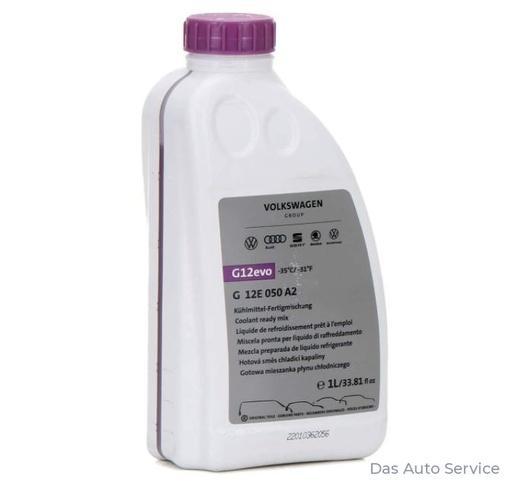
Genuine VAG G12Evo antifreeze G12E050A2 1.0l
Genuine G12evo coolant is the right choice for a cooling system that specifies it. What matters is using the correct coolant for your car and not ignoring the condition of the cooling system.
View in shopRead more
- Diagnostics
- Routine servicing
- EA888 Gen3 Water Pump Leak: Causes and Fix
- 1.4 TSI EA211 Water Pump and Thermostat Problems
- VW Radiator Fan Keeps Running: When Is It a Fault?
- Engine Overheating: What to Do and What to Avoid
Frequently asked questions
Why is my car overheating so quickly?
It could be a stuck thermostat, a faulty water pump, trapped air in the cooling system, low coolant or an incorrect temperature sensor reading. We also need to check the radiator fan and rule out combustion gases entering the coolant.
How can I tell whether it's the thermostat or water pump?
You can't be sure just by looking at the temperature gauge. We use diagnostic equipment and a thermal imaging camera to check the temperatures and find out whether the coolant is circulating properly.
How quickly should an engine warm up?
There's no single warm-up time that applies to every car. What's more important is that the temperature settles within the normal operating range and doesn't keep climbing.
Can I keep driving if the engine temperature goes above normal?
No. Pull over safely and switch off the engine, especially if the red warning light is on. Carrying on could turn a small problem into a major repair.