Your car smells of petrol, and you're wondering whether it's serious or something that will go away on its own. I hear this quite often at the workshop, and there's one thing I want you to remember. A petrol smell is not something you should put up with or wait to disappear. Petrol is a fire waiting to happen. That might sound alarming, but that's exactly why I want you to understand where the smell could be coming from, when it's dangerous and what you should do before a small leak turns into a big problem.
When is it normal for your car to smell of petrol, and when isn't it?
If you've just filled up at a petrol station and notice a faint smell of petrol around your car, that can be perfectly normal. But if you've already driven away and the smell keeps coming into the cabin, that's a different story. It's even more worrying if your car smells of petrol while it's parked. And if you also notice drops of fuel underneath, there's no room for doubt.
I want to make an important distinction here. Smelling petrol briefly just after filling up is one thing. Having that smell constantly, or noticing it every time you drive, is something else entirely. Don't treat the second situation as normal, whether your car runs perfectly well, whether the Check Engine warning light is on or whether you have any other symptoms at all. The smell alone is enough reason to investigate.
What are the most common reasons your car smells of petrol?
The fuel system isn't just a tank and a few pipes. Petrol has to travel from the tank to the engine, and there's also a separate system that controls petrol vapours. When something starts leaking or a seal no longer holds properly, the smell can appear in all sorts of places. Here's what I check first.
- Fuel pipes and connections in the engine bay. These carry petrol to the engine, and if one of the connections starts leaking, you may notice the smell under the bonnet. This is one area you should never ignore.
- High-pressure fuel pump and its seals. On direct-injection engines, the pump operates at high pressure, and a problem with its seals can cause a petrol smell. If you want to understand more about how this system works, read my article about high fuel pressure in TSI engines.
- Fuel pump inside the tank and its seal. On many cars, you can access this pump from underneath the rear seat. If the seal or cover isn't fitted properly, you may notice the smell towards the back of the cabin.
- Petrol vapour control system. This includes an activated charcoal canister and a valve that help prevent petrol vapours from escaping into the air. If something goes wrong with this system, you might smell petrol without seeing any fuel leaking underneath the car.
- Fuel filler cap. Yes, sometimes it's that simple. If the cap doesn't seal properly, petrol vapours can escape around it. That's why checking the cap is one of the first easy things to do.
Notice anything these problems have in common? They can all cause exactly the same symptom, but for completely different reasons. That's why I don't like diagnosing cars by saying, "It's probably this." First, we find out where the smell is coming from. Then we decide what needs repairing. Otherwise, you end up with the familiar game of replacing parts and hoping for the best.
What should I do if my car smells of petrol?
First and most importantly, don't underestimate the situation. You don't need to know anything about cars to react properly. You just need to follow a few simple rules, because with petrol, we're not only talking about a mechanical fault. We're also talking about a fire risk.
- Don't smoke or use a naked flame anywhere near the car. This applies even if the smell seems faint and you can't see any fuel leaking.
- If you can see petrol dripping underneath the car, don't start the engine. Don't try to drive to the workshop yourself. Call for roadside recovery.
- If you can only smell petrol and can't see a leak, the car still needs checking. If the smell is faint, only outside the cabin, and there are no other signs of a leak, contact a workshop immediately. If the smell is inside the cabin or is strong, don't drive the car. Opening the windows doesn't make a possible fuel leak safe.
WARNING! If you can smell petrol inside the cabin, don't drive the car. Don't wait for another fault or warning light to appear. Get it checked without delay.
What do we check at the workshop when a car smells of petrol?
When a car comes into Das Auto Service with this complaint, we don't start replacing parts straight away. First, we need to find out exactly where the petrol or its vapours are coming from. We check several key areas because sometimes you can smell petrol a long way from the actual problem. This is where proper diagnostics matter much more than guesswork.
- We inspect the engine bay, fuel pipes, connections and high-pressure fuel pump. When it's safe to do so, we also check the system with the engine running and the fuel system under pressure.
- We check the fuel pump inside the tank, its seal and the cover underneath the rear seat. This is particularly important when the smell is coming from the back of the car.
- We test the petrol vapour control system using diagnostic equipment. This helps us look for problems with the activated charcoal canister, the valve and the way the system operates.
Older 2.0 TFSI engines also have a few things worth knowing about. One of them is the worn fuel pump cam follower. I've covered this problem in a separate article because the fuel system on these engines has its own particular issues. The important thing is not to assume that every petrol smell means the same fault.
Tip from Kris Mladenov: If you notice a petrol smell, try to work out whether it's coming from the front, the back or around the fuel tank. Don't crawl underneath the car or take anything apart. Knowing roughly where the smell comes from can help us decide where to start looking. If you smell petrol inside the cabin, don't carry on driving. When petrol is involved, the best repair starts with acting quickly.
I hope you've found this article useful! If you have, I'd be happy if you shared it with a friend who drives a petrol car. My mission has always been simple: when I know something useful, I want more people to know it too. Because sometimes, making the right decision at the right time can prevent a much more serious problem.
The solution in our shop

Genuine Longlife III FE 0W30 oil 5L
Genuine LongLife III engine oil is for servicing your engine, not for fixing a petrol smell. At our workshop, we change the engine oil and all filters (oil, fuel, air and cabin) every 10,000 km or once a year, whichever comes first.
View in shop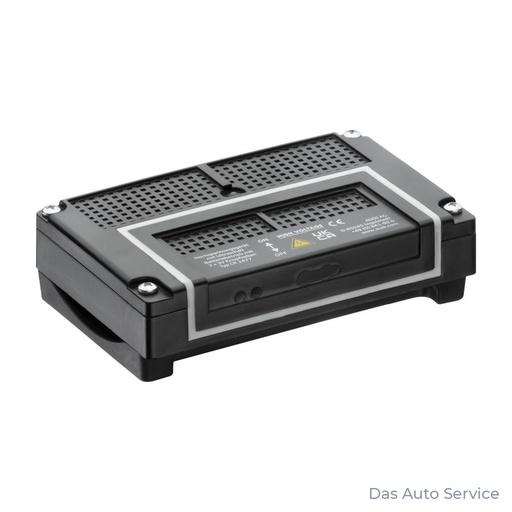
Audi ultrasonic rodent deterrent device
The ultrasonic marten repellent helps protect your car against animals that can damage fuel pipes. It's a preventative measure, not a substitute for inspecting and repairing a fuel leak.
View in shopRead more
Frequently asked questions
Why does my car smell of petrol?
It could be caused by leaking fuel pipes, a problem with the high-pressure fuel pump, a faulty seal on the fuel pump inside the tank or an issue with the petrol vapour control system. Sometimes, the fuel filler cap is the culprit.
Is it dangerous if I can smell petrol inside my car?
Yes, it is dangerous. Petrol is highly flammable, and a petrol smell inside the cabin should never be ignored. Don't drive the car until the cause has been investigated.
Can the petrol smell be coming from the fuel filler cap?
Yes. If the cap doesn't seal properly, petrol vapours can escape around it. But don't assume the cap is the only problem without having the car checked.