If you drive a Golf 5 GTI, A3 8P, A4 B7 with the 2.0 TFSI, Octavia 2 RS or Leon Cupra, there's one little part I really want you to know about. It's the high-pressure fuel pump cam follower. It costs about as much as lunch, but if it wears through and nobody spots it in time, you could end up needing a new camshaft and fuel pump. And that's when things get expensive.
What is the 2.0 TFSI fuel pump cam follower, and why does it wear out?
With direct injection, fuel enters the engine at very high pressure. That's the job of the high-pressure fuel pump, which is driven by a lobe on the camshaft. Between that lobe and the pump piston sits a little metal cup – the cam follower. Every time the engine turns, it slides against the camshaft lobe. Just imagine how many millions of times that happens. On the 2.0 TFSI EA113 and early EA888 engines, the surface of this little cup gradually wears away until, eventually, it can wear right through.
And that's where the trouble starts. Once the cam follower wears through, the camshaft lobe starts pushing directly against the pump piston. Both begin to wear. The camshaft gets damaged, the pump suffers too, and metal particles end up in the engine oil. All because of one tiny metal cup.
How can you tell if the cam follower is worn?
- Your car doesn't pull like it used to, especially when you put your foot down at higher revs.
- The engine misfires or even goes into limp mode.
- The engine management light comes on, and a diagnostic scan shows low fuel pressure fault codes.
- The engine struggles to start when it's warm.
Please, don't wait for these symptoms. If the cam follower has already worn through, there's a good chance the camshaft lobe has been damaged too. And at that point, we won't be replacing just one little part. We're looking at a major repair.
How do we check the cam follower at the workshop?
- First, we remove the high-pressure fuel pump. It's not a particularly time-consuming job.
- We take out the cam follower and inspect it carefully. If we find wear or a mark on its surface, we replace it.
- We also inspect the camshaft lobe and the fuel pump itself.
- Then we put everything back together with a new seal.
For these engines, I recommend checking the cam follower every 30,000 to 50,000 km. And there's something else I want you to remember – don't stretch your engine oil change intervals. The oil lubricates this little cup too, so its condition really matters. For cars driven in Bulgaria, my recommendation is to change the engine oil and oil filter every 10,000 km or once a year, whichever comes first, regardless of the oil used.
Does every 2.0 TFSI engine have this problem?
No, and that's important to understand. On the newer EA888 engines, the design was changed and the problem has almost disappeared. So don't worry just because you see TFSI written on the engine cover. We need to know exactly which engine you've got underneath. If you're unsure, send us your VIN at Das Auto Service and we'll check whether your engine is one of those affected.
Is the cam follower related to other TFSI problems?
If you drive a TFSI, you've probably heard about some of their other weak spots too. I've already talked to you separately about timing chain problems and engines that burn oil. The cam follower is another part you shouldn't forget about. The good news is that, of all these problems, this is the cheapest one to put right. But only if we catch it in time.
A tip from Kris Mladenov: If you drive a 2.0 TFSI from these years and can't remember the last time anyone checked the cam follower, ask them to inspect it at your next service. Fifteen minutes of work could save you from having to replace the camshaft.
I'll be happy if this article helps save even one camshaft. If you've got a TFSI, find out when the cam follower was last checked. And if a friend of yours drives one of these engines, send them this article. You might save them a lot of trouble.
The solution in our shop
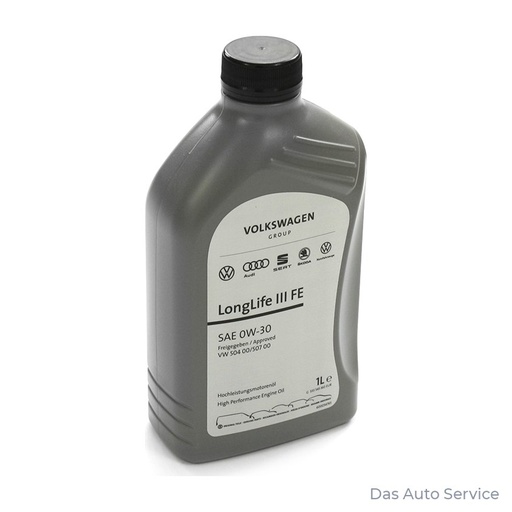
Genuine LongLife III FE 0W30 engine oil
Genuine LongLife III FE 0W30 engine oil, one litre, depending on your engine's specification.
View in our shopRead more
- Diagnostics at Das Auto Service
- Complete engine rebuilds
- How to tell if your 1.8 or 2.0 TFSI has a timing chain problem
- 1.8 and 2.0 TSI/TFSI engines – excessive oil consumption
- When should I change the oil and service parts on my VAG car?
- 1.8 and 2.0 TFSI: ignition coils and spark plugs
- 1.8 and 2.0 TSI (EA888 Gen3): water pump and thermostat leaks
Frequently asked questions
What is the fuel pump cam follower on a 2.0 TFSI?
Picture a small metal cup sitting between the camshaft lobe and the piston inside the high-pressure fuel pump. Over time, it wears down, and its surface can eventually wear right through.
How can I tell if the cam follower is worn?
Your car loses power, misfires or the engine management light comes on. A diagnostic scan shows fault codes for low fuel pressure. But please, don't wait for any of that before having it checked.
How often should I check the cam follower?
On the 2.0 TFSI EA113 and early EA888 engines, I recommend checking it every 30,000 to 50,000 km. That way, we can catch the wear before it damages the camshaft and fuel pump.