Your car drives perfectly up to 100 km/h, but as soon as you reach 110–120 km/h, the steering wheel starts shaking or you feel vibrations through the seat. Sound familiar? I hear this all the time at the workshop, especially after a tyre change. The first thing everyone thinks of is wheel balancing. And quite often, that's exactly the problem. But! Not every vibration comes from the tyres, and balancing the wheels again won't always fix it. Sometimes it's a bent alloy wheel, sometimes a driveshaft or something in the suspension. I'll explain how to tell these problems apart and why knowing exactly when the vibration starts makes such a difference.
How can I tell where the vibration is coming from?
The first thing I want to know when someone tells me their car vibrates at high speed is exactly where they feel it. Through the steering wheel, the seat or the whole car? It also matters whether the vibration only happens when you accelerate or carries on when you're driving at a steady speed. These little details can point us towards the cause before we've even put the car on a ramp.
- The steering wheel shakes at a certain speed. We usually start by checking the front wheels. It could be wheel balancing, a bent alloy or a tyre problem, but I wouldn't rule out the suspension either.
- You feel vibrations through the seat or floor. My attention goes straight to the rear wheels. Quite often, the driver can feel the vibration through the car without the steering wheel shaking at all.
- The car vibrates under acceleration, but the vibration disappears when you're cruising. That makes me suspect the driveshafts, especially when the vibration changes depending on whether you're pressing the accelerator.
- The vibration happens when you brake. Now we're looking at the brake discs. That's a separate issue and shouldn't be confused with vibrations when driving at a steady speed.
See how many different things can be behind a simple complaint like "my car is shaking"? That's why I'm not a fan of diagnosing problems over the phone with answers like "It's probably the wheel balancing." It might be. But first, we need to understand when, where and under what conditions the problem happens.
Why is my car vibrating at high speed?
The most common cause is something to do with the wheels, especially if the vibration started after a tyre change. But there are other possibilities we shouldn't overlook. Here's what I check and why.
- Incorrect wheel balancing or a missing balance weight. When a wheel is balanced, small weights are fitted to the rim to help it rotate evenly. If the balancing hasn't been done properly or one of those weights falls off, you'll start feeling vibrations at certain speeds.
- A bent alloy wheel or a bulge in the tyre. A wheel can be perfectly balanced without being perfectly round. If the alloy is bent or the tyre is deformed, the vibration can still be there after balancing.
- Incorrectly tightened wheel bolts. This is something you really shouldn't underestimate. How the wheels are tightened matters. I've covered this in detail in how your winter wheels were tightened.
- Worn ball joints and driveshafts. Ball joints are the moving connections in the suspension, while driveshafts transfer power to the wheels. When these parts wear out, they can cause vibrations, particularly under acceleration.
- A worn wheel bearing. The bearing allows the wheel to rotate freely. When it wears out, you'll often hear a distinctive humming or droning noise that gets louder as your speed increases. I've explained this separately in my article about wheel bearing noise.
- Worn suspension bushes and control arms. These keep the wheels in the correct position and absorb some of the forces while driving. When they're worn, the suspension no longer works as it should, and that can also cause vibrations.
And here's a mistake I see in the motor trade. A car comes in with a vibration, someone balances the wheels, the problem is still there, so they balance them again. Then a third time. Meanwhile, nobody has checked whether an alloy is bent or whether there's any wear in the suspension. The point is to find the actual cause, not just keep repeating the same job.
What do you check at the workshop when a car vibrates?
At Das Auto Service, we don't start replacing parts based on guesswork. First, we check the things that could cause that particular vibration. The idea is simple: find out where it's coming from instead of replacing something that might be perfectly fine.
- We check the balance of all four wheels and inspect the alloys on the balancing machine. We don't just concentrate on the front wheels because the rears can also cause vibrations through the car.
- We inspect the tyres for deformation. We look for uneven areas, bulges and anything else that could stop the wheel rotating smoothly. Wheel balancing alone isn't enough to rule out this kind of problem.
- We check the driveshafts, ball joints and bearings underneath the car. We're looking for wear and excessive play that could explain the vibration. This is particularly important when it happens under acceleration.
- We check the suspension and wheel alignment. We inspect the control arms, bushes and wheel positions. That helps us work out whether the problem is limited to the wheel or whether something else needs fixing.
Not every car with a vibration needs suspension repairs. Sometimes wheel balancing really is all it needs. But if we skip the other checks, we could hand the car back with exactly the same vibration. And that's not diagnosis. That's guesswork.
Is it dangerous to drive if my car has started vibrating?
It depends on the cause, but I wouldn't recommend ignoring vibrations. Especially if they've appeared suddenly and the car was driving normally before. Hitting a pothole, for example, can damage an alloy wheel or a tyre. And no, this isn't something you should simply get used to.
WARNING! If the vibration started suddenly after hitting a pothole, you could have a bent alloy wheel or a damaged tyre. Don't drive at high speed until the wheels have been checked. Just because the car still drives doesn't mean everything is fine.
What should I tell the workshop to help find the problem faster?
You don't need to know anything about cars to help us diagnose the problem. All you need to do is pay attention to when the vibration happens. Does it start at 110 km/h? Does it get worse at 120 km/h? Can you feel it through the steering wheel or the seat? That's far more useful than trying to guess which part has failed.
Tip from Kris Mladenov: Tell us exactly what speed the car starts vibrating at and whether it happens when you accelerate or when you're driving at a steady speed. Also, pay attention to whether the steering wheel shakes or the vibration comes through the seat and floor. These details help us know where to look and save unnecessary checks.
I hope you've found this article useful! If you have, I'd appreciate it if you shared it with a friend who's also wondering why their car vibrates at high speed. My mission has always been simple: when I know something, I want more people to know it too. Because the more you understand your car, the harder it is for someone to convince you to replace perfectly good parts without knowing what's wrong.
The solution in our shop
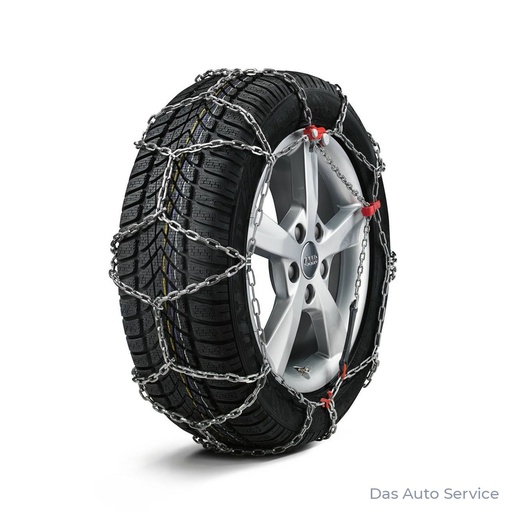
Audi snow chains, basic, for tyres 205/60 R16
Audi snow chains – useful in winter when your tyres alone aren't enough for the road conditions.
View in shop
Compact LED torch to help you get a better look at the wheel and tyre when visibility is poor.
View in shopRead more
- Diagnostics
- Wheel Bearing Noise: Why It Gets Louder with Speed
- Wheel Bolt Tightening Torque: Are Your Wheels Safe?
Frequently asked questions
Why does my car vibrate at 120 km/h?
The most common cause is wheel balancing, but it could also be a bent alloy wheel, a deformed tyre or worn suspension components. Knowing the exact speed at which the vibration starts helps us track down the problem.
How can I tell whether it's wheel balancing or a suspension problem?
If the steering wheel shakes at a particular speed, we check the wheels first. If the vibration mainly happens under acceleration, we also check the driveshafts. But you can't make a definite diagnosis just from how the vibration feels.
Is it dangerous to drive with vibrations?
It can be dangerous, especially if the cause is a damaged tyre, a bent alloy wheel or a suspension problem. Don't drive at high speed until you've found out where the vibration is coming from.
Why does my car still vibrate after wheel balancing?
Because balancing won't fix a bent alloy wheel, a deformed tyre or worn suspension components. If the vibration is still there, the other possible causes need checking too.