"The car's been sitting for a week and now it won't start." I hear this every day at the workshop. Everything was fine yesterday. You locked the car, left it in the car park, and today – nothing. Either you hear clicking, or the engine turns over but won't start. That's when the guessing begins. Is it the battery, the starter motor or the fuel pump? Three possible causes, three completely different repairs. I'll explain how I tell them apart, because there's no point replacing parts blindly.
How can I tell why my car won't start after sitting?
The first thing I want to know is exactly what happens when you try to start the car. Don't just tell me "it won't start", because those three words can mean completely different things. There's a huge difference between an engine that doesn't turn over at all and one that turns over normally but won't fire up. So first, we listen and look. The car itself gives us clues about where to start looking.
- The starter turns slowly or just clicks – most often, the battery is weak and can't supply enough power to turn the engine over.
- The starter turns normally, but the engine won't fire up – we look for a problem with the fuel supply or ignition system.
- Nothing happens, and the dashboard flickers or the lights behave strangely – there could be a voltage problem or a poor electrical connection.
See the difference? In the first case, there isn't enough power to turn the engine over. In the second, the engine turns but won't start. And in the third, even the electrical system isn't working properly. Those are three different directions for diagnosis. And the worst thing you can do is start replacing parts because someone told you it's "probably the starter".
Why won't my car start after sitting?
The battery – the most common suspect
A lot of people imagine that when they lock their car, everything inside goes to sleep and stops using electricity. But modern cars don't work like that. Various electronic control units, the alarm and the keyless entry system continue using power even when the car is parked. Little by little, the battery loses charge. If it's already weak, after two or three weeks it might simply not have enough power left to turn the engine over.
There's something else many people overlook. On modern cars, replacing the battery isn't just a matter of disconnecting the old one and fitting a new one. The new battery needs to be coded so the car knows what battery it's working with. Otherwise, the charging system might not manage it properly. I've explained why this matters in detail in my article why a new battery needs coding.
The fuel pump – when the starter turns but the engine won't fire
Imagine the starter is turning perfectly normally. The engine turns over, the dashboard lights up, everything seems fine, but the car stubbornly refuses to start. On petrol engines, one possible cause is the fuel pump inside the tank. Its job is to supply fuel at the pressure the engine needs. If the pump fails, you can crank the engine for as long as you like, but it won't start.
But there's something important I want to make clear. Just because the engine turns over but won't start doesn't automatically mean the fuel pump has failed. There could also be an ignition problem. That's why we check what's actually missing instead of ordering a pump based on a guess. Diagnosis should find the cause, not justify a part you've already replaced.
The starter motor and cables – when all you hear is clicking
The starter motor is the electric motor that turns the engine over so it can start. If the battery is charged but all you hear when you try to start the car is clicking, we have a good reason to check the starter and its cables. A poor electrical connection can also stop the starter from turning the engine properly. And that's exactly why I don't like diagnosing a faulty starter just by listening to it. First, we need to make sure it's getting the power it needs.
What should I do if my car won't start?
You don't need to be a mechanic to carry out a few simple checks. They won't replace a proper diagnosis, but they can help you work out whether the problem looks like a flat battery or something else. The most important thing is not to keep cranking the engine endlessly, hoping the car will eventually give in and start.
- Check the dashboard and headlights. Do they come on normally, or do they flicker and go dim? If the electrical system is behaving strangely, the first things to check are the voltage and electrical connections.
- If the starter turns slowly, you can try jump-starting the car with jump leads or a suitable jump starter. This can help if the battery is weak, but it doesn't necessarily mean the battery needs replacing.
- If the starter turns normally but the engine won't fire up, stop trying. Don't keep cranking it endlessly. Get help so the fuel supply and ignition system can be checked.
There's one mistake I see all the time with problems like this. People focus on getting the car started without finding out why it refused to start in the first place. Yes, you can jump-start it and drive away. But if the underlying problem is still there, next time you'll be standing beside the car again, wondering what's wrong. That's why I insist on finding the actual fault, not just temporarily getting around the symptom.
How can I prevent starting problems after leaving my car parked?
If you know your car is going to be parked for a long time, the sensible thing to do is use a suitable battery maintainer to keep the battery charged. If that's not possible, at least take it for a longer drive once a week. The idea is simple – don't let the battery lose charge week after week, especially if it's already in poor condition. I've written a separate article about preparing your car for a long period off the road: what to do when your car is parked for a long time.
WARNING! On a petrol engine, repeatedly cranking the starter without the engine firing can allow unburnt fuel to enter the catalytic converter. This creates a risk of further damage. If the car doesn't start after 2–3 attempts, stop and find out why.
Tip from Kris Mladenov: Measure the battery voltage with the engine switched off. If it's below 12.4 V, the battery is partially discharged. Below 12 V, there's a real risk the car won't start in the morning. Don't wait until you're stranded in a car park to check its condition. A timely check can save you a lot of trouble.
I hope you've found this article useful! If you have, I'd be happy if you shared it with a friend who's also wondered why their car won't start after sitting. My mission is simple – when I know something, I want more people to know it too. Because an informed car owner is much harder to talk into unnecessary repairs.
The solution in our shop
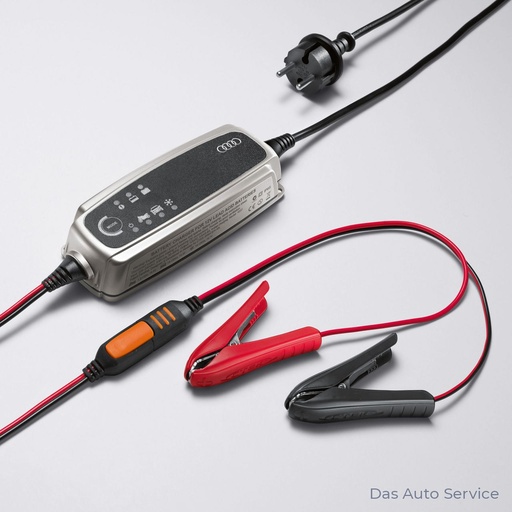
The genuine Audi battery charger is suitable for maintaining the battery in cars that are left parked for long periods. A good solution if you don't drive your car regularly.
View in shop
Genuine Longlife III FE 0W30 oil 5L
LongLife III oil is intended for routine servicing of engines for which it is specified. At our workshop, I recommend changing the engine oil and all filters – oil, fuel, air and cabin – every 10,000 km or once a year, whichever comes first, regardless of the LongLife service intervals.
View in shopRead more
- Electrical faults and control modules
- Diagnostics
- VW Battery Coding: Why Start/Stop Stops in Winter
- Car Storage Tips: Before and After Long-Term Storage
Frequently asked questions
Why won't my car start after sitting?
The most common cause is a weak battery that has lost charge while the car was parked. Other possible causes include problems with the fuel pump, ignition system, starter motor or electrical connections.
How can I tell if it's the battery or the starter motor?
If the starter turns slowly and the lights go dim, check the battery first. If the battery is charged but all you hear is clicking, the starter motor and its cables need checking.
How many days can a car sit without the battery going flat?
It depends on the condition of the battery and how much electricity the car uses while locked. If the battery is already weak, even two or three weeks of sitting could be enough to leave the car unable to start.
What should I do if the starter turns but the car won't start?
Don't keep cranking the engine endlessly. If it doesn't start after 2–3 attempts, get help to have the fuel system and ignition checked.