You turn the key or press the start button and… nothing. The engine doesn't turn over, the car won't start, and you're wondering whether the battery is flat, the starter motor has failed or something else is wrong. Sometimes you hear a single click, sometimes the dashboard goes dark, and sometimes all the lights come on normally but the car does absolutely nothing. I hear it all the time at the workshop: "Kris, my car won't start and the starter isn't turning. Should I buy a new battery?" Not so fast! I'll show you a few simple checks to help you work out what's wrong before you start replacing parts blindly.
What exactly happens when you try to start the car?
The first thing I want you to do is pay attention to the dashboard and the sounds you hear when you try to start the engine. You don't need any special equipment to spot the difference. The car itself gives you clues about where to look. There are three main situations we see most often.
- The dashboard lights are dim or go out completely when you try to start the engine. That's the first sign that the battery might be flat. There's enough power to light up a few warning lights, but when the starter motor demands more current, the voltage drops and everything goes dark.
- The dashboard lights up normally, but all you hear is a click. This is when I start suspecting the starter motor or its cables and electrical connections. Power is getting through to some extent, but the starter can't turn the engine over. That doesn't automatically mean you need to replace it.
- The dashboard lights up normally, but there's no sound at all. Complete silence. The car might not even be allowing the engine to start because the automatic gearbox isn't in P or N, the clutch pedal isn't pressed or the key isn't being recognised.
See the difference? Three situations that look exactly the same to the owner: the car won't start. But the causes can be completely different. That's why I always start with the symptoms, not a guess about which part has failed.
How can I check whether the battery is flat?
You can do the simplest check right there in the car park. Switch on the headlights, then try to start the engine. If the headlights suddenly go very dim or almost go out, you've got good reason to suspect the battery. It might have enough power for the lights but not enough to turn the starter motor. And this is where a lot of people get caught out. They assume that because the dashboard lights up, the battery must be fine. Not necessarily!
If you've got a voltmeter, it's even easier to check. Measure the battery voltage with the engine switched off. If it reads below 12 V, that's already low and the battery needs attention. But don't confuse a single voltage reading with a proper battery health check. At Das Auto Service, we don't decide to replace a battery just because someone says the engine won't turn over.
There's something I want you to remember. A battery can look perfectly fine until you ask it to do the real work: turn the engine over. That's why checking the headlights is so useful. It's not a definitive diagnosis, but it immediately points you in the right direction.
How can I tell if the starter motor is faulty?
Let's say you've checked the battery and tried jump leads, but all you still hear when you try to start the car is clicking. Now it makes sense to look at the starter motor and its power cable. The starter is the electric motor that turns the engine over so it can fire up. If it isn't working, you can press that start button as many times as you like. The engine isn't going to turn itself over.
You might have heard the old trick of tapping the starter motor. Yes, sometimes a tap really does get it working again and the car starts. But! That doesn't mean you've fixed it. It means there's a fault that has temporarily allowed the starter to work. In that situation, the starter needs checking and, if a fault is confirmed, replacing. Don't rely on another tap doing the trick next time.
What really annoys me is when someone goes straight for a new starter motor without checking the battery and cables first. Then it turns out the new starter behaves exactly like the old one. So what have we achieved? We've replaced a perfectly good part and the problem is still there. Diagnosis should come before repairs, not the other way round.
What starting interlocks can stop the car from starting?
There's a third situation that often gets overlooked. The battery is fine, the starter motor might be in perfect working order, but the car simply isn't sending it the signal to turn. Sometimes the reason is so simple that it doesn't even occur to you to check it. Before you start looking for a serious fault, check these things.
- The automatic gearbox isn't in P or N. The car may prevent the engine from starting because it isn't detecting the correct gear selector position. Check the selector before going any further.
- The clutch pedal isn't fully pressed. On a manual car, that can be enough to stop the starter motor from responding at all. Press the pedal right to the floor and try again.
- The key fob battery is weak. On cars with keyless start, the vehicle might not recognise the key and may refuse to start. Everything looks normal, but you press the button and nothing happens.
That's why I say not every car that refuses to start has a faulty starter motor. Sometimes the problem is simply that the system isn't allowing the engine to start in the first place. And those are two completely different things. If you don't tell them apart, you can waste a lot of time looking for a fault that isn't there.
IMPORTANT! Don't use another car with its engine running as a power source for jump-starting, and don't disconnect the jump leads while the engine is cranking. Sudden voltage spikes can damage the car's electronic control units. Jump-starting incorrectly can leave you with a much bigger problem than a flat battery.
Does a new battery need coding?
On cars with Start/Stop, replacing the battery isn't just a matter of undoing two terminals and fitting a new one. The new battery needs to be coded so the car knows it's been replaced. That's something you shouldn't skip. I've explained why in detail in my article on why a new battery needs coding.
If your car sits unused for long periods, you also need to pay attention to the battery. Leaving it parked for too long can give you an unpleasant surprise when you finally decide to drive it again. Have a read of what to do when your car has been sitting unused for a long timeas well. It's better to be prepared than to discover a problem just when you need to leave.
Tip from Kris Mladenov: Before buying a new starter motor, check the battery voltage first. In many cases, what looks like a faulty starter is actually just a flat battery. Check the cables too before replacing anything. One proper check could save you a completely unnecessary repair.
I hope you've found this article useful! If you have, I'd be happy if you shared it with a friend who might one day find themselves stuck with a car that refuses to start. My mission has always been simple: when I know something, I want more people to know it too. Because the more you understand your car, the harder it is for someone to convince you to replace parts for no reason.
The solution in our shop
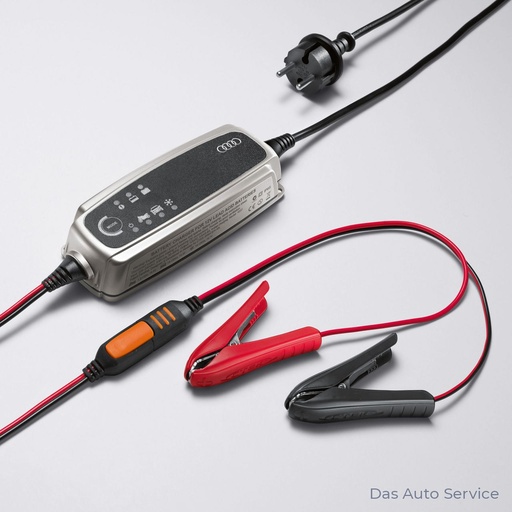
The genuine Audi battery charger is useful for keeping your battery charged, especially if your car sits unused for long periods.
View in shop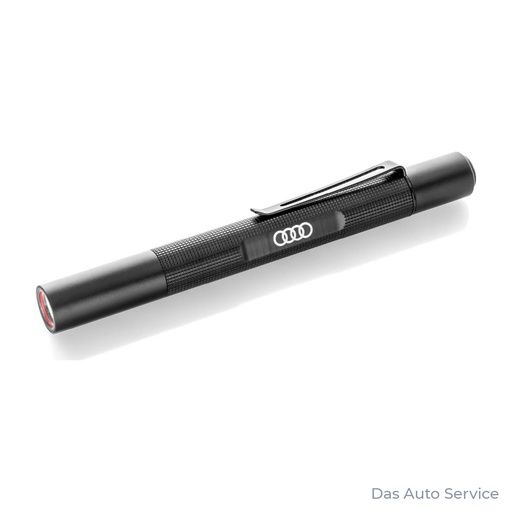
This compact LED torch is handy for checking the battery, terminals and cables, especially in the evening or somewhere with poor lighting.
View in shopRead more
- Electrical faults and control modules
- VW Battery Coding: Why Start/Stop Stops in Winter
- Car Storage Tips: Before and After Long-Term Storage
Frequently asked questions
How can I tell whether it's the battery or the starter motor?
Switch on the headlights and try to start the engine. If they almost go out, suspect the battery. If the dashboard lights up normally but all you hear is clicking, the starter motor, its cables and electrical connections need checking.
Why does the starter motor just click?
The battery might not have enough power, the starter motor could be faulty, or there could be a problem with its cables or electrical connections. Clicking alone isn't enough to tell you which part needs replacing.
Why won't my car start with keyless start?
The key fob battery might be weak, preventing the car from recognising the key. You press the start button, but the car won't allow the engine to start.
Why does the dashboard light up but the starter motor doesn't turn?
A starting interlock might be preventing the engine from starting. For example, the automatic gearbox might not be in P or N, or the clutch pedal might not be fully pressed. Check these things before assuming the starter motor is faulty.