If you drive a Golf, Polo, A3, Octavia, Fabia or Leon with a small TSI petrol engine and an automatic gearbox, there's a good chance you've got the 7-speed dry clutch DSG. Its factory designation is DQ200, and you'll find 0AM marked on the gearbox itself. There are plenty of stories about DSG DQ200 problems, and we see these gearboxes at Das Auto Service almost every week. I want to help you spot the early warning signs, understand what usually goes wrong and why it happens. Because, my friend, a bit of juddering doesn't automatically mean you need a whole new gearbox.
What's different about the DQ200?
The larger 6-speed DSG has two clutches that run in oil. The DQ200 is different. It's designed for smaller engines, and its clutches are dry, much like those in a manual gearbox. There's something else that's really important, and even quite a few garages don't know it. The DQ200 uses two completely separate oils. One lubricates the gears inside the mechanical part of the gearbox. The other is a special hydraulic fluid for the mechatronic unit – the brain that uses hydraulic pressure to control gear changes. They're two different fluids, and you must never mix them up.
How can you tell if your DQ200 has a problem?
- The DSG jerks or judders when you pull away, especially uphill or when crawling through traffic.
- You feel an unpleasant jolt when the gearbox shifts from first to second, or back down again at low speed.
- The letters showing the gear selector position start flashing on the dashboard.
- A gearbox warning message appears, sometimes even telling you that you can continue driving.
- Suddenly, only some of the gears are available. For example, you might have 1, 3, 5 and 7, or only 2, 4, 6 and reverse.
Here's something important I want you to remember. If your DSG judders when pulling away, the clutch is usually the first thing we check. It might be worn, or it might simply need adapting. But if the letters start flashing on the dashboard and whole groups of gears disappear, we're almost always looking for a problem with the mechatronic unit. That's a big difference. And the repair is completely different too.
What actually goes wrong inside the mechatronic unit?
The mechatronic unit is the brain of the DQ200. Inside, there's an electric pump that builds up hydraulic pressure and stores it in a pressure accumulator. From there, the fluid flows to the valves that control the gear changes. Sounds complicated, doesn't it? But the idea is simple. And this is exactly where one of the most common failures starts.
The accumulator housing cracks. At first, the crack is so tiny you can barely see it. But hydraulic fluid starts leaking internally through that crack, and the pressure drops. The pump switches on more and more often, running for longer each time to make up for the lost pressure. Eventually, the pump itself can burn out, or its fuse can blow. And that's when the DSG goes into limp mode.
When we connect the diagnostic tester and read the stored faults, these are the two codes we see most often:
- P17BF – the hydraulic pump protection has activated because the pump has been running for too long.
- P189C – the gearbox has limited its operation because the system can't build up the pressure it needs.
If the accumulator housing is cracked, forget about welding it or trying to glue it back together. I've seen enough of those attempts. Someone patches it up, a month goes by, and the problem comes straight back. Then you're paying for another repair. Except you've already paid for the first one. I'm telling you this because I don't want you throwing your money away.
How do we repair a DQ200?
It all depends on what's actually failed. That's why we always start with diagnostics at Das Auto Service, rather than ordering parts straight away. First, we check the car's battery. Yes, the ordinary 12-volt battery. If it's weak, it can cause all sorts of strange behaviour that looks very much like a faulty gearbox. Then we read the fault codes and check the mechatronic unit's hydraulic pressure using live diagnostic data. Only then do we decide what needs repairing.
- If the DSG only jerks when pulling away and there are no stored faults, a basic setting and clutch adaptation with a diagnostic tester is often enough.
- If the clutch is already worn, we replace the complete clutch kit and always carry out an adaptation afterwards.
- If the mechatronic unit is losing pressure, it needs replacing or repairing properly by replacing the accumulator housing. No glue, no makeshift patches.
Does the DQ200 need an oil change?
I bet someone's told you that the DQ200 doesn't need servicing. I hear that all the time. I've explained this before in my article about gearbox service intervals. But I don't believe in oil that lasts forever. The oil in the mechanical part of the DQ200 should be changed every 60,000 km, and we use genuine oil. It doesn't just lubricate the gears; it also helps keep them cool. The hydraulic fluid inside the mechatronic unit is completely separate, and we check it every time we service the gearbox. Remember that – these are two different fluids.
How should you drive to help your DQ200 last longer?
- When you're stuck in traffic, don't let the car constantly creep forward with your foot lightly on the brake. It's better to stop, hold the brake, then pull away normally.
- Don't use the accelerator to hold the car on a hill. That makes the clutch slip continuously, building up heat and wearing it out.
- If you're waiting at a traffic light for a while, just keep your foot on the brake. Don't keep releasing it to inch forward a little, only to stop again.
- If you notice your DSG starting to behave differently, don't put it off. Come in for diagnostics while it's still early. That gives you a much better chance of avoiding an expensive repair.
Advice from Kris Mladenov: With the DQ200, the cheapest repair often ends up being the most expensive. Don't replace parts blindly, don't fit a second-hand mechatronic unit, and don't pour in universal gearbox oil. One proper diagnosis could save you an entire repair. And a fair bit of money out of your own pocket.
I hope you've now got a better understanding of how the DQ200 works and what can go wrong with it. If you've found this helpful, send the article to a friend who drives a car with a DSG. You might save them a lot of headaches and some unnecessary expense too.
The solution in our shop
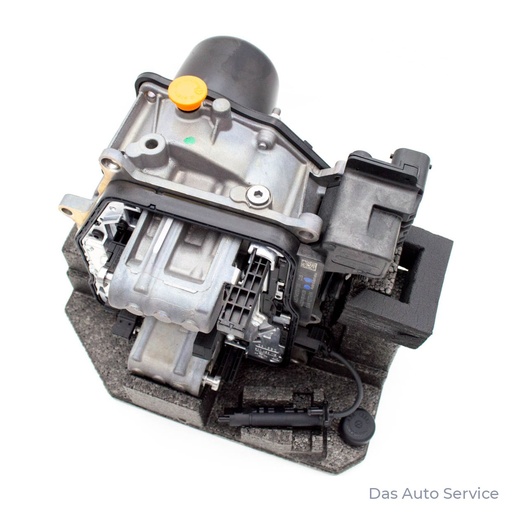
Mechatronic unit for 7-speed dry clutch DSG
Mechatronic unit for the 7-speed dry clutch DSG. For when the system can no longer maintain hydraulic pressure.
View in our shop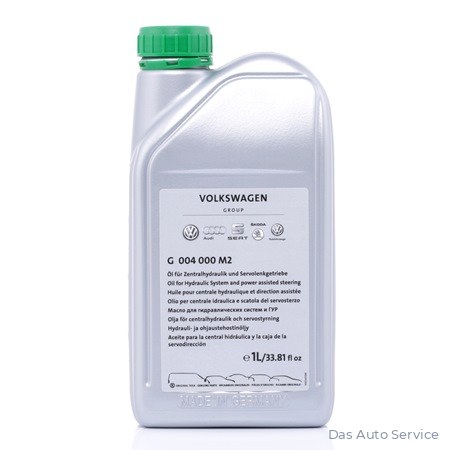
Genuine VAG hydraulic fluid G004000M2 1 l
Genuine hydraulic fluid G 004 000 for the DQ200 mechatronic unit.
View in our shop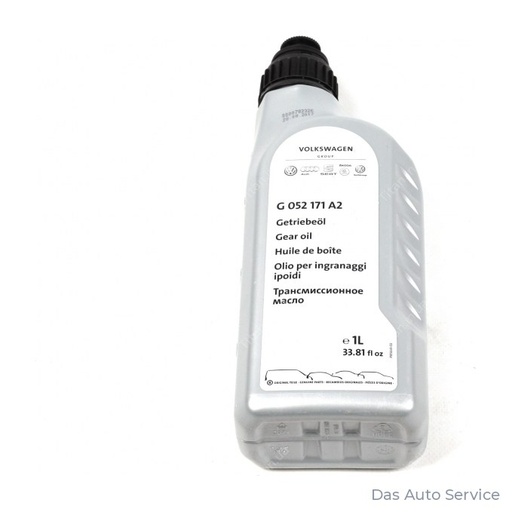
Genuine manual gearbox oil G052171A2 1 l
Genuine gearbox oil G 052 171 for the mechanical part of the DQ200.
View in our shopRead more
- Gearbox repairs
- Gearbox servicing
- How often should I service my 6-speed DSG gearbox?
- Gearbox service intervals for VAG Group cars
- DSG DQ381 and DQ500 with wet clutches: when should you change the oil?
- DSG DQ250: when does the mechatronic unit fail and what should you do?
Frequently asked questions
Why are the gear selector letters flashing on the dashboard?
It means the gearbox has logged a fault and gone into limp mode. On the DQ200, one of the most common causes is the mechatronic unit losing hydraulic pressure.
What do fault codes P17BF and P189C mean?
P17BF means the hydraulic pump protection has kicked in because the pump has been running for too long. P189C means the gearbox has limited its operation because it can't build up enough pressure. We often see both codes together when the accumulator housing inside the mechatronic unit has cracked.
Does the DSG DQ200 need an oil change?
Yes, and I really recommend you don't skip it. The oil in the mechanical part of the gearbox should be changed every 60,000 km using genuine oil. The mechatronic unit has its own separate hydraulic fluid, which we check when servicing the gearbox.
Why does my DSG jerk or judder when pulling away?
Most often, the clutch is either worn or simply needs adapting. That's why we run diagnostics first, to work out which one it is. I don't want you spending money on parts until we're sure exactly what's wrong.