"It rattles at idle, but when I press the clutch, it stops." I hear this all the time at the workshop. And you know what's interesting? Plenty of people carry on driving like this for months because the car still drives fine. They think that if the noise disappears when they press the clutch, it can't be anything serious. But that rattle is often one of the first dual-mass flywheel symptoms, and believe me, it's not a part you want to let fall apart. I'll explain what it does, why it wears out and how to tell when it's time to replace it, before your gearbox suffers too.
What is a dual-mass flywheel, and why does my car need one?
Imagine the engine and gearbox are two people trying to work together, but one keeps giving the other a shove. Your engine doesn't turn completely smoothly. Every time the fuel burns inside a cylinder, it creates a little jolt, and those jolts cause vibrations. Especially in a diesel. If all those vibrations went straight into the gearbox, you'd feel them inside the car, and the parts inside the gearbox would take a beating they really don't need.
That's where the dual-mass flywheel comes in. It's called that because it's made of two sections with springs between them. One takes the jolts from the engine, while the other passes the power more smoothly to the gearbox. The springs in between soften those jolts. Think of the flywheel as a cushion between your engine and gearbox. When it's healthy, you hardly know it's there. But once it starts wearing out, it makes sure you notice.
What are the symptoms of a worn dual-mass flywheel?
Most often, someone comes into the workshop and says, "Kris, something's rattling, but as soon as I press the clutch, it goes quiet." That's certainly one of the classic signs of a worn dual-mass flywheel. But! It doesn't mean every rattle comes from the flywheel. So I want you to know what to listen and feel for, without trying to diagnose the problem yourself.
- Rattling at idle that stops when you press the clutch. You hear a rattling noise while the engine is idling, but it disappears when you press the clutch pedal. That's one of the first things that makes me want to check the flywheel.
- Vibrations when pulling away. You try to pull away gently, but instead of moving off smoothly, the car starts juddering. Don't assume that's normal just because you drive a diesel.
- Knocking when starting or switching off the engine. You turn the key or switch off the engine and feel an unpleasant thump. The flywheel may no longer be absorbing those jolts properly.
- Metallic rattling at low revs. You're driving slowly, give it some throttle and hear a metallic rattle. That's another good reason for us to check what's happening between the engine and gearbox.
If you drive a 2.0 TDI, I've covered this problem in more detail in my article dual-mass flywheel – when does it rattle?. Give it a read, because recognising the symptoms early really matters. But remember, a noise is only a clue. We still need to check the car to find the real cause.
What makes a dual-mass flywheel wear out so quickly?
I'm going to tell you something you might not like. Sometimes the way you drive puts more strain on the flywheel than you realise. I'm not saying you should treat your car like a museum piece. I'm talking about a few driving habits that seem harmless but constantly make those springs inside the flywheel absorb heavy jolts.
- Driving at low revs in a high gear. The engine struggles, the vibrations get stronger and the flywheel has to keep absorbing them. That's not being gentle with your car.
- Engine remapping for more torque. When the engine starts producing more torque, the flywheel has to cope with more load too. Just because the engine can produce more power doesn't mean every part behind it can automatically handle it.
- Pulling away with too much throttle and overheating the clutch. If you keep pulling away like this, you're putting extra strain on both the clutch and the flywheel. They work together, and a problem with one can affect the other.
See what all three have in common? In every case, the flywheel has to absorb more punishment than it would with smooth, sensible driving. And those springs won't last forever. That's why I always explain to my customers that simply replacing the damaged part isn't enough. We also need to understand why it wore out, so we don't end up with exactly the same problem again.
How do you check if the flywheel really needs replacing?
This is where a good mechanic comes in. I don't like it when someone hears a rattle and immediately says, "It's the flywheel. Replace it!" Especially when we're talking about a repair that involves removing the gearbox. I'd much rather check what the car is telling us first, then decide what actually needs repairing.
- We start with a diagnostic tester. We check how evenly the engine is running, because any irregularities can give us useful clues about the problem.
- Next, we listen to the engine and take the car for a test drive. We need to know exactly when the noise appears, when it disappears and whether there are any vibrations or knocks.
- Once the gearbox has been removed, we check the amount of play in the flywheel. That lets us assess its condition directly instead of guessing from the noise alone.
There's something important I want you to understand. A diagnostic tester is a tool, not a crystal ball. Just because someone has plugged in a tester, read the fault codes and cleared them doesn't mean they've checked the flywheel. We need to put all the symptoms together and diagnose the problem properly. Otherwise, you could end up paying to replace a perfectly good part, only to find that the rattling is still there.
Should I replace the dual-mass flywheel and clutch together?
When the flywheel is worn, I recommend replacing it together with the clutch kit. The reason is simple: they work together, and I don't want to leave worn parts behind when we've already carried out a major repair. With a DSG gearbox, though, the procedure is different. If your car has a DSG, have a read of how we replace a DSG clutch. I've explained how the job is done there.
WARNING! If the dual-mass flywheel breaks apart, it can damage the gearbox and starter motor. Don't keep driving for ages with a metallic rattle, and don't wait until the noise becomes unbearable. By then, you could be looking at a much bigger repair.
Tip from Kris Mladenov: Don't drive your diesel at 1,200 rpm in sixth gear just because you think you're being kind to it. If the engine is struggling and shaking, change down a gear. It's a small habit that helps protect both the engine and the dual-mass flywheel. I'm telling you this because I'd much rather see you enjoying your car than having to bring it in for a repair you could have avoided.
I hope you've found this article useful! If you have, I'd love you to share it with a friend who drives a diesel or keeps wondering where that annoying rattling noise is coming from. My mission is simple: when I know something useful, I want more people to know it too. Because the better you understand your car, the less likely you are to end up paying out of your own pocket for a problem you could have caught early.
The solution in our shop
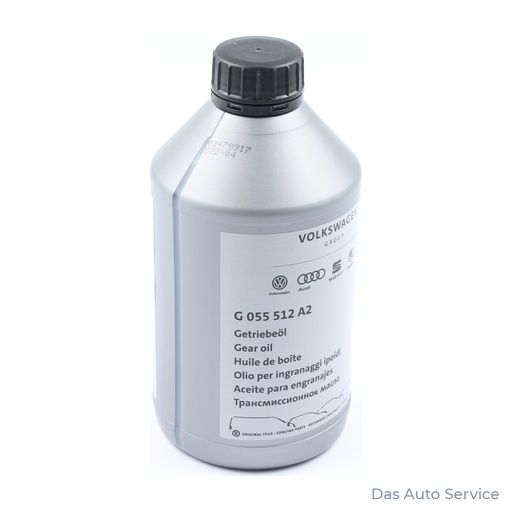
Genuine manual transmission oil G 055512A2 1l
Genuine gearbox oil for manual gearboxes. Using the right oil is important for the gearbox to work properly, so it should always be chosen for your specific car.
View in shop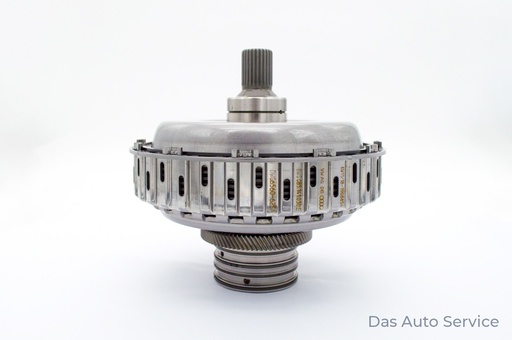
Clutch kit for S tronic 0B5. When repairing a clutch, it's important to use the correct kit for the specific gearbox.
View in shopRead more
- Diagnostics
- DSG and S tronic gearbox repair
- 2.0 TDI Dual-Mass Flywheel: Signs of Failure
- DSG Clutch Replacement: Step-by-Step Workshop Guide
Frequently asked questions
What is a dual-mass flywheel?
It's a flywheel made of two sections with springs between them. It absorbs engine vibrations before they reach the gearbox. It's especially important in diesel cars.
How do I know if my dual-mass flywheel needs replacing?
The most common signs are rattling at idle that stops when you press the clutch, vibrations when pulling away and knocking when starting or switching off the engine. But you can't diagnose a faulty flywheel from the noise alone.
Should the flywheel be replaced together with the clutch?
When the dual-mass flywheel is worn, I recommend replacing it together with the clutch kit. With DSG gearboxes, the procedure is different and depends on the specific gearbox.