You can smell exhaust fumes inside your car, but you reckon it's probably coming from the car in front? What if it's coming from your own? There's something I really want you to know. Exhaust fumes contain carbon monoxide, a gas you can't see or smell, but one that can be extremely dangerous. What you're smelling is the other gases in the exhaust, while the most dangerous one could be coming in with them without you having a clue. So when you tell me your car smells of exhaust fumes, I'm not going to suggest an air freshener. I'm going to find out where those fumes are getting in.
Why are exhaust fumes inside my car dangerous?
Imagine you're driving along, everything seems fine with the car, but after a while you start getting a headache or feeling sleepy. You might think you're just tired, when actually you could be breathing in carbon monoxide. This gas can cause headaches, drowsiness and slower reactions. And when you're behind the wheel, your reactions are what you need most. The worrying thing is that carbon monoxide itself has no smell, so your nose can't warn you it's there.
And here's something a lot of people don't realise. That exhaust smell you're noticing comes from other substances in the fumes, not from carbon monoxide. But if those gases can find their way into the cabin, carbon monoxide might be getting in with them. That's why I don't want you getting used to the smell or thinking it's normal just because your car is getting older. It doesn't matter whether you drive a Golf, Passat, Audi or Porsche. Inside your car, you should be breathing clean air, not what's coming out of the exhaust pipe.
Where are the exhaust fumes getting into my car?
The first thing I want you to understand is that the smell doesn't always come from where you notice it. You could have a leak near the engine, with the fumes reaching you through the ventilation system. Or there might be a leak at the back, underneath the boot, where the airflow draws the fumes into the cabin. That's why I don't start replacing parts blindly. I look for where the gases are escaping and how they're finding their way inside.
- A cracked exhaust manifold, leaking gasket or damaged flex pipe. These are all places where exhaust gases can escape before they reach the end of the exhaust system.
- A rusted-through silencer or a faulty clamp underneath the car. Your engine might be running beautifully, but the exhaust system could still be leaking fumes.
- The boot and rear door seals. If they're not sealing properly, exhaust gases can find their way into the cabin.
- Fumes being drawn in from outside. For example, you're stuck in traffic behind a smoking car, and your ventilation system is drawing in outside air because recirculation isn't switched on.
That last one is particularly important, because not every exhaust smell means there's something wrong with your own car. If the vehicle in front is smoking, your ventilation system can pull its fumes straight into your cabin. But if the smell keeps coming back, even when there are no other cars around, we've got a very good reason to check yours. And don't assume your exhaust is fine just because it isn't making a noise. Gases can escape through a leak you can't hear at all.
What should I do immediately if I smell exhaust fumes?
The first rule is simple. Don't just carry on driving as though nothing's wrong. Open the windows to let fresh air in and work out where you can stop safely. Don't try to cover up the smell with an air freshener. It won't stop the fumes getting in. It'll only make them harder for you to notice. I want you to fix the cause, not hide the smell.
- Open the windows to get some fresh air into the cabin.
- Set the ventilation system to bring in fresh air from outside, provided the air outside is clean. If you're behind a smoking vehicle, don't let the system pull in its exhaust fumes.
- If you develop a headache, start feeling sleepy or notice your reactions slowing down, stop as soon as it's safe, get out into fresh air and seek medical help. Do not carry on driving.
And one more thing. I don't want you driving a little further just to see whether the smell goes away. If there's a leak in the exhaust system, you've got no way of knowing how much gas is entering the cabin. And if you're already feeling sleepy or getting a headache, that's definitely not the time to experiment. Leave the car somewhere safe and arrange to have it checked without driving it yourself. I'd much rather it turned out to be something minor than have you risk your health.
What do we check at the workshop when your car smells of exhaust fumes?
At Das Auto Service, we start with the exhaust system because I want us to find the actual leak, not make guesses. We check the whole system, from the exhaust manifold right through to the tailpipe, including pressure testing it. We inspect the gaskets, flex pipes, silencers and joints. If there's a leak somewhere, we need to find it. Otherwise, you could replace half the exhaust system and still end up with exactly the same smell.
- We pressure-test the exhaust system from the manifold to the tailpipe to find where the gases are escaping.
- We inspect the cabin, rear door and boot seals, because exhaust fumes can also get inside through these areas.
- We check whether the smell might be coming from the air conditioning system. If you're not quite sure what you're smelling, have a read of why your car smells inside.
The important thing is to work out which of two problems we're dealing with. Is your car leaking exhaust gases, or is the ventilation system drawing in fumes from outside? To you, the smell might seem exactly the same, but the causes are very different. That's why we check everything first and only then decide what needs repairing. I've never liked the approach of "let's replace this and see what happens". Especially when we're talking about the air you're breathing.
WARNING! Don't carry children in a car that smells of exhaust fumes. Carbon monoxide is dangerous, and you can't detect it by smell. Don't use the car until the cause has been found and fixed.
Tip from Kris Mladenov: If the smell gets stronger when the boot or rear windows are open, that's a clue that we should look for a leak towards the back of the car. If the smell is coming through the ventilation system, we'll start checking around the front and see where it's drawing its air from. These are clues, not a final diagnosis. And please don't try driving with the boot open to test it. Leave that part to us.
I hope you've found this article useful! If you have, I'd really appreciate you sharing it with a friend who might also have noticed an exhaust smell inside their car. My mission is simple. When I know something important about cars, I want more people to know it too. Because I care about you and your car. And if you ignore a problem like this, the consequences won't be the workshop's to deal with. You'll be the one facing them, and this time I'm not just talking about money.
The solution in our shop
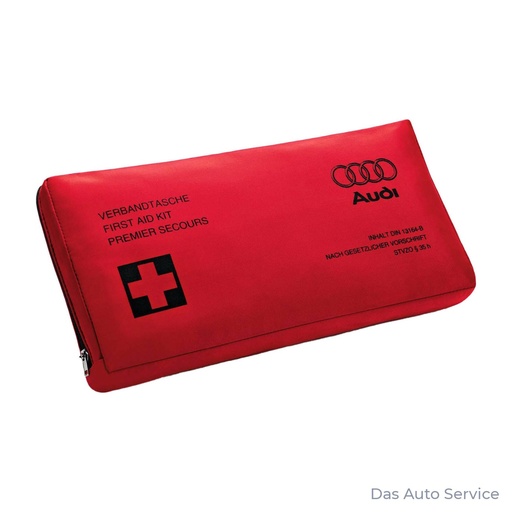
The genuine Audi first aid kit is a useful piece of safety equipment to keep in your car. But it won't protect you from exhaust fumes, and it's no substitute for getting the problem checked promptly.
View in shop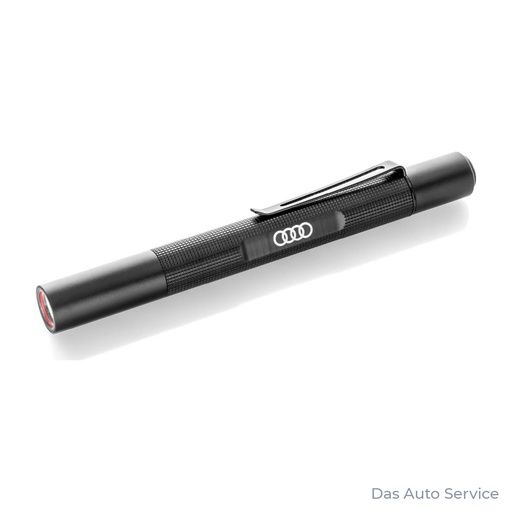
A compact LED torch is handy for inspecting the visible parts underneath your car. But if you suspect an exhaust leak, don't get underneath a vehicle with its engine running. This needs to be checked at a workshop.
View in shopRead more
Frequently asked questions
Is it dangerous if my car smells of exhaust fumes?
Yes. Exhaust fumes can contain carbon monoxide, which has no smell and can cause headaches, drowsiness and slower reactions. Don't drive the car until it's been checked.
Where can exhaust fumes enter the car?
Through a cracked exhaust manifold, leaking gasket, damaged flex pipe, rusted-through silencer or faulty boot and door seals. The ventilation system can also draw in exhaust fumes from another vehicle.
Can an exhaust smell come through the air conditioning?
Yes. The ventilation system can draw in exhaust fumes from outside or from a leak in your own car. We need to find out where the smell is coming from rather than simply covering it up.
What should I do if I get a headache while my car smells of exhaust fumes?
Stop somewhere safe, get out into fresh air and seek medical help. Don't carry on driving, because a headache could be a sign of carbon monoxide exposure.