Do you know what can wreck the engine in your Golf 5 GTI without you even noticing anything is wrong? A tiny part inside the fuel pump drive. Yes, really. The Golf 5 GTI brought the GTI name back to life and reminded everyone why that little badge means so much. Under the bonnet sits the 2.0 TFSI from the EA113 family, a turbocharged engine that loves being driven hard but needs looking after. If you already own one or you're thinking of buying one, I'll explain what you need to know about the engine, timing belt, ignition coils, fuel pump and DSG gearbox. Because this is a brilliant car when you know how to look after it.
Which cars use the Golf 5 GTI engine?
The first thing I want you to understand is that the 2.0 TFSI EA113 isn't exclusive to the Golf 5 GTI. You'll find this engine in quite a few cars across the VW Group, which is why many of its problems are already well known. If you drive one of the following models, this information will be useful to you too. Just make sure you check your exact engine code.
- VW Golf 5 GTI – the car most people associate with this engine. You'll also find it in the Jetta, Passat B6, Eos and early Scirocco models.
- Audi A3 8P, Audi TT 8J and Audi A4 B7 – the same engine family fitted to different models.
- SEAT Leon 2, SEAT Altea and Škoda Octavia 2 RS – more cars that came with the 2.0 TFSI EA113.
Why am I telling you this? Because you'll often find someone online talking about a problem with their Audi A3 that also applies to your Golf 5 GTI. And the other way round. These engines belong to the same family, so many of their weak points are shared. But don't assume every part is identical without checking the engine code first.
How do I identify my 2.0 TFSI engine code?
When we're talking about the Golf 5 GTI, saying you've got a "two-litre turbo" isn't enough. You need to know the exact engine code. That way, you won't mix up different versions when looking for information or ordering parts. And believe me, it matters when you're servicing the engine.
- AXX and BWA – versions of the 2.0 TFSI EA113 producing 200 hp.
- BYD – the 230 hp version found in the Golf 5 GTI Edition 30 and Pirelli.
Where do you find the code? Check the vehicle data sticker in the boot or your service book. It's written there, so there's no need to guess by looking at the engine. I always prefer working with the exact engine code rather than making assumptions. Especially when we're dealing with the timing belt, fuel system or other important components.
What's under the bonnet of the Golf 5 GTI?
Let me explain how this engine works without burying you in technical jargon. The EA113 is a four-cylinder turbocharged petrol engine with direct fuel injection. That means the fuel is injected straight into the cylinders. There are a few things about its design worth understanding, because some of its best-known problems come from these very components.
- Four cylinders, FSI direct fuel injection and a turbocharger.
- A timing belt and a separate chain connecting the camshafts. Yes, this engine has both.
- A high-pressure fuel pump driven by the camshaft through a small cam follower.
- A manual gearbox or a 6-speed DSG DQ250.
The fuel pump deserves special attention. Its job is to build up the pressure needed for direct fuel injection, and it's driven by the camshaft. Between the pump and the camshaft sits a small part called the cam follower. Remember that name, because I'm about to explain why it's so important. And why you should never forget about it during servicing.
Golf 5 GTI 2.0 TFSI common problems: what goes wrong?
Now we're getting to the important bit. The Golf 5 GTI is a car that can put a huge smile on your face, but there are a few things you need to keep an eye on. That doesn't mean everything is going to break. It means knowing what to check before the engine warning light comes on and you're left trying to work out what's gone wrong.
The fuel pump cam follower
This is one of the components I take most seriously on the EA113. The cam follower sits between the high-pressure fuel pump and the camshaft. It wears down over time, and if that wear goes unnoticed, the camshaft itself can be damaged. One tiny part can turn into a much bigger repair bill. I've explained the problem in detail in my article about the worn fuel pump cam follower.
The important thing is not to wait until the engine starts running badly. The cam follower needs checking at every service. Not by listening for noises or making guesses, but by actually inspecting its condition. It's one of those small maintenance jobs that can save you a serious headache later.
Ignition coils and spark plugs
Another familiar problem involves the ignition coils and spark plugs. If your engine starts shaking, misfiring or running unevenly, the ignition system is one of the first things worth checking. The coil supplies high voltage to the spark plug, which ignites the fuel mixture. When the ignition isn't working properly, the engine simply can't run smoothly.
But! That doesn't mean you should rush out and buy new ignition coils every time the engine misfires. Start with a proper diagnostic check and look at the misfire readings. That's how you find out where the problem is coming from. If you'd like to know more, read my guide to ignition coils and spark plugs on 1.8 and 2.0 TFSI engines.
Crankcase ventilation
"Kris, my car has started making a whistling noise, and I think it's using oil." That's exactly the sort of complaint that makes me want to check the crankcase ventilation system. This system deals with the gases that build up inside the engine. When it isn't working properly, you can end up with whistling noises and increased oil consumption. It's not something you should ignore.
If your 2.0 TFSI is burning oil or making a strange whistling noise, don't immediately assume the worst. First, find out what's actually causing it. I've covered this in detail in my article about why the 2.0 TFSI burns oil and makes a whistling noise. On petrol engines, the crankcase ventilation filter needs replacing every 60,000 km.
Carbon build-up on the valves
Direct fuel injection has its advantages, but there's one downside you should know about. The fuel goes straight into the cylinder instead of passing over the intake valves. That means carbon deposits can build up on those valves. You'll often see people on forums simply calling it "carbon build-up". Over time, those deposits can start affecting how well the engine runs.
There's no point guessing here. First, you need to check the condition of the valves, then decide what actually needs doing. If you want to understand the problem better, have a look at my article on why carbon builds up on TSI and TFSI valves and how to clean it. The important thing is understanding the cause rather than just throwing new parts at the car.
DSG DQ250 and the mechatronic unit
If your Golf 5 GTI has an automatic gearbox, it's the 6-speed DSG DQ250. This is a dual-clutch gearbox that changes gear quickly and works brilliantly with the turbocharged engine. But it needs looking after too. If it starts changing gear harshly, banging into gear or jerking, you need to find out what's happening.
One important component is the mechatronic unit. Think of it as the gearbox's brain, controlling the gear changes. Not every jerk means the mechatronic unit has failed, which is why proper diagnostics are essential. I've explained more in my article about when the DSG DQ250 mechatronic unit fails. And don't forget the regular gearbox servicing.
How should I service my Golf 5 GTI to keep it healthy?
If you want to enjoy this car for years, regular servicing is essential. I don't care whether the oil bottle says LongLife or how long the manufacturer's service interval allows you to drive. For cars driven in Bulgaria, I recommend changing the engine oil and all the filters every 10,000 km or once a year, whichever comes first, regardless of the oil used. That's how you look after an engine. You're not trying to set a record for how long one batch of oil can last.
- Engine oil, oil filter, fuel filter, air filter and cabin filter – replace every 10,000 km or once a year, whichever comes first.
- Fuel pump cam follower – inspect at every service and replace when its condition requires it.
- Timing belt – replace according to the prescribed service schedule, together with the rollers and water pump. Remember that this engine also has a chain connecting the camshafts.
- DSG DQ250 – change the oil every 60,000 km using genuine oil and all the necessary service parts, followed by a mandatory gearbox adaptation.
- Crankcase ventilation filter – replace every 60,000 km.
- Brake fluid – replace every 2 years, and coolant every third heating season.
- Air conditioning – service every spring, including a system check and replacement of the receiver-drier and system oil. Simply topping up the refrigerant isn't enough.
- General workshop inspection – every 6 months.
WARNING! If you miss a worn fuel pump cam follower, you risk damaging the camshaft. Don't wait for the engine to start running badly. Have the cam follower inspected at every service.
Is the Golf 5 GTI with the EA113 engine worth buying?
Yes, absolutely. For me, the Golf 5 GTI is still one of the best GTIs ever made, provided it's been looked after properly. The 2.0 TFSI EA113 has real character, delivers its power beautifully and makes the car genuinely fun to drive. But if the previous owner ignored the cam follower, timing belt and regular servicing, all that fun can quickly turn into a repair bill.
If you're buying one, pay close attention to its service history. You want to know whether the timing belt has been replaced, whether the cam follower has been inspected and whether the engine oil has been changed regularly. If it's a DSG, check the gearbox service history too. Don't be won over just because the car looks fantastic. What matters is what's been happening under the bonnet.
Tip from Kris Mladenov: Every time your 2.0 TFSI EA113 goes in for a service, ask to see the fuel pump cam follower. The inspection itself takes just five minutes and could save your camshaft from serious damage. Keep an eye on the timing belt too, because the fun of owning a Golf 5 GTI shouldn't end with an avoidable repair bill.
I hope you've found this article useful! If you have, I'd love you to share it with a friend who drives a Golf 5 GTI, Audi A3 or another car with the 2.0 TFSI EA113 engine. My mission is simple: when I know something useful, I want more people to know it too. Because having the right information can save you a lot of trouble and a lot of money out of your own pocket.
The solution in our shop

Genuine Longlife III FE 0W30 oil 5L
Genuine LongLife III engine oil is a suitable choice when it meets the requirements of your specific engine. Despite the LongLife name, at Das Auto Service we change it every 10,000 km or once a year.
View in shop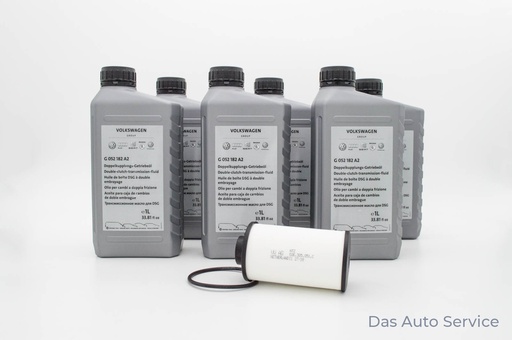
Genuine service kit for the 6-speed DSG DQ250, including oil, filter and seals. Everything needed for the gearbox service is conveniently included in one kit.
View in shopRead more
- Routine servicing
- Diagnostics
- 2.0 TFSI Fuel Pump Cam Follower Wear
- 2.0 TFSI Ignition Coils and Spark Plugs
- 2.0 TFSI PCV Valve Symptoms: Whistling and Oil Use
Frequently asked questions
What are the most common Golf 5 GTI problems?
On the 2.0 TFSI EA113 engine, you need to keep an eye on the fuel pump cam follower, ignition coils, spark plugs, crankcase ventilation and carbon build-up on the valves. If your car has the DSG DQ250 gearbox, pay attention to the mechatronic unit and make sure the gearbox is serviced regularly.
Does the Golf 5 GTI have a timing chain or a timing belt?
The 2.0 TFSI EA113 engine has both a timing belt and a separate chain connecting the camshafts. The timing belt must be replaced according to the prescribed service schedule, together with the rollers and water pump.
When should the fuel pump cam follower be replaced?
The cam follower needs to be inspected at every engine service. If it's worn, replace it straight away rather than waiting for it to damage the camshaft.
Should I choose a Golf 5 GTI with DSG or a manual gearbox?
Both are good choices if they're in good condition. With the DSG DQ250, it's particularly important to change the gearbox oil every 60,000 km using genuine oil and always carry out a gearbox adaptation after servicing.